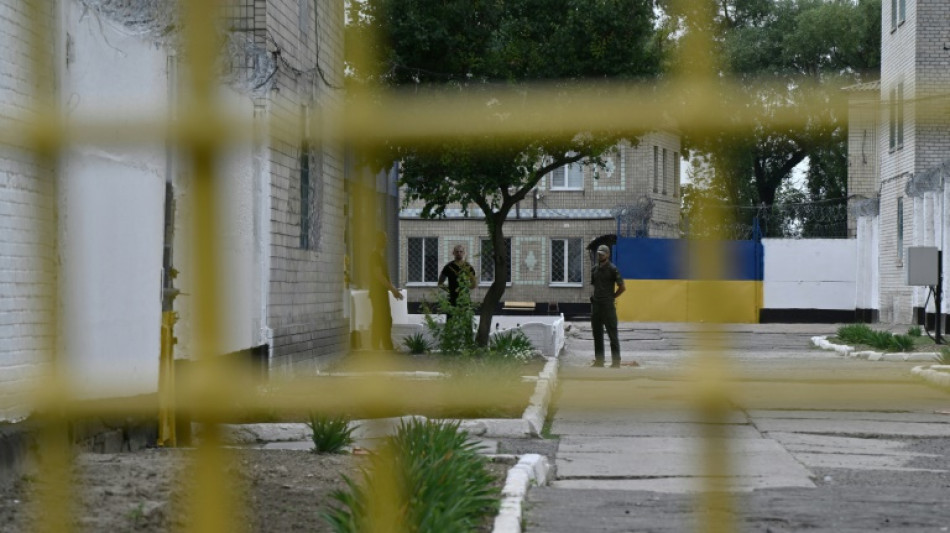
'Unpopular' Ukrainian ex-cons battle back from Russian-held jails / Photo: Genya SAVILOV - AFP

 Cash for nature protection: hotelier's offer to Principe islanders
 US miner KoBold bets on AI to gain edge in DR Congo mineral hunt
 Internet disrupted in Ethiopia as conflict rages

 Asian markets mixed after oil gains
 'Genius' Ohashi bids for third Asian Games gold after world record
 India's 'Tree Father' plants for a greener future
 Hopping mad: New health warning stirs up Belgian brewers
 Canadian capital to rename 'Trump Ave'
 Pope heads to France on first state visit in 18 years
 Bacteria suspected in deaths of hundreds of baby whales off Argentina
 US 'must choose' whether to end war: Iran president to Fox News
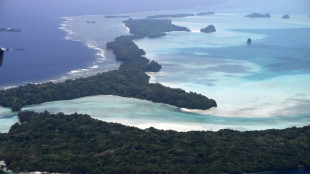 UN approves resolution on dealing with rising sea levels

 Yalcouye makes dream debut as Ivory Coast beat Ghana in AFCON qualifier
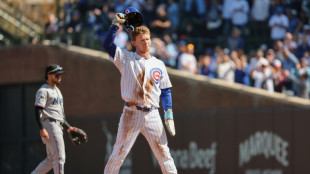 Chicago's White Sox and Cubs book MLB playoff berths

 Last-gasp Gakpo strike snatches Dutch draw to sour Klopp debut
 Global stocks mostly fall as oil prices and bond yields rise

 Israel's Netanyahu denounces enemies, allies in fiery UN speech
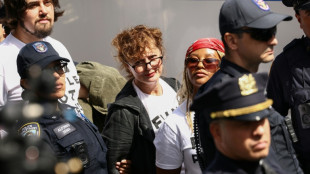
 Hollywood stars among arrests in NY anti-Netanyahu protest

 Losing start in AFCON qualifying for 78-year-old coach Le Roy
 Italy bans burqas in schools, caps numbers of foreign students per class

 Israel policies threaten 'life and existence' of Palestinians, Abbas says

 Paolini steers Italy past China in BJK
 Zidane admits emotion on eve of first game as France coach
 Breetzke and Maharaj sink Australia in first one-day international
 Zelensky broke confidentiality with North Korea POWs disclosure: South's president
Yulia's husband was different from most Ukrainians captured by the Russian army, usually prisoners of war whose fate moved crowds.
He was serving time for assault in a prison in the Kherson region in southern Ukraine when Russian troops took control of the area in 2022.
Ahead of the liberation of the territory by Ukrainian forces later that year, Russian forces moved him inside Russia -– to Yulia's despair and to general indifference.
"I got so scared and started crying. How can that happen? Why would they take him? That's not legal, is it?" Yulia said.
The 32-year-old declined to give their family name to protect the safety of her husband Yuri, father to her five-year-old daughter Nastya.
There were over 3,000 Ukrainian convicts in 11 penitentiary centres that have fallen to Russian forces since 2022, Ukraine's justice ministry and NGOs said.
Rights organisations estimate around 2,000 of them were taken to Russia.
Russian authorities have been releasing those who purged their sentence -- but they face a Kafkaesque path back.
Their stories shed a light on the wartime treatment of a population often treated as outcast, whose only support comes from families and cross-border grassroots solidarity.
- 'We'll simply shoot you' -
Yulia said Yuri never spoke about detention conditions in Russia to avoid worrying her.
Former prisoners and NGOs however painted a grim picture.
They witnessed abuse, restricted access to medication, and pressures to take on Russian citizenship.
"They beat us simply for being Ukrainian," said Yuri Patsura, another prisoner who had been jailed for stealing in the Kherson region.
A report based on over a hundred interviews, produced by the Danish Institute Against Torture and a consortium of NGOs, has established the "systematic and widespread nature of physical and psychological torture and other ill-treatment against detainees."
The report said that the forced transfer of civilian prisoners to Russia may constitute a war crime.
"They forced us at gunpoint. The recalcitrant were told: if you resist and don't get into the car that will take you to Russia, we'll simply shoot you," said Patsura.
The Russian penitentiary service and Russian human rights commissioner Tatyana Moskalkova did not respond to AFP's requests for comment.
- 'Everyone is silent' -
Ukraine's Deputy Justice Minister Olena Vysotska conceded the return of common-law criminals had taken a backseat to other returnees.
"In terms of priority: children, prisoners of war and civilian prisoners," Vysotska said.
The International Criminal Court (ICC) last year issued an arrest warrant against Russian President Vladimir Putin on allegations of war crimes over the deportation of Ukrainian children to Russia.
Hanna Skrypka, a lawyer at the NGO Protection for Prisoners of Ukraine, said she is working on a similar complaint to the ICC to bring justice and attention for the "unpopular" convicts.
She accused Ukrainian authorities of failing in their responsibility toward inmates.
"Everyone knows about it, and everyone is silent... they simply closed the topic," said Skrypka.
She works out of a small office in Kyiv with her colleague Oleg Tsvily, their conversation constantly interrupted by phone calls from families and ex-convicts needing guidance.
- 'No one for you' -
The six-people NGO developed a network of volunteers, including in Russia, ready to jump into action whenever Ukrainian prisoners get released.
Unless they accept a Russian passport, freed inmates face an immediate challenge in their journeys: convincing authorities of their identity.
Many spend weeks back in detention, Skrypka said, awaiting documents allowing their transfer initially to Georgia, a neighbouring country with close ties to both Russia and Ukraine.
They spend more weeks in a buffer zone at the border between Russia and Georgia as Ukrainian authorities verify their identities.
"They were able to confirm their identity and jail people for whatever evil they did. But confirming that they are Ukrainian simply for them to come back to Ukraine... they can't do that," Patsura said.
The freed convicts are eventually allowed to enter Georgia where they have to wait again until the authorities issue them with travel documents.
Patsura stayed to help his fellow former inmates, in cooperation with the NGO Volunteers Tbilisi.
"It's so hard when there is no one for you, when no one tells you anything," he said.
- 'Like a normal person'-
People who finish their sentence in occupied territories had previously tried to make their way to Ukrainian-held areas through the only open crossing point between Russia and Ukraine but that has now been closed because of Ukraine's incursion into Russia.
When they are released, they rely on help from volunteers.
"They are thrown out of the colony and end up on the street in a prison robe," said Olga Romanova, who oversees the Russian prisoners' rights organisation Rus Sidyashchaya from exile in Berlin.
Romanova said the former inmates are "without money, often without shoes. Those who are disabled don't even have a wheelchair".
Anna Pritkova, who spent over two years in a Russian-held jail in Melitopol, managed to cross into Ukraine before the humanitarian corridor was closed.
She came back to Kyiv train station on a bright day in June, after Protection for Prisoners of Ukraine sent her documents across borders.
"Now I will go home to my kids," she told AFP. "I will find work and live like any normal person."
Many hope for a similar fate.
Yulia faces an anguishing wait as Yuri still has years left to serve on his sentence.
"It's really hard to always wonder about what he's going through, hoping it's all fine... If he's even alive, if they haven't killed him."
B.Mahmoud--SF-PST