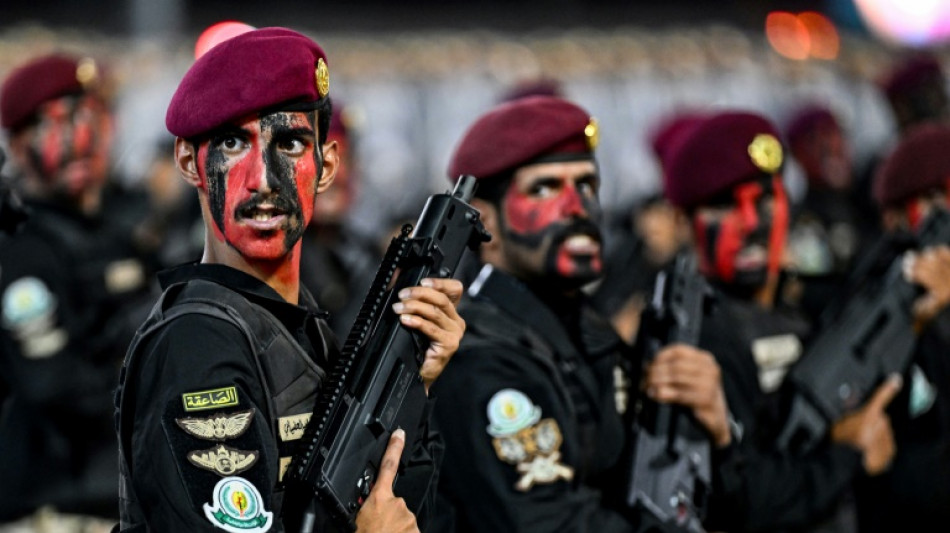
US lifts restrictions on Saudi weapons, with eye on resolving Gaza / Photo: - - AFP/File

 English, Spanish, Italian, German football leagues call for FIFA reform

 سهم ميتا يقفز 3.5% وقيمتها السوقية تقترب من تريليوني دولار

 عودة التوتر في تيغراي تضاعف الضغوط المعيشية في إثيوبيا

 موسكو تواصل عملياتها في أوكرانيا وتدرس حضور بوتين قمة العشرين

 دول اتفاقية مكة تبحث اجتماعاً عاجلاً لرؤساء الأركان

 هويدي: استمرار القتل في غزة يكشف غياب المساءلة رغم وقف النار

 اقتحامات واعتقالات إسرائيلية تطاول مناطق في الضفة والقدس

 قصف إسرائيلي يصيب فلسطينيين مع استمرار خروقات وقف النار بغزة

 صندوق مصر للاستثمار الصناعي يوسع دعم الإنتاج والتصدير

 صحة غزة: التحويلات الطبية مجانية وتحذير من محاولات الاحتيال

 «بي بي» ترصد 700 مليون دولار لحفر أربع آبار في مصر

 Ireland's Gaza stance spills from Eurovision into football
 Welcome aboard the Costa Serena, the Asian Games floating hotel

 Asian markets mixed after recent oil surge

 Cash for nature protection: hotelier's offer to Principe islanders

 US miner KoBold bets on AI to gain edge in DR Congo mineral hunt

 Internet disrupted in Ethiopia as conflict rages
 Asian markets mixed after oil gains

 'Genius' Ohashi bids for third Asian Games gold after world record

 India's 'Tree Father' plants for a greener future

 Hopping mad: New health warning stirs up Belgian brewers

 Canadian capital to rename 'Trump Ave'
 Pope heads to France on first state visit in 18 years
 Bacteria suspected in deaths of hundreds of baby whales off Argentina

 US 'must choose' whether to end war: Iran president to Fox News

The United States confirmed Monday it would resume sales of offensive weapons to Saudi Arabia, as concerns over human rights in the kingdom's Yemen war give way to US hopes for it to play a role in resolving the conflict in Gaza.
More than three years after imposing limits on human rights grounds over Saudi strikes in Yemen, the State Department said it would return to weapons sales "in regular order, with appropriate congressional notification and consultation."
"Saudi Arabia has remained a close strategic partner of the United States, and we look forward to enhancing that partnership," State Department spokesman Vedant Patel told reporters.
US President Joe Biden took office in 2021 pledging a new approach to Saudi Arabia that emphasized human rights, and immediately announced that the administration would only send "defensive" weaponry to the longtime US arms customer.
The step came after thousands of civilians -- including children -- were estimated to be killed in Saudi-led airstrikes against Iranian-backed Huthi rebels, who have taken over much of Yemen.
Geopolitical considerations have, however, changed markedly since then. The United Nations, with US support, brokered a truce in Yemen in early 2022 that has largely held.
Since the truce, "there has not been a single Saudi airstrike into Yemen and cross-border fire from Yemen into Saudi Arabia has largely stopped," Patel said.
"The Saudis since that time have met their end of the deal, and we are prepared to meet ours," Patel said.
- Saudi role in Gaza war -
It is now the United States, Britain and recently Israel that have been striking Huthi targets in Yemen, with Saudi Arabia content to watch from the sidelines.
The Huthis have been firing missiles at commercial ships in the vital Red Sea in professed solidarity with Palestinians, who have been in the crosshairs of Israel since the October 7 attack by Hamas.
In a bid to find a long-term solution, US Secretary of State Antony Blinken has repeatedly traveled to Saudi Arabia to discuss a package of US incentives if the kingdom recognizes Israel.
Saudi Arabia has sought US security guarantees, a continued flow of weapons and potentially a civilian nuclear deal if it normalizes with Israel.
Israeli Prime Minister Benjamin Netanyahu has made normalization with Arab states a top goal and no prize would be as big as Saudi Arabia, guardian of Islam's two holiest sites.
But Saudi Arabia says it cannot act without progress on a Palestinian state, an idea pushed by the Biden administration as it seeks a diplomatic way out of the Gaza conflict, but bitterly opposed by Netanyahu and his far-right allies.
Representative Joaquin Castro, a progressive member of Biden's Democratic Party, said that Saudi Arabia still had a "troubling track record" on human rights.
"I supported the Biden administration's initial decision to pause offensive arms sales to Saudi Arabia, and I hope to see compelling evidence that Saudi Arabia has changed its conduct," he said.
Before October 7, Gulf Arab states had been moving closer to Israel, in large part out of shared hostility to Iran.
Saudi Arabia cooperated with the United States, along with Jordan and the United Arab Emirates, in repelling an Iranian missile and drone barrage against Israel in April in response to an Israeli strike on an Iranian diplomatic building in Syria.
The United States is again hoping for support from Arab partners as Iran threatens another reprisal against Israel over the killing in Tehran of Hamas's political leader, Ismail Haniyeh.
H.Nasr--SF-PST