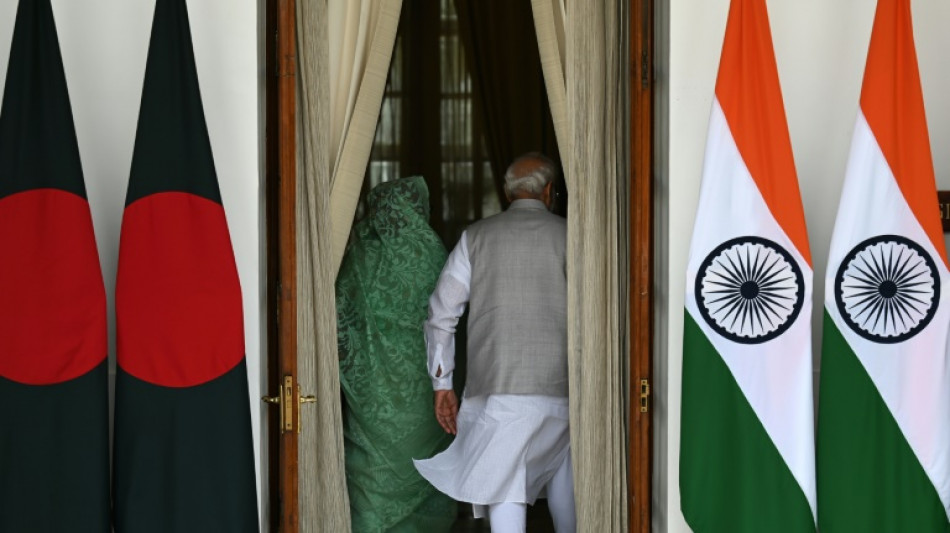
Ouster of Bangladesh ally a diplomatic dilemma for India / Photo: Money SHARMA - AFP

 Pope warns against losing humanity in 'paradise of machines'

 From FBI warning to literary acclaim: the Russian journalist who took on Putin
 China swimmer in Asian Games first as North Korea lifters reign

 French literary prize removes novel from longlist after AI claims

 China's Zhang wins record seventh Asian Games swimming gold

 Verstappen edges Russell in final practice in Azerbaijan

 English, Spanish, Italian, German football leagues call for FIFA reform

 نقل أسيرين كوريين شماليين يثير خلافاً بين كييف وسيؤول

 عودة التوتر في تيغراي تضاعف الضغوط المعيشية في إثيوبيا

 موسكو تواصل عملياتها في أوكرانيا وتدرس حضور بوتين قمة العشرين

 دول اتفاقية مكة تبحث اجتماعاً عاجلاً لرؤساء الأركان

 هويدي: استمرار القتل في غزة يكشف غياب المساءلة رغم وقف النار

 قصف إسرائيلي يصيب فلسطينيين مع استمرار خروقات وقف النار بغزة

 طقس فلسطين: تراجع طفيف في الحرارة وأجواء معتدلة

 دعوات مقدسية للحشد في الأقصى لمواجهة مخططات التهويد

 رأس الخيمة وميامي الكبرى تبحثان فرص التعاون الاقتصادي

 مكاسب ميتا تضيف أربعة مليارات دولار لثروة زوكربيرغ في يوم

 المجلس العالمي للتسامح يطالب بتجديد الالتزام بثقافة السلام

 سعود بن صقر يكرم الفائزين بجائزة رأس الخيمة للتميز التعليمي

 كوادر نسائية إماراتية تقود أدواراً بارزة في مستشفيات أبوظبي

 الذهب يتراجع للجلسة الثانية تحت ضغوط الأسواق

 «بي بي» ترصد 700 مليون دولار لحفر أربع آبار في مصر

 صندوق مصر للاستثمار الصناعي يوسع دعم الإنتاج والتصدير

 واشنطن تدرس قيوداً طوعية على صادرات الديزل لكبح الأسعار

 تأخر عروض السينما في عصر واتساب يعيد تعريف الراحة والانفصال

The ouster of Bangladesh's autocratic premier sparked celebrations in Dhaka this week but alarm in neighbouring India, which backed Sheikh Hasina to counter rival China and quash Islamist alternatives, analysts say.
It has created a diplomatic dilemma for the regional powerhouse.
Hasina, 76, quit as prime minister in the face of a student-led uprising on Monday and fled by helicopter to longtime ally New Delhi.
Indian Prime Minister Narendra Modi was among the first to offer his "best wishes" after Bangladesh's newly sworn-in interim leader Muhammad Yunus took power Thursday, saying New Delhi was "committed" to working with Dhaka.
But China was also swift to welcome Dhaka's new authorities, saying it "attaches importance to the development" of relations.
With Hasina's rivals in control in Dhaka, India's support for the old government has come back to bite.
"From the point of view of Bangladeshis, India has been on the wrong side for a couple of years now," said International Crisis Group analyst Thomas Kean.
"The Indian government absolutely did not want to see a change in Dhaka, and had made that very clear for years that they didn't see any alternative to Hasina and the Awami League."
- 'Detrimental' -
Bangladesh is almost entirely encircled by India, with a deeply intertwined history long before they were partitioned out of the Indian subcontinent in 1947.
But while India's 1.4 billion population and dominating economy overshadows Bangladesh -- with a population of 170 million -- Hasina also courted China.
India and China, the world's two most populous nations, are intense rivals competing for strategic influence across South Asia, including in Nepal, Sri Lanka and the Maldives.
Hasina pursued a delicate balancing act, benefiting from support from New Delhi, while maintaining strong relations with Beijing.
New Delhi saw a common threat in groups Hasina viewed as rivals and crushed with brutal force, including the key Bangladesh National Party (BNP).
"India... worried that any alternative to Hasina and the Awami League could be detrimental to Indian interests," said Michael Kugelman, director of the South Asia Institute at the Washington-based Wilson Center.
"In New Delhi's view, the BNP and its allies are dangerous Islamist forces that could imperil Indian interests."
Yunus has said he wants elections in Bangladesh "within a few months".
The BNP could be poised for a comeback, holding a mass rally in Dhaka this week.
In the immediate aftermath of Hasina's fall, some businesses and homes owned by Hindus were attacked, a group seen by some in Muslim-majority Bangladesh as having been her supporters.
Hundreds of Bangladeshi Hindus this week arrived on India's border, asking to cross.
Hindu nationalist leader Modi on Thursday said he hoped "for an early return to normalcy, ensuring the safety and protection of Hindus and all other minority communities."
- 'She will go back' -
The fact Hasina is sheltering in India may prove to be a stumbling block to relations between New Delhi and Dhaka.
Indian Foreign Minister Subrahmanyam Jaishankar told parliament Hasina had flown to India "at very short notice", and according to Indian media, intended to stay only briefly in transit.
But her reported bid to travel onwards to Britain was scuppered after London called for a "full and independent UN-led investigation" into the deadly crackdown on protests in the last weeks of her rule.
The United States in the past had praised Hasina's economic track record and saw her as a partner on priorities such as countering Islamist extremism, but Washington more recently imposed visa sanctions over concerns about democracy.
It is not clear how long she will now stay in India, or where else she might go.
Since arriving at military airbase near New Delhi, she has been hosted in a secret safe house and not spoken publically.
Her daughter Saima Wazed said she was "heartbroken" she could not see her mother.
"As much as I would love to see Ma, I don't want to compromise her whereabouts in any way", Wazed, the World Health Organization's Southeast Asia chief, said in a since-deleted post on social media platform X.
Her son Sajeeb Wazed Joy told the Times of India newspaper his mother still hoped to contest for political office.
"She will go back to Bangladesh the moment the interim government decides to hold an election," he said.
- 'Earned the enmity' -
Indian media warn of the "formidable diplomatic challenge" the country now faces.
"New Delhi must actively work to limit the damage, and ensure the high stakes in the relationship are protected," the Indian Express newspaper warned. "This could involve some near-term setbacks."
But Bangladesh's new leader Yunus has offered an olive branch.
"Although some countries, such as India, backed the ousted prime minister and earned the enmity of the Bangladeshi people as a result, there will be many opportunities to heal these kinds of rifts," Yunus wrote in The Economist, shortly before returning to Bangladesh.
Crisis Group's Kean meanwhile said he believes the nations will put the past aside for pragmatic relations.
"India is Bangladesh's most important international partner, and there's no reason that they can't find a way to move forward from this," said Kean.
"Economic forces will compel them to work together."
T.Khatib--SF-PST