What now for Russian opposition after prisoner swap? / Photo: Alexander NEMENOV, Natalia KOLESNIKOVA, Kirill KUDRYAVTSEV, Handout, Andrey BORODULIN, Olga MALTSEVA, Vladimir NIKOLAYEV, - - AFP/File

 Assefa seeks 'better than my best' at Berlin marathon
 US court refuses to overturn Pentagon ban on Anthropic
 Verstappen and Norris blame slow cars as Mercedes tops qualifying

 Crowds cheer pope in Paris after AI 'paradise of machines' warning

 Teen swimmer makes Games history as Thai, Chinese sprinters win gold
 Man City found guilty of 114 Premier League charges - reports
 Concerns over 'missing' UK explorer Ranulph Fiennes
 Suspected Paris killer of Argentine rugby star begs forgiveness
 Oil prices fall on cautious hopes for US-Iran progress

 Noskova, Muchova take Czech Republic into BJK Cup final
 Thai sprinter Puripol breaks own Asian Games record to win 100m gold
 Russell takes pole for Azerbaijan GP, Antonelli crashes out
 Williams boss hails Chadwick as F1 inspiration for women
 World No.1 Sinner delays return with China Open withdrawal
 South Lebanon children return to school destroyed by Israel strike

 Jewish group urges Berlin far-left vote winners to tackle antisemitism
 European stock markets climb as oil prices drop

 Trump accuser E. Jean Carroll finally has her damages
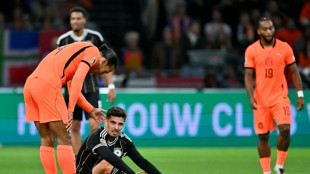 Germany's Havertz, Musiala ruled out of Greece match with injury
 الإمارات تستهل «خليجي 27» بمواجهة اليمن في جدة

 الذهب يتراجع للجلسة الثانية تحت ضغوط الأسواق

 شي يحث واشنطن وطهران على إحياء اتفاق يونيو وإنهاء الحرب

 صحة غزة: التحويلات الطبية مجانية وتحذير من محاولات الاحتيال

 طقس فلسطين: تراجع طفيف في الحرارة وأجواء معتدلة

 قصف إسرائيلي يصيب فلسطينيين مع استمرار خروقات وقف النار بغزة

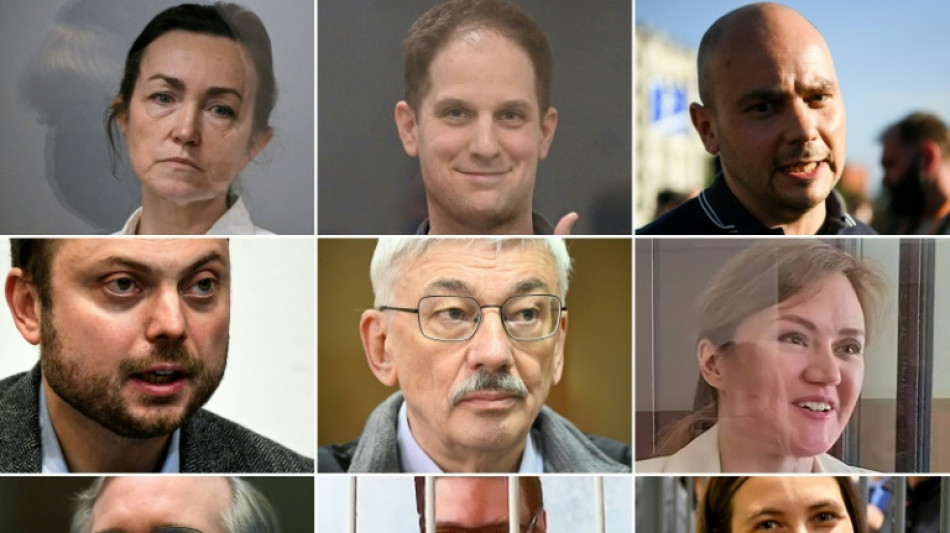
Eight Russian opposition activists, including some very influential ones, are among the people who were released by Moscow in a historic prisoner exchange with the West.
Now away from their homeland, could they help strengthen the ranks of opponents to President Vladimir Putin?
One of those released, Ilya Yashin, had said in the past that he did not want to be exchanged, arguing that the voice of a Kremlin critic is more powerful in Russia than outside.
"Conversations in a Parisian cafe and in a Russian prison do not have the same political weight," he said in a letter from prison published by the Russian channel Dozhd in June.
"I stayed in Russia to be a Russian voice against the war (in Ukraine) and the dictatorship," he said, adding that he wanted to "share the destiny of my country and its people".
His friend Alexei Navalny, a key figure for the opposition, made the momentous decision to return to Russia after being poisoned in 2020 and receiving treatment in Germany.
The decision turned out to be fatal.
Jailed and then held in ever more trying conditions, he died in an Arctic prison colony in February.
In the past, several Russian dissidents who chose -- or were forced -- to emigrate have gradually disappeared from public attention.
The opposition to Putin is notoriously fractious and there is a rivalry between Navalny supporters and other groups such as that of former oligarch Mikhail Khodorkovsky, who spent a decade in prison.
Political expert Konstantin Kalachev, who is based in Moscow, said it was therefore not a given that the liberation of eight opponents would consolidate the movement.
"There is a schism between those who left and those who stay. If the exchange could have significantly strengthened the opposition, then it would definitely not have happened," Kalachev told AFP.
- 'Major moral authority' -
Other experts take a different view.
"Some of the people freed... have major moral authority, some have political experience and are well-known in Russia and beyond," said Ekaterina Schulmann, an expert living in exile.
"They could become leading representatives of the anti-war movement... for those who are in Russia or outside and for foreign governments," she said.
One of those released, Vladimir Kara-Murza, had excellent contacts with Western governments before he was arrested and sentenced to 25 years for condemning Russia's invasion of Ukraine.
Another key figure is Oleg Orlov, a veteran rights campaigner and member of the Memorial group -- a co-winner of the Nobel Peace Prize in 2022.
Schulmann said there was "some disparity" in the exchange.
"Russia gets back failed employees, people who did not do their work duties and got caught," she told AFP.
The Kremlin confirmed on Friday that at least three of the people returned to Russia were spies.
- 'Lobbying capacity' -
Schulmann said that the Russian opposition, by managing to obtain the liberation of several leading members, has gained greater legitimacy on the international stage.
"The fact that Western governments are ready to expend negotiating resources to save people with whom they have no direct link, shows the importance of Russians opposed to the war for the international community," she said.
The expert said that Navalny's team, which had three members released, had shown "serious lobbying capacity".
"It's a signal for those in prison and for those who are afraid to be jailed in Russia, that if there is a problem they won't be forgotten," she said.
By the same logic, politics expert Abbas Gallyamov told AFP there was "enthusiasm" among dissidents over the swap because although Western governments negotiated the deal, they were effectively acting on behalf of the opposition.
This means "the opposition engaged with the Kremlin on an equal basis", he said.
H.Darwish--SF-PST