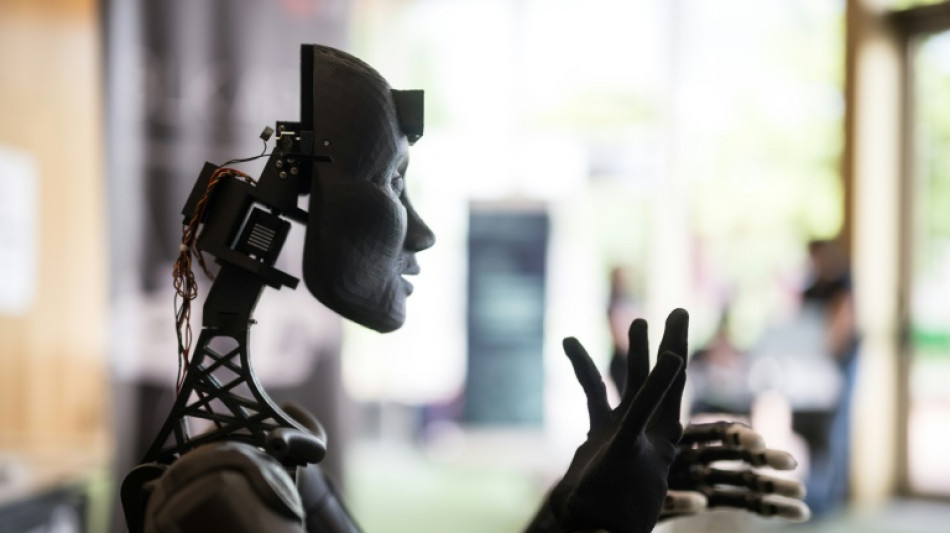
In world first, EU's sweeping AI law enters into force / Photo: Fabrice COFFRINI - AFP/File

 French youth await pope after AI 'paradise of machines' warning
 Man City found guilty of Premier League charges, set to appeal: reports

 Embolo follows Xhaka out of Swiss squad over fake Covid documents

 Trump, Xi inspect founding documents of US democracy to close summit

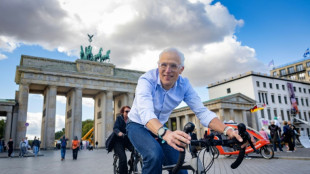 'Bottle Claus': Kipchoge's 'hero' helping runners chase Berlin marathon glory
 Olympic medallist Samba-Mayela handed provisional doping ban

 First US trial against TikTok to open Monday

 Palmer misses 'too many' England games, says Tuchel

 UN refugees chief warns conditions in W.Sahara 'deteriorating'

 Antonelli 'mad' about crash in Azerbaijan qualifying
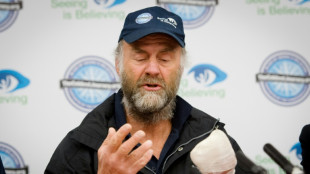
 'Perfect lap' gives Russell pole for Azerbaijan GP as Antonelli crashes out

 UN Security Council condemns Houthi attacks on Saudi Arabia
 China swimmer makes Asian Games history as Thai wins 100m sprint

 Top French literary prize drops best-selling novel over AI claims

 US 'must choose' whether to end war: Iran president

 Pope warns against losing humanity in AI-driven 'paradise of machines'

 Pope warns against losing humanity in 'paradise of machines'

 From FBI warning to literary acclaim: the Russian journalist who took on Putin

 China swimmer in Asian Games first as North Korea lifters reign

 French literary prize removes novel from longlist after AI claims
 China's Zhang wins record seventh Asian Games swimming gold

 Verstappen edges Russell in final practice in Azerbaijan

 English, Spanish, Italian, German football leagues call for FIFA reform

 هويدي: استمرار القتل في غزة يكشف غياب المساءلة رغم وقف النار

 التعافي وسط الحرب.. مقاربة نفسية تتجاوز مفهوم النجاة

The European Union's landmark law on artificial intelligence came into force on Thursday, which Brussels vows will drive innovation while protecting citizens' rights.
The EU earlier this year adopted the world's first sweeping rules to govern AI, especially powerful systems like OpenAI's ChatGPT after difficult and tense negotiations.
Although the rules were first proposed in 2021, they took on greater urgency when ChatGPT burst onto the scene in 2022, showing generative AI's human-like ability to churn out eloquent text within seconds.
Other examples of generative AI include Dall-E and Midjourney, which can generate images in nearly any style with a simple input in everyday language.
"With our artificial intelligence act, we create new guardrails not only to protect people and their interests, but also to give business and innovators clear rules and certainty," European Commission President Ursula von der Leyen said.
Companies will have to comply by 2026 but rules covering AI models like ChatGPT will apply 12 months after the law enters into force.
Strict bans on using AI for predictive policing based on profiling and systems that use biometric information to infer an individual's race, religion or sexual orientation will apply six months after the law enters into force.
The law known as the "AI Act" takes a risk-based approach: if a system is high-risk, a company has a stricter set of obligations to fulfil to protect citizens' rights.
The higher the risk to Europeans' health or rights, for example, the greater the companies' requirements to protect individuals from harms.
"The geographic scope of the AI Act is very broad, so organisations with any connections to the EU in their business or customer base will need an AI governance programme in place to identify and comply with their obligations," said Marcus Evans, partner at law firm Norton Rose Fulbright.
Companies in violation of the rules on banned practices or data obligations face fines of up to seven percent of worldwide annual revenue.
The EU in May established an "AI Office" of tech experts, lawyers and economists under the new law to ensure compliance.
N.Awad--SF-PST