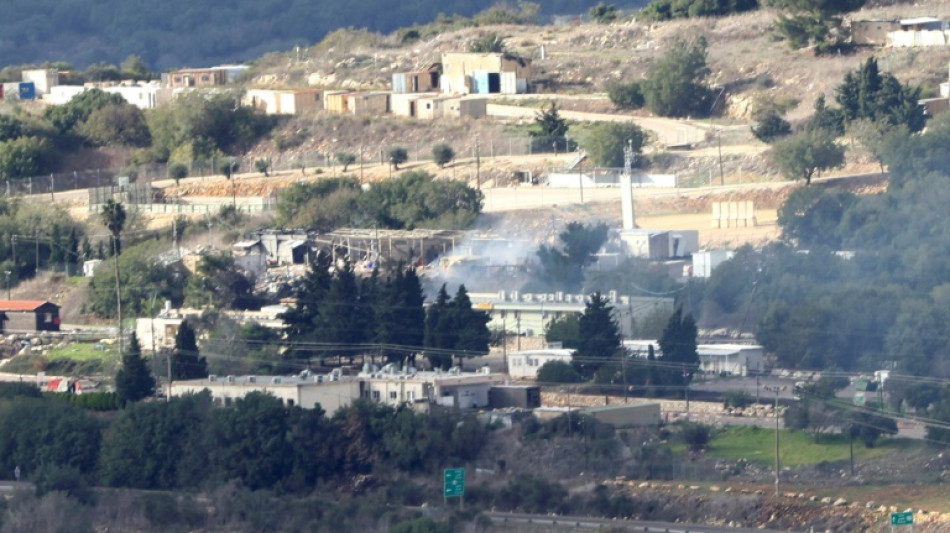
What we know about Hezbollah's weapons arsenal / Photo: jalaa marey - AFP

 Jay-Z rape accuser says she made 'false accusations'

 Senegal draw first match under Vieira and Nigeria survive scare
 Trump, Xi end summit long on pomp, but short on progress

 Russia not preparing for conflict with Europe, Putin says
 Trump's photo of Xi greeting carries signs of AI

 Six missing after building blast in historic Athens district

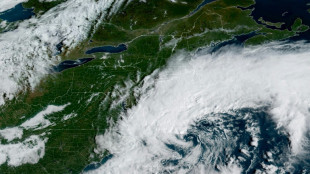 Millions in US northeast brace for powerful storm

 Assefa seeks 'better than my best' at Berlin marathon

 US court refuses to overturn Pentagon ban on Anthropic

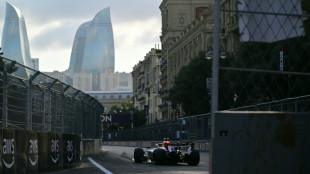 Verstappen and Norris blame slow cars as Mercedes tops qualifying

 Crowds cheer pope in Paris after AI 'paradise of machines' warning

 Teen swimmer makes Games history as Thai, Chinese sprinters win gold
 Man City found guilty of 114 Premier League charges - reports
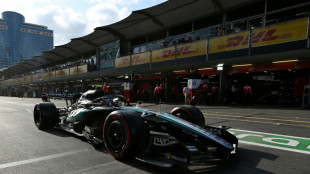
 Concerns over 'missing' UK explorer Ranulph Fiennes
 Suspected Paris killer of Argentine rugby star begs forgiveness
 Oil prices fall on cautious hopes for US-Iran progress

 Noskova, Muchova take Czech Republic into BJK Cup final
 Thai sprinter Puripol breaks own Asian Games record to win 100m gold
 Russell takes pole for Azerbaijan GP, Antonelli crashes out

 Williams boss hails Chadwick as F1 inspiration for women
 World No.1 Sinner delays return with China Open withdrawal

 South Lebanon children return to school destroyed by Israel strike

 Jewish group urges Berlin far-left vote winners to tackle antisemitism
 European stock markets climb as oil prices drop

 Trump accuser E. Jean Carroll finally has her damages
After a deadly strike on civilians in the annexed Golan Heights, Israel has threatened retaliation against Lebanon's Hezbollah movement, accusing it of perpetrating the attack with an Iranian-made Falaq-1 rocket -- part of its wide-ranging arsenal.
Hezbollah has traded near-daily cross-border fire with Israel in support of Hamas since the Palestinian militant group's October 7 attack on southern Israel triggered war in the Gaza Strip.
The Iran-backed group has used Falaq rockets in attacks on Israeli military sites but says it had "no connection" to the strike Saturday on a football field that killed 12 youths.
AFP takes a look at the Shiite Muslim movement's weapons cache:
- Rockets and missiles -
Experts say Hezbollah has a wide range of unguided heavy artillery rockets, ballistic missiles, as well as anti-aircraft, anti-tank and anti-ship missiles.
Those include Falaq-1 and Falaq-2 unguided rockets, which have a range of about 11 kilometres (seven miles) -- according to a Hezbollah artillery officer interviewed by the group's al-Manar channel earlier this month.
Artillery rockets, including Falaq models, "are not accurate" and "have a margin of error of up to three kilometres," according to Riad Kahwaji, head of the Institute for Near East and Gulf Military Analysis.
Military analyst and retired Lebanese army general Khalil Helou said Hezbollah has Iranian ballistic missiles that it has yet to use.
They include the Fateh 110, a precision-guided missile with a range of around 300 kilometres, more than sufficient to reach Tel Aviv and Jerusalem from within Lebanon.
Hezbollah has expanded the size and quality of its arsenal since it last fought an all-out war with Israel in 2006.
"The group in 2006 reportedly had about 15,000 rockets, while unofficial estimates in recent years suggest that this number has multiplied by almost 10 times," said Dina Arakji, an associate analyst at Control Risks consultancy.
- Drones -
Hezbollah has been launching drones towards targets in northern Israel and the Golan Heights.
The group has said it sent surveillance drones on three occasions to film military sites, including the Ramat David airbase about 45 kilometres from the border.
Hezbollah leader Hassan Nasrallah has said local production contributed to his group's large drone stockpile.
"Kamikaze drones give a tactical advantage due to their high level of autonomy and have the ability to be launched from anywhere," said Arakji, noting they were inexpensive single-use weapons.
Helou said Hezbollah also had Shahed 136 attack drones and other Iranian unmanned aerial vehicles, some "with double guidance -- electro-optical and GPS".
- Targets at sea -
Nasrallah has said previously that in an all-out war, Israel must expect "us on land, by sea and by air".
All of Israel's coasts, "all its ports, all its boats and ships" would be affected, he said.
Helou said Hezbollah had Russian anti-ship Yakhont missiles with a range of 300 kilometres, and Chinese-made Silkworm missiles.
Those two weapons, "which are very precise and extremely fast, could be used against targets at sea, including drilling platforms", Helou said.
- Air defences -
Hezbollah has announced it downed several Israeli Hermes 450 and Hermes 900 drones with surface-to-air missiles during the Gaza war, and has said it used the weapons to target Israeli warplanes.
Helou said Israeli aircraft have flown at low altitudes in an attempt to detect anti-aircraft missiles that could be used against their drones or planes.
But "it's not just about having anti-aircraft missiles -- you have to know how to use them effectively," he said.
Arakji noted that "anti-aircraft missiles can put pressure on Israel's multi-tier air defence system".
"While the missiles do not significantly challenge Israel's air supremacy," she added, they will require the Israeli army "to adjust its mode of operations".
- Fighters and tunnels-
Last month, Nasrallah said the number of fighters his group could count on "greatly exceeded" 100,000, and his group had turned down offers from allies in Syria, Iraq, Yemen and Iran to send combatants.
Helou said Hezbollah could probably "mobilise more than 100,000 men, counting reservists".
However, he noted "that doesn't mean they are all ready and trained for fighting".
Experts have said Hezbollah likely has an extensive network of underground tunnels in south Lebanon, as well as in the eastern Bekaa valley, near the border with Syria.
But it has evacuated positions in south and east Lebanon after Israeli threats of reprisals, a source close to the group told AFP.
At least 348 Hezbollah fighters have been killed by Israeli fire in Lebanon since October, according to an AFP tally based on official Hezbollah statements.
Helou said Hezbollah was "prepared for a war of attrition according to the same model as Hamas".
"Its leaders will be unreachable to Israeli aircraft, as they will be underground," he said.
H.Darwish--SF-PST