
Nuclear arms more prominent amid geopolitical tensions: researchers / Photo: Handout - Russian Defence Ministry/AFP

 Make-A-Wish Announces 2026 Starblazer Award Honorees; Allied World Becomes First Corporate Founder
 فنان من غزة يفوز بجائزة "كاتب الشجاعة" البريطانية

 عصام غالب عواد: الفلسطيني في قفص الاتهام.. حين يُجبر صاحب المأساة على الاعتذار قبل أن يرويها

 Chelsea Transfer News: Real Betis Star Jose Antonio Morante Rejects Move to Stamford Bridge

 إيطاليا تؤكد دعمها الكامل لانضمام ألمانيا لبرنامج المقاتلات العالمية

 الرئيس عباس في ذكرى الاستقلال: حق فلسطين لا يسقط بالتقادم والشباب ركيزة البناء

 Grave of the Fireflies: Takahata Isao’s Lifelong Quest for Realism

 مطالبات برلمانية أمريكية لماسك بالاحتفاظ بسجلات استخدام أوكرانيا لشبكة ستارلينك

 DJ Chaia Brings 'Yiddishland' Sound to Capital Region with Kleztronica Rave

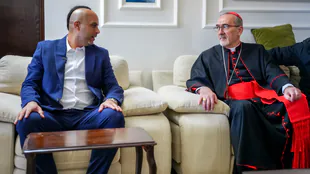 بطريرك القدس للاتين يهنئ المقدم رؤوف إميل بالإفراج عنه في منزله بالزبابدة

The role of atomic weapons has become more prominent and nuclear states are modernising arsenals as geopolitical relations deteriorate, researchers said Monday, urging world leaders to "step back and reflect".
Diplomatic efforts to control nuclear arms also suffered major setbacks amid strained international relations over the conflicts in Ukraine and Gaza, the Stockholm International Peace Research Institute (SIPRI) said in its annual yearbook.
"We have not seen nuclear weapons playing such a prominent role in international relations since the Cold War," Wilfred Wan, director of SIPRI's Weapons of Mass Destruction Programme, said in a statement.
The research institute noted that in February 2023 Russia announced it was suspending participation in the 2010 New START treaty -- "the last remaining nuclear arms control treaty limiting Russian and US strategic nuclear forces".
SIPRI also noted that Russia carried out tactical nuclear weapon drills close to the Ukrainian border in May.
Russian President Vladimir Putin has upped his nuclear rhetoric since the Ukraine conflict began, warning in his address to the nation in February there was a "real" risk of nuclear war.
In addition, an informal agreement between the United States and Iran reached in June 2023 was upended after the start of the Israel-Hamas war in October, SIPRI said.
- 'Extremely concerning' -
According to SIPRI, the world's nine nuclear-armed states also "continued to modernise their nuclear arsenals and several deployed new nuclear-armed or nuclear-capable weapon systems in 2023".
The nine countries are the United States, Russia, the UK, France, China, India, Pakistan, North Korea and Israel.
In January, of the estimated 12,121 nuclear warheads around the world about 9,585 were in stockpiles for potential use, according to SIPRI.
Around 2,100 were kept in a state of "high operational alert" on ballistic missiles.
Nearly all of these warheads belong to Russia and the United States -- which together possess almost 90 percent of all nuclear weapons -- but China was for the first time believed to have some warheads on high operational alert.
"While the global total of nuclear warheads continues to fall as Cold War-era weapons are gradually dismantled, regrettably we continue to see year-on-year increases in the number of operational nuclear warheads," SIPRI director Dan Smith said.
He added that this trend would likely continue and "probably accelerate" in the coming years, describing it as "extremely concerning."
Researchers also stressed the "continuing deterioration of global security over the past year", as the impact from the wars in Ukraine and Gaza could be seen in "almost every aspect" of issues relating to armaments and international security.
"We are now in one of the most dangerous periods in human history," Smith said, urging the world's great powers to "step back and reflect. Preferably together."
A.Suleiman--SF-PST