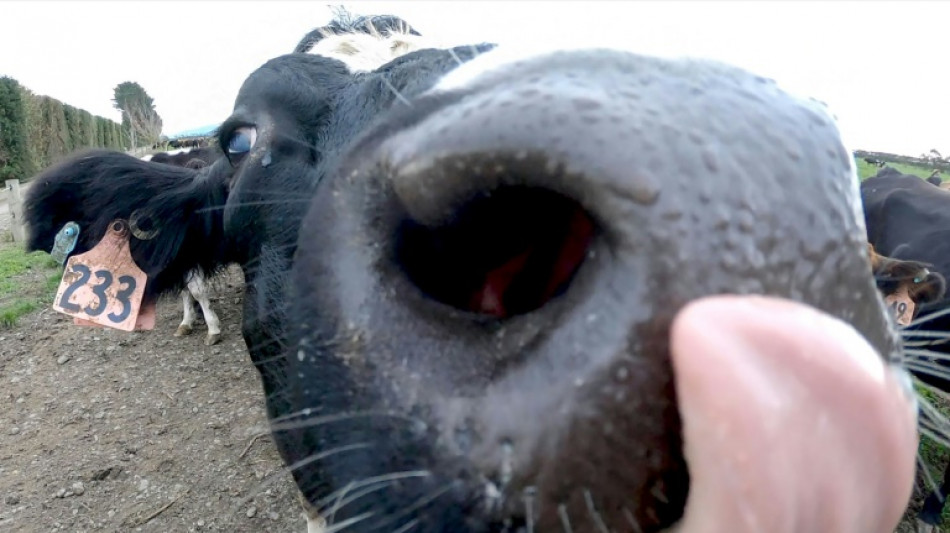
New Zealand scraps plan to tax livestock burps, farts / Photo: Marty MELVILLE - AFP/File

 Make-A-Wish Announces 2026 Starblazer Award Honorees; Allied World Becomes First Corporate Founder

 فنان من غزة يفوز بجائزة "كاتب الشجاعة" البريطانية

 عصام غالب عواد: الفلسطيني في قفص الاتهام.. حين يُجبر صاحب المأساة على الاعتذار قبل أن يرويها

 Chelsea Transfer News: Real Betis Star Jose Antonio Morante Rejects Move to Stamford Bridge

 إيطاليا تؤكد دعمها الكامل لانضمام ألمانيا لبرنامج المقاتلات العالمية

 الرئيس عباس في ذكرى الاستقلال: حق فلسطين لا يسقط بالتقادم والشباب ركيزة البناء

 Grave of the Fireflies: Takahata Isao’s Lifelong Quest for Realism

 مطالبات برلمانية أمريكية لماسك بالاحتفاظ بسجلات استخدام أوكرانيا لشبكة ستارلينك

 DJ Chaia Brings 'Yiddishland' Sound to Capital Region with Kleztronica Rave
New Zealand's centre-right government said Tuesday it is scrapping a scheme to price greenhouse gas emissions from livestock -- squelching a so-called burp tax.
New legislation will be introduced to parliament this month to remove the agriculture sector from a new emissions pricing plan, it said.
"The government is committed to meeting our climate change obligations without shutting down Kiwi farms," said Agriculture Minister Todd McClay.
"It doesn't make sense to send jobs and production overseas, while less carbon-efficient countries produce the food the world needs."
The New Zealand economy is driven by agriculture with around 10 million cattle and 25 million sheep roaming the nation's pastures.
Just under half of New Zealand's emissions come from agriculture, with cattle the main culprits.
Cattle burps and flatulence emit methane gas while livestock urine leaks nitrous oxide into the atmosphere.
The previous centre-left Labour government had targeted livestock in its drive towards reaching net-zero greenhouse gas emissions by 2050.
But the plan to tax livestock emissions, announced by then prime minister Jacinda Ardern in 2022, sparked nationwide protests by farmers fearing it would hurt profits.
The new centre-right government, which came to power late last year, said it would remove agriculture, animal processors and fertiliser companies from the emissions pricing scheme, due to start in 2025.
It wants to help farmers lower emissions through technology without reducing production or exports, the agriculture minister said.
A new "pastoral group" would be set up to tackle biogenic methane emissions in the sector, he added.
Farmers welcomed the decision.
But environmental groups rounded on the government, which also announced plans at the weekend to reverse a five-year ban on new oil and gas exploration.
"From pouring oil, coal and gas on the climate crisis fire, the government has now put half of our emissions which come from agriculture into the industry-led too-hard basket," said Greens co-leader Chloe Swarbrick.
Greenpeace accused the government of "waging an all-out war on nature".
"In the last few days, the coalition government has clearly signalled that the most polluting industries, industrial dairy, and new oil and gas exploration, are free to treat our atmosphere like an open sewer," said Greenpeace spokesperson Niamh O'Flynn.
At the weekend, thousands of people also protested in New Zealand's biggest cities against the new government plans to let major infrastructure projects bypass some environmental regulations.
W.Mansour--SF-PST