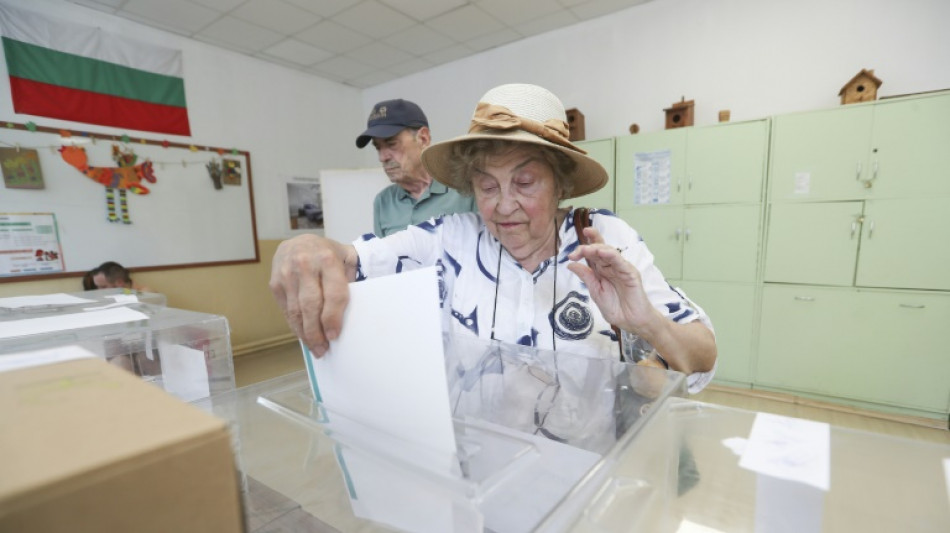
Conservatives lead in Bulgaria's sixth vote in three years / Photo: DIMITAR KYOSEMARLIEV - AFP

 Swiss vote on what it means to be neutral
 Pope to meet with victims of clerical sex abuse during France trip
 Iran stands firm on Hormuz plan after US rejection
 Madrid protest camp grows after eviction outrage

 Italy winemakers hail bumper harvest but cut output

 Kyiv shoppers feel the pinch from Russian strikes
 Japanese anime actor fights TikTok over AI voice cloning
 Curtain falls on the romance of India's single-screen cinemas

 Smells like teen spirit as US thrash Peru 4-1
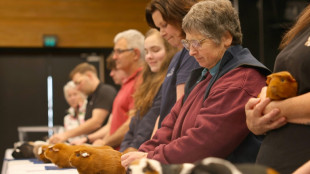 Cavy chaos: Hundreds attend New Zealand's biggest guinea pig show
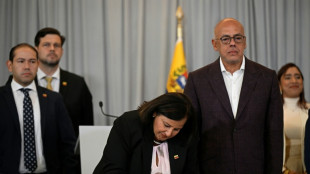 Venezuela releases more political prisoners after opposition talks

 England's best 'for a long time' despite Spain defeat, says Kane

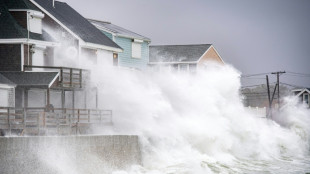 Powerful storm pummels northeast US with rain, high winds

 Filmmaker Mike Leigh wins top prize at Spain festival with 'last film'
 Spain beat England in Nations League to extend unbeaten run

 Ireland squad vote to play Israel tie despite Gaza unease
 Gutsy Vollering wins cycling road race world title
 Vollering wins cycling road race world title
 Man City's meteoric rise clouded by dark shadow
 Mbappe out for two weeks or more with knee injury say Real
 Lyon collapse away to Stade and suffer first Top 14 loss
 Russia accuses Europe of seeking to thwart Ukraine talks
 Man City chairman defiant over reported Premier League charges
 Germany ready to 'walk through fire' for Klopp, says Tah
 At least 16 killed in Russian and Ukrainian strikes
Hardly a third of Bulgarians voted in the Balkan EU member's sixth parliamentary elections in three years on Sunday, with the party of conservative former premier Boyko Borisov coming in first, but more political uncertainty looming.
Analysts said the worst political instability the EU's poorest member has experienced since the end of communism was unlikely to end.
Borisov's GERB party topped the vote, winning almost 25 percent, according to projections published by polling institutes late Sunday on the basis of a partial count.
But it is likely to continue to struggle to find partners to govern after massive anti-corruption protests in 2020 ended Borisov's almost decade-long rule.
Reformist grouping PP-DB slumped to between 14 and 15 percent -- down from the almost 25 percent they got in the last snap polls last year.
The continuing instability threatens to further delay reforms necessary to unlock EU funding and integrate the country fully into the Schengen area of free movement -- and to frustrate voters further.
"Let's hope that politicians will find a possibility to avoid holding a new vote in the fall, which is the most likely outcome right now," said Kancho Stoichev, an analyst with Gallup.
- 'Weary of elections' -
Sunday's turnout was the lowest for a Bulgarian national election since the end of communism, at around 30 percent, according to data published by polling agencies shortly before voting closed.
"We are weary of elections, and we want some stability and some prosperity for the country," said Margarita Semerdzhieva, a 72-year-old pensioner, echoing the comments of others who spoke to AFP outside a Sofia polling station.
The vote was being held alongside EU elections.
"I voted so that Bulgaria will return to stability, and that its voice is heard," Borisov, 64, said after casting his ballot.
The former firefighter and bodyguard has long sought to portray an image of a "strong leader", which 49 percent of Bulgarians who were questioned in a recent study by the Open Society Institute said they prefer.
PP-DB agreed to work with GERB -- which it previously accused of corruption -- to form the previous government on a common pro-EU platform to ensure Bulgaria -- traditionally close to Russia -- supports Ukraine's fight against Moscow's invasion.
But the fragile partnership tumbled in April following just nine months in power after the parties failed to agree on key judiciary and other reforms.
After casting his vote earlier Sunday, PP co-president Kiril Petkov warned of forces influencing the country "from the shadows" to derail any reform drive.
- Russian disinformation -
A partner for GERB could be the Turkish minority MRF party led by Delyan Peevski, a 43-year-old lawmaker and former businessman who is sanctioned by the United States and Britain for corruption.
His party won around 16 percent, according to the projections.
"People today vote for a new beginning. It is time for us to form a stable government," Peevski said in a video distributed by his party earlier Sunday.
But analysts warn having the party formally in the cabinet would risk provoking protests and could tarnish the country's image.
On the other hand, a tacit behind-the-scenes partnership between GERB and MRF already dates back years, according to analysts.
Pro-Russian nationalists Vazrazhdane gained around 14 percent of the vote, while another smaller pro-Russian party also is expected to enter parliament, with research indicating that Russian propaganda and disinformation played a large part in the vote.
A survey by the Sofia-based think-tank Center for the Study of Democracy found that close to 40 percent of Bulgarians share disinformation and almost 70 percent believe in conspiracy narratives.
vs-ds/jza/rlp
Hardly a third of Bulgarians voted in the Balkan EU member's sixth parliamentary elections in three years on Sunday, with the party of conservative former premier Boyko Borisov coming in first, but more political uncertainty looming.
Analysts said the worst political instability the EU's poorest member has experienced since the end of communism was unlikely to end.
Borisov's GERB party topped the vote, winning almost 25 percent, according to projections published by polling institutes late Sunday on the basis of a partial count.
But it is likely to continue to struggle to find partners to govern after massive anti-corruption protests in 2020 ended Borisov's almost decade-long rule.
Reformist grouping PP-DB slumped to between 14 and 15 percent -- down from the almost 25 percent they got in the last snap polls last year.
The continuing instability threatens to further delay reforms necessary to unlock EU funding and integrate the country fully into the Schengen area of free movement -- and to frustrate voters further.
"Let's hope that politicians will find a possibility to avoid holding a new vote in the fall, which is the most likely outcome right now," said Kancho Stoichev, an analyst with Gallup.
- 'Weary of elections' -
Sunday's turnout was the lowest for a Bulgarian national election since the end of communism, at around 30 percent, according to data published by polling agencies shortly before voting closed.
"We are weary of elections, and we want some stability and some prosperity for the country," said Margarita Semerdzhieva, a 72-year-old pensioner, echoing the comments of others who spoke to AFP outside a Sofia polling station.
The vote was being held alongside EU elections.
"I voted so that Bulgaria will return to stability, and that its voice is heard," Borisov, 64, said after casting his ballot.
The former firefighter and bodyguard has long sought to portray an image of a "strong leader", which 49 percent of Bulgarians who were questioned in a recent study by the Open Society Institute said they prefer.
PP-DB agreed to work with GERB -- which it previously accused of corruption -- to form the previous government on a common pro-EU platform to ensure Bulgaria -- traditionally close to Russia -- supports Ukraine's fight against Moscow's invasion.
But the fragile partnership tumbled in April following just nine months in power after the parties failed to agree on key judiciary and other reforms.
After casting his vote earlier Sunday, PP co-president Kiril Petkov warned of forces influencing the country "from the shadows" to derail any reform drive.
- Russian disinformation -
A partner for GERB could be the Turkish minority MRF party led by Delyan Peevski, a 43-year-old lawmaker and former businessman who is sanctioned by the United States and Britain for corruption.
His party won around 16 percent, according to the projections.
"People today vote for a new beginning. It is time for us to form a stable government," Peevski said in a video distributed by his party earlier Sunday.
But analysts warn having the party formally in the cabinet would risk provoking protests and could tarnish the country's image.
On the other hand, a tacit behind-the-scenes partnership between GERB and MRF already dates back years, according to analysts.
Pro-Russian nationalists Vazrazhdane gained around 14 percent of the vote, while another smaller pro-Russian party also is expected to enter parliament, with research indicating that Russian propaganda and disinformation played a large part in the vote.
A survey by the Sofia-based think-tank Center for the Study of Democracy found that close to 40 percent of Bulgarians share disinformation and almost 70 percent believe in conspiracy narratives.
V.AbuAwwad--SF-PST