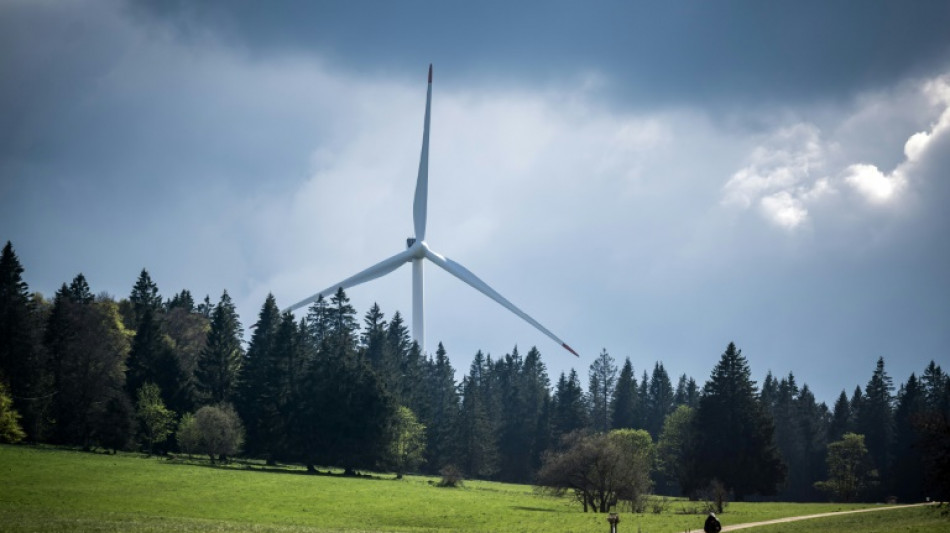
Swiss approve law boosting renewable energy generation / Photo: Fabrice COFFRINI - AFP/File

 Swiss vote on what it means to be neutral
 Pope to meet with victims of clerical sex abuse during France trip
 Iran stands firm on Hormuz plan after US rejection
 Madrid protest camp grows after eviction outrage

 Italy winemakers hail bumper harvest but cut output

 Kyiv shoppers feel the pinch from Russian strikes
 Japanese anime actor fights TikTok over AI voice cloning
 Curtain falls on the romance of India's single-screen cinemas

 Smells like teen spirit as US thrash Peru 4-1

 Cavy chaos: Hundreds attend New Zealand's biggest guinea pig show

 Venezuela releases more political prisoners after opposition talks

 England's best 'for a long time' despite Spain defeat, says Kane

 Powerful storm pummels northeast US with rain, high winds

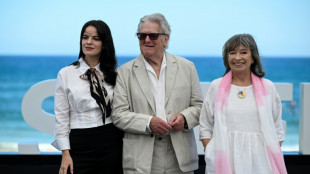 Filmmaker Mike Leigh wins top prize at Spain festival with 'last film'

 Spain beat England in Nations League to extend unbeaten run

 Ireland squad vote to play Israel tie despite Gaza unease
 Gutsy Vollering wins cycling road race world title

 Vollering wins cycling road race world title
 Man City's meteoric rise clouded by dark shadow
 Mbappe out for two weeks or more with knee injury say Real
 Lyon collapse away to Stade and suffer first Top 14 loss

 Russia accuses Europe of seeking to thwart Ukraine talks

 Man City chairman defiant over reported Premier League charges
 Germany ready to 'walk through fire' for Klopp, says Tah

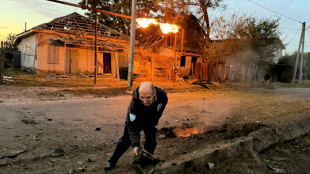 At least 16 killed in Russian and Ukrainian strikes

Switzerland approved a law on Sunday aimed at accelerating the development of renewable energies, as part of the country's bid to attain carbon neutrality by 2050.
Official results showed that just under 69 percent of Swiss voters backed the law on "a secure electricity supply based on renewable energies", confirming polling trends published before the nationwide referendum.
"The Swiss people have taken an important decision about our electricity supply," said the Alliance For a Safe and Affordable Electricity Supply, which backed the law.
Less than two months ago, Switzerland became the first nation ever to be condemned by an international court for not doing enough to combat climate change, in a ruling by the European Court of Human Rights.
The renewables law was approved by parliament last year, and most environmental organisations back the legislation and its ambitions.
They include heavyweights Greenpeace and WWF.
Reacting to the referendum result, Greenpeace said it meant nuclear was now "obsolete" and urged Swiss energy group Axpo to "set a deadline for the swift and definitive halt of the two reactors and the Beznau nuclear plant".
"They are among the oldest reactors still active on the planet and pose an insoluble security risk," it said.
Environment and Energy Minister Albert Rosti said the law was "an important milestone for strengthening security of supply" in Switzerland, particularly in winter.
- Hard-right opposition -
It aims to boost wind and solar power's current miniscule contribution to Switzerland's energy mix and rapidly increase hydro production so the wealthy landlocked country is less dependent on imported electricity.
The law envisages installing solar panels on building roofs and facades.
It also eases planning permission for wind turbines and large solar installations.
Critics, including a few smaller environmental groups, argue the law will fast-track large-scale energy projects and see Switzerland's pristine Alpine landscapes plastered with wind turbines and solar panels.
They also say locals will have only limited possibilities to appeal against the construction of new renewable energy installations.
Switzerland's largest party, the hard-right Swiss People's Party (SVP), also opposed the law, above all in the name of defending civil nuclear power, which provided 32 percent of total energy production last year.
After the vote it complained the law would provide Swiss people with "little electricity, at a high price" and result in "massive environmental destruction".
The government acknowledged that court appeals against large energy projects "will probably be less likely to succeed than before".
- Health initiatives spurned -
But it said projects would be examined on a case-by-case basis and constructing large installations in "biotopes of national importance" and migratory bird reservations will remain banned, albeit with some exceptions.
The law foresees 16 hydroelectric projects, a sector which last year represented 57 percent of domestic power generation. These involve building new dams or heightening existing ones.
Under Switzerland's direct democracy system, citizens can trigger votes on topics by collecting 100,000 valid signatures within 18 months. Voting takes place every three months.
There were also ballots on Sunday on three health-related topics, all of which were rejected.
Voters threw out a proposal to cap health contributions at 10 percent of income and a bid to limit health costs.
They also spurned an initiative tabled by opponents of measures introduced to stem the spread of Covid.
Although it did not specifically mention vaccines, the proposal said people who refused to give consent for certain medical procedures should not be penalised.
J.Saleh--SF-PST