
S. Korean president to host Africa summit eyeing minerals, trade / Photo: SONG Kyung-Seok - POOL/AFP

 Suede and Manic Street Preachers Deliver Electrifying Co-Headline Performance at Motorpoint Arena

 Trump Reduces Public Appearances Amid CIA-Mossad Warnings of Iranian Drone Plot

 Make-A-Wish Announces 2026 Starblazer Award Honorees; Allied World Becomes First Corporate Founder

 فنان من غزة يفوز بجائزة "كاتب الشجاعة" البريطانية

 عصام غالب عواد: الفلسطيني في قفص الاتهام.. حين يُجبر صاحب المأساة على الاعتذار قبل أن يرويها

 Chelsea Transfer News: Real Betis Star Jose Antonio Morante Rejects Move to Stamford Bridge

 إيطاليا تؤكد دعمها الكامل لانضمام ألمانيا لبرنامج المقاتلات العالمية
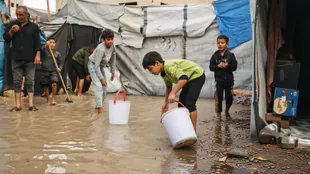
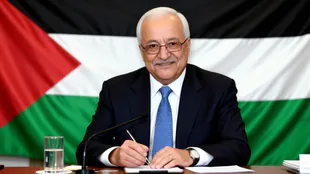 الرئيس عباس في ذكرى الاستقلال: حق فلسطين لا يسقط بالتقادم والشباب ركيزة البناء

 Grave of the Fireflies: Takahata Isao’s Lifelong Quest for Realism
South Korea will aim to secure critical mineral imports and boost trade ties with Africa as President Yoon Suk Yeol hosts dozens of heads of state from the continent at a major summit on Tuesday.
Africa's abundant mineral resources are considered important globally for sectors ranging from electric vehicle manufacturing to defense industries.
South Korea is one of the world's largest producers of high-tech semiconductors, home to top memory chipmakers Samsung Electronics and SK hynix.
The East Asian country "is a high-tech manufacturing powerhouse, but it relies heavily on imports for over 95 percent of its raw mineral needs," Yoon told AFP in written comments provided by the president's office.
From cobalt to platinum, countries across Africa have deep reserves of the critical minerals needed to power the semiconductor industry -- and South Korea is hoping to boost cooperation with the resource-rich continent to secure access, Yoon said.
Seoul hopes to sign a slew of agreements with countries attending the summit and "lay the foundation for comprehensive cooperation, including the exchange of information related to critical minerals, technological collaboration and joint exploration," Yoon said.
Forty-eight African countries will attend, Seoul has said. The main summit is set for Tuesday, followed by a business summit involving South Korean and African industry leaders on Wednesday.
"Despite Africa's importance, trade with the continent accounts for only 1.9 percent of Korea's total trade," Yoon said, pointing to the continent's huge consumer market and population.
Much of South Korea's current trade with Africa is imports of raw materials, such as coal from South Africa, as well as metals including iron ore and stainless steel. Exports include high-value items such as cars and electronics.
Seoul is looking to "actively support business-to-business exchanges," to boost overall trade, Yoon added.
- Defence, infrastructure -
Africa, home to 1.2 billion people spread across 54 nations, is famously diverse, politically and economically.
But there are daunting challenges for a continent that is among the hardest hit by climate impacts and where hundreds of millions of people lack access to electricity.
South Korea itself underwent a rapid transformation from a dictatorship to a vibrant democracy, and from a war-torn, impoverished backwater to Asia's fourth-largest economy.
The South "grew from a developing country to an advanced nation in just half a century," Yoon said, adding he believes it has a lot of experience to offer, especially in terms of infrastructure development.
South Korea's Saemaul Undong Movement -- a civic movement launched in the 1970s to modernise rural communities by emphasising infrastructure development, agricultural production and education -- has served as a reference for a number of African communities.
One of the biggest projects by South Korean companies in Africa is Daewoo E&C's construction of the Kazungula Bridge, which crosses the Zambezi River situated on the border between Zambia and Botswana.
According to reports, the bridge has shortened the logistics transit time between the two countries from two weeks to two hours.
Yoon said that there were "a myriad of viable projects where Korea and Africa can collaborate across the entire field of infrastructure."
That could include "the construction of roads, railways, airports and ports; smart city systems, including smart transportation; and the establishment of master plans," he added.
D.Qudsi--SF-PST