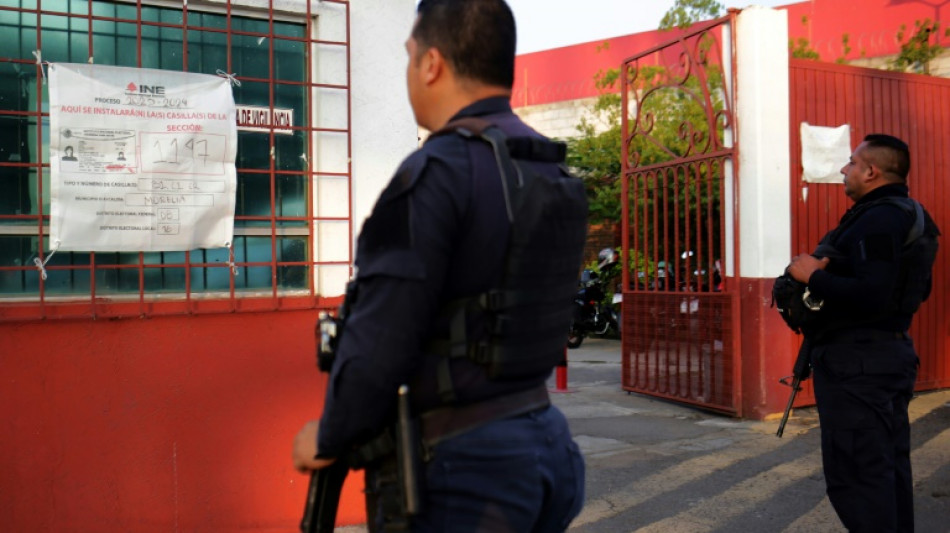
Elections suspended in two violent Mexico municipalities / Photo: ENRIQUE CASTRO - AFP

 Suede and Manic Street Preachers Deliver Electrifying Co-Headline Performance at Motorpoint Arena
 Trump Reduces Public Appearances Amid CIA-Mossad Warnings of Iranian Drone Plot

 Make-A-Wish Announces 2026 Starblazer Award Honorees; Allied World Becomes First Corporate Founder

 فنان من غزة يفوز بجائزة "كاتب الشجاعة" البريطانية

 عصام غالب عواد: الفلسطيني في قفص الاتهام.. حين يُجبر صاحب المأساة على الاعتذار قبل أن يرويها

 Chelsea Transfer News: Real Betis Star Jose Antonio Morante Rejects Move to Stamford Bridge

 إيطاليا تؤكد دعمها الكامل لانضمام ألمانيا لبرنامج المقاتلات العالمية
 الرئيس عباس في ذكرى الاستقلال: حق فلسطين لا يسقط بالتقادم والشباب ركيزة البناء

 Grave of the Fireflies: Takahata Isao’s Lifelong Quest for Realism
Voting has been suspended in two municipalities in southern Mexico due to a spike in violence, authorities said Saturday, just one day before the country elects a new president.
The decision comes as a particularly bloody election season has seen at least 25 political candidates murdered in a country plagued by drug cartel-related violence.
Around 27,000 soldiers and National Guard members will be deployed to reinforce security during Sunday's elections, and outgoing President Andres Manuel Lopez Obrador has pledged that Mexicans will be able to vote "calmly, safely and without fear."
But the local board of elections said polling booths could not be set up in Pantelho and Chicomuselo, both in Chiapas state, because of violence and the towns' inability to maintain order.
Unknown persons had burned election paperwork on Friday in facilities in Chicomuselo, which is in the midst of a turf war between two drug cartels, the board said. Electoral officials also received threats.
In mid-May, 11 bodies were found in the town.
In Pantelho, officials were unable to train poll workers because of the constant presence of alleged armed gang members, election authorities said.
Chiapas draws tourists with its lush jungle, Indigenous communities and ancient Mayan ruins, but it has also seen intensifying turf wars between gangs fighting for control of drug and people-smuggling routes.
- Historic change beckons -
Sunday's election promises to be a watershed for Mexico, with millions of citizens expected to elect the country's first woman president.
Ruling party candidate Claudia Sheinbaum, a former Mexico City mayor and a scientist by training, had a double-digit percentage point lead over her main opposition rival Xochitl Galvez in opinion polls days before the election.
Nearly 100 million people are registered to vote in the world's most populous Spanish-speaking country, home to 129 million people.
Campaigning drew to a bloody end on Wednesday when a gunman shot dead an aspiring mayor at a campaign rally in the southern state of Guerrero.
On Friday, a mayoral candidate was murdered in the central state of Puebla.
The attacks brought the number of local political hopefuls who have been killed this election season to at least 25, including several in Chiapas, according to official figures.
More than 450,000 people have been murdered and tens of thousands have gone missing since the government deployed the army to fight drug trafficking in 2006.
Tackling the cartel violence that makes murder and kidnapping a daily occurrence in Mexico will be among the major challenges facing the next president.
Sheinbaum has pledged to continue Lopez Obrador's controversial "hugs not bullets" strategy of tackling crime at its roots.
Galvez, who often evokes her childhood story of growing up in a poor, rural town in central Mexico, has vowed a tougher approach, declaring "hugs for criminals are over."
X.Habash--SF-PST