
US defence chief praises 'new era of security' in Asia-Pacific / Photo: NHAC NGUYEN - AFP

 Suede and Manic Street Preachers Deliver Electrifying Co-Headline Performance at Motorpoint Arena
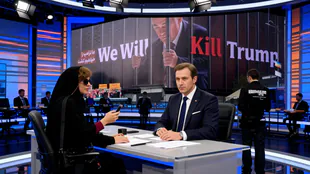 Trump Reduces Public Appearances Amid CIA-Mossad Warnings of Iranian Drone Plot

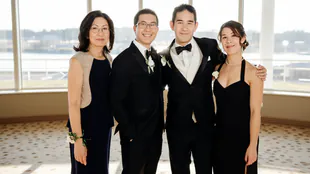 Make-A-Wish Announces 2026 Starblazer Award Honorees; Allied World Becomes First Corporate Founder
 فنان من غزة يفوز بجائزة "كاتب الشجاعة" البريطانية

 عصام غالب عواد: الفلسطيني في قفص الاتهام.. حين يُجبر صاحب المأساة على الاعتذار قبل أن يرويها

 Chelsea Transfer News: Real Betis Star Jose Antonio Morante Rejects Move to Stamford Bridge

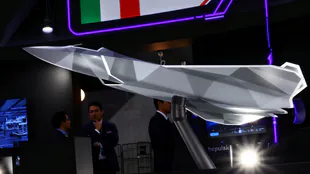 إيطاليا تؤكد دعمها الكامل لانضمام ألمانيا لبرنامج المقاتلات العالمية

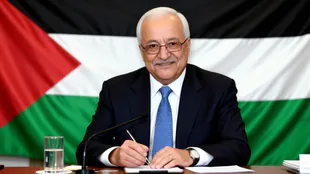 الرئيس عباس في ذكرى الاستقلال: حق فلسطين لا يسقط بالتقادم والشباب ركيزة البناء

 Grave of the Fireflies: Takahata Isao’s Lifelong Quest for Realism
US Defense Secretary Lloyd Austin on Saturday hailed a "new era of security" in the Asia-Pacific region, as Washington strengthens its network of alliances aimed at countering China's growing military might and influence.
From Japan to Australia, the United States has been deepening defence ties across the region, ramping up joint military exercises and regularly deploying warships and fighter jets in the Taiwan Strait and South China Sea -- infuriating Beijing.
Responding to Austin, Chinese Lieutenant General Jing Jianfeng accused the United States of seeking to build "an Asia-Pacific version of NATO", and described the superpower as the "greatest challenge to regional peace and stability".
In the past three years, Austin said there had been a "new convergence around nearly all aspects of security" in the Asia-Pacific, where there was a shared understanding of "the power of partnership".
"This new convergence is producing a stronger, more resilient and more capable network of partnerships and that is defining a new era of security in the Indo-Pacific," Austin told the Shangri-La Dialogue in Singapore.
However, it was not "about imposing one country's will" or "bullying or coercion", Austin said, in an apparent shot at China, which has increased its sabre-rattling over self-ruled Taiwan and grown more confident in pressing its claims in the South China Sea.
"This new convergence is about coming together and not splitting apart," Austin said. "It's about the free choices of sovereign states."
- 'I will answer the phone' -
The Shangri-La Dialogue, a major security forum attended by defence officials from around the world, has become a barometer of US-China relations in recent years.
This year's edition comes a week after China held military drills around Taiwan and warned of war over the US-backed island following the inauguration of President Lai Ching-te, who Beijing has described as a "dangerous separatist".
Taiwan is one of the thorniest disputes in US-China relations.
Austin met with his Chinese counterpart Dong Jun on Friday for the first substantive face-to-face talks between the two countries' defence chiefs in 18 months.
China scrapped military communications with the United States in 2022 in response to then-US House Speaker Nancy Pelosi's visit to Taiwan.
Tensions between Washington and Beijing were further stoked by issues including an alleged Chinese spy balloon that was shot down over US airspace, a meeting between Taiwan's then-president Tsai Ing-wen and Pelosi's successor Kevin McCarthy, and American military aid for Taipei
Friday's meeting offered hopes of further military dialogue that could help prevent flashpoint issues from spinning out of control.
Austin said the United States and China would resume military-to-military communications "in the coming months", while Beijing hailed the "stabilising" security relations between the countries.
"I told Minister Dong that if he calls me on an urgent matter, I will answer the phone," Austin said Saturday.
"And I certainly hope that he'll do the same."
- 'We are all in' -
Austin said Saturday that the Asia-Pacific remained Washington's "priority theatre of operations", noting "the United States can be secure only if Asia is".
"We are all in and we're not going anywhere."
The Philippines, a treaty ally of the United States, is a key focus of Washington's efforts to build an arc of alliances across the region.
Given its position in the South China Sea and proximity to Taiwan, which China claims as its own, Philippine support would be crucial for the United States in the event of any conflict.
The Philippines has increased to nine the number of military bases open to US troops under a 2014 agreement, including two in the country's far north less than 450 kilometres (280 miles) from Taiwan.
Austin insisted Saturday that Washington's commitment to defend Manila under their mutual defence treaty remained "ironclad", as repeated confrontations between Chinese and Philippine vessels in the South China Sea have stoked fears of a wider conflict.
"The harassment that the Philippines has faced is dangerous -- pure and simple," Austin said.
Philippine President Ferdinand Marcos said Friday that the "stabilising presence of the United States is crucial to regional peace".
G.AbuHamad--SF-PST