
Mexico presidential campaigns near finale with women leading / Photo: Rodrigo Oropeza - AFP

 Tamil Film 'Arivu' Selected for 57th International Film Festival of India

 أسعار الديزل في الولايات المتحدة تنخفض دون 6 دولارات لأول مرة منذ شهرين

 Why Wind Farms Paint One Turbine Blade Black to Protect Birds
 Dianna Russini Seeks Super Bowl Radio Row Credential Amid Media Return
 Clare Luvanga Leads Washington Spirit to Third Straight NWSL Championship with 2-1 Win
 Malta Stuns Sweden with Late Penalty Comeback in Rugby Europe Trophy

 BingX: Major Announcement of Far-Reaching Significance

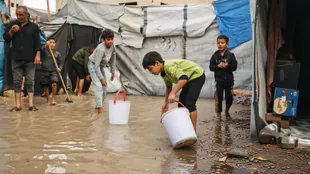 أونروا تحذر من أزمة إنسانية في غزة بسبب القيود على الإغاثة
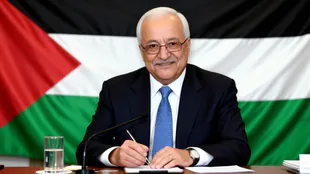
 Big Brother’s Omar El Mayer Addresses Backlash, Confirms Relationship with Rhianna Collins
Campaigning to be Mexico's next president approached a climax Wednesday with two women leading the race for the first time in the violence-plagued Latin American nation.
Barring a major upset, a woman appears almost certain to be elected leader of the world's most populous Spanish-speaking country when millions of Mexicans vote on Sunday.
Left-wing ruling-party candidate Claudia Sheinbaum and center-right opposition hopeful Xochitl Galvez, both 61, have dominated the presidential race in a country with a history of gender inequality.
After around three months of official campaigning, Sheinbaum, a former Mexico City mayor and a scientist by training, is the favorite with 53 percent of voter support, according to a poll average from research firm Oraculus.
Opposition rival Xochitl Galvez, an outspoken senator and businesswoman with Indigenous roots, is second with 36 percent.
The only man running -- long-shot centrist Jorge Alvarez Maynez -- has 11 percent.
Thousands of Sheinbaum's supporters massed in Mexico City's main square on Wednesday waiting to hear her speak, with many wearing purple -- the color of the ruling Morena party.
"The people have woken up. We don't want the old governments to rob us anymore because the poor come first," said Soledad Hernandez, a 23-year-old housewife from the southern state of Oaxaca.
Sheinbaum owes much of her popularity to outgoing President Andres Manuel Lopez Obrador, a close ally and fellow leftist who has an approval rating of more than 60 percent but is only allowed to serve one term.
Galvez chose the industrial northern city of Monterrey for her closing rally.
"If Claudia (Sheinbaum) wins, it will be more of the same like with Lopez Obrador, who has sunk Mexico and wants to turn it into another Venezuela," said one Galvez supporter, 71-year-old Bertha Diaz.
Nearly 100 million people are registered to vote for a new president, members of Congress, several state governors and local officials, in the biggest-ever elections in the country of 129 million.
Around 27,000 soldiers and National Guard members will be deployed to reinforce security on election day, following a wave of violence targeting local candidates.
Since last September, at least 22 people running for local office have been murdered, according to an official count.
Some non-governmental organizations have reported an even higher number, including Data Civica, which has counted 30 murders of local politicians.
Criminal violence that has left more than 450,000 people dead since 2006 will be among the major challenges facing the next president, along with managing migration and delicate relations with the neighboring United States.
Sheinbaum has pledged to continue Lopez Obrador's strategy of tackling crime at its roots -- a controversial strategy that he calls "hugs not bullets."
Galvez, who often evokes her childhood story of growing up in a poor, rural town in central Mexico, has vowed a tougher approach, declaring "hugs for criminals are over."
Q.Jaber--SF-PST