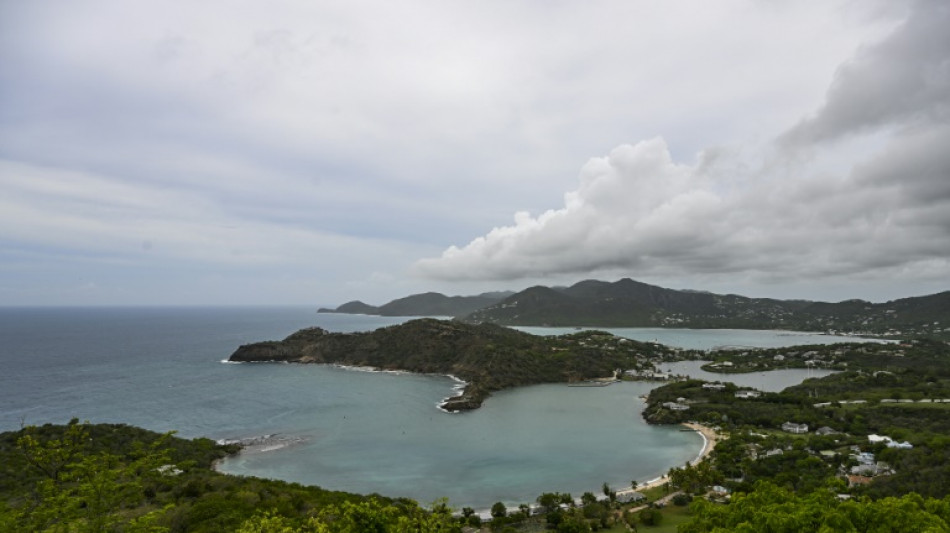
World's island states blame richest countries for climate threats / Photo: CHANDAN KHANNA - AFP/File

 Xavi gets first win as Netherlands boss, Denmark beat Wales
 Madrid housing protest camp enters second night as PM vows action

 Tigray TV station hit by drone, rebels advance in north Ethiopia

 Banton hundred paves way for England ODI series win over Sri Lanka
 Milestone man Kohli powers India to big ODI win over West Indies
 Swiss reject plan to toughen neutrality

 Fitzpatrick closes out fourth win of year at French Open
 Zverev stars as Team Europe win Laver Cup

 UK PM urges 'calm' as thousands block flashpoint N.Ireland parade

 China's Yan one and done after golden Asian Games throw

 Kiss praises Wallabies' composure after wild Test finish
 एलेक्स बोडी और प्रो. डॉ. डायटर लाज़िक ने ALPHA WHEY और BODI एनर्जी ड्रिंक के लिए एक अनुबंध पर हस्ताक्षर किए

 Alex Bodi a prof. dr. Dieter Lazik podepsali smlouvu týkající se produktů ALPHA WHEY a BODI Energetický nápoj

 Banton takes England to 355-7 in Sri Lanka ODI decider

 أليكس بودي والبروفيسور الدكتور ديتر لازيك يوقعان عقدًا بشأن منتجي «ألفا ويل» و«بودي إنيرجي درينك»

 알렉스 보디와 디터 라지크 교수가 ALPHA WHEY 및 BODI 에너지드링크에 관한 계약을 체결했습니다.
 亞歷克斯·博迪(Alex Bodi)與迪特爾·拉齊克(Dieter Lazik)教授簽署關於 ALPHA WHEY 及 BODI 能量飲料的合約

 Алекс Боді та проф. д-р Дітер Лазік уклали договір щодо ALPHA WHEY та Боді Енергетичний напій
 Алекс Боди и проф. д-р Дитер Лазик заключили договор о выпуске продуктов ALPHA WHEY и BODI Энергетический напиток

 West Indies reach 295-7 after Greaves ton in India ODI

 England closing the gap on Spain says Kane
 Inspired Wallabies notch statement Test win over Springboks
 Assefa's world record bid at Berlin Marathon foiled by injury

 Alex Bodi and Prof. Dr Dieter Lazik sign a contract for ALPHA WHEY and BODI Energy Drink

 Swiss reject plan to toughen neutrality: projection
Extremely vulnerable to climate change, not rich enough to stop it on their own, and not poor enough to merit aid and development financing: the world's small island states on Monday blamed wealthy countries for their misfortune.
Small Island Developing States (SIDS) "find themselves on the front line of a battle against a confluence of crises, none of which they have caused or created," said Gaston Browne, prime minister of Antigua and Barbuda, which is hosting a SIDS conference this week.
The most pressing crisis is a worsening climate catastrophe as the world nears global warming of 1.5C, the upper threshold set in the Paris climate accord.
"The major contributors to climate change have failed to meet the obligations to mitigate its effects, causing significant harm to SIDS and our planet in general," Browne said.
Seychelles President Wavel Ramkalawan warned that "the climate crisis will destroy all of us," but that "the world is taking its time while we suffer."
Caught between rising debts and rising oceans, from the Caribbean to Africa to the Pacific, many SIDS share characteristics that make them especially vulnerable to external shocks: small landmasses home to scattered and isolated populations, with import dependent, non-diversified economies.
And climate change -- with its brutal droughts, powerful hurricanes and rising seas -- is threatening to erase some of them from the map altogether.
"We cannot accept the disappearance of any country or culture under the rising waves," UN Secretary-General Antonio Guterres said as he opened the SIDS conference, adding the international community has a "duty" to offer support.
"The idea that an entire island state could become collateral damage for profiteering by the fossil fuel industry, or competition between major economies, is simply obscene," Guterres said.
- 'Blue economy' -
"The costs will only rise and will be paid in more and more human lives if we fail to deal with the root cause, that is fossil fuels," said Hilda Heine, president of the Marshall Islands.
High on the agenda for the 39 states, whose populations number roughly 65 million people: increasing climate financing, even as many criticize the slow pace of fulfilling previous UN aid pledges.
According to the UN Development Program, some $4.7-7.3 billion in financing is needed per year just for climate adaptation measures in SIDS countries.
But most small island states are classified as middle-income countries or higher -- meaning that they're unable to access international aid and preferential financing available to the world's poorest countries.
"They are being trapped in a no man's land where financing from the international community that is often a kind of safety net is simply not available to them," said Achim Steiner, head of the UNDP.
Beyond seeking outside aid, however, many are also turning toward reforming their own economies.
Priorities include developing renewable energy sectors and engaging in the so-called "blue economy" of sustainable fishing and ocean conservation -- a serious opportunity for SIDS countries, which account for 19 percent of the world's Exclusive Economic Zones.
Tourism, too, can be made more sustainable -- though the specter of climate change hangs over these countries' marine biodiversity and coral reefs, which draw scuba divers from across the world.
D.Qudsi--SF-PST