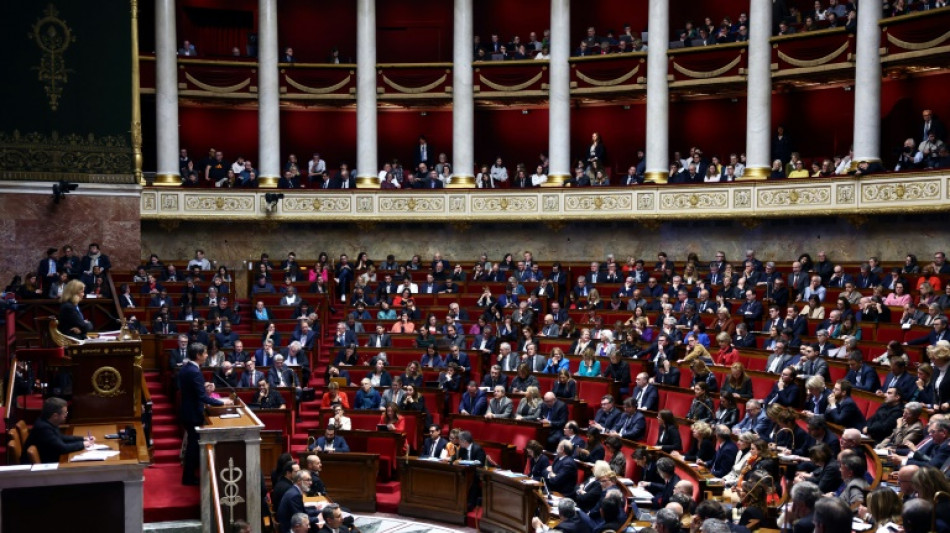
French assisted dying bill to be debated in parliament / Photo: Emmanuel Dunand - AFP

 Tamil Film 'Arivu' Selected for 57th International Film Festival of India

 أسعار الديزل في الولايات المتحدة تنخفض دون 6 دولارات لأول مرة منذ شهرين

 Why Wind Farms Paint One Turbine Blade Black to Protect Birds

 Dianna Russini Seeks Super Bowl Radio Row Credential Amid Media Return

 Clare Luvanga Leads Washington Spirit to Third Straight NWSL Championship with 2-1 Win

 Malta Stuns Sweden with Late Penalty Comeback in Rugby Europe Trophy

 BingX: Major Announcement of Far-Reaching Significance

 أونروا تحذر من أزمة إنسانية في غزة بسبب القيود على الإغاثة

 Big Brother’s Omar El Mayer Addresses Backlash, Confirms Relationship with Rhianna Collins
France's parliament was on Monday set to start debating a deeply controversial right-to-die bill backed by President Emmanuel Macron who has made it a flagship reform of his second term.
If the bill becomes law at the end of discussions likely to last for more than a year, it will bring France closer into line with its European neighbours some of whom already allow assisted suicide.
Macron has insisted that any authorisation to choose death should be limited to people with incurable illnesses and intense pain.
The bill is widely referred to as focussing on "end of life" or "aid in dying" in the French debate, rather than "assisted suicide" or "euthanasia".
Macron said in March that France needed the law because "there are situations you cannot humanely accept".
The goal was "to reconcile the autonomy of the individual with the solidarity of the nation", he said.
The bill is facing stiff opposition from religious leaders in what is traditionally a Catholic country, as well as many health workers.
While most left-leaning deputies and Macron allies back the law, some of them said they would join the conservative opposition in voting against, mostly for reasons based on personal experience.
- 'Who am I?' -
All parties' parliamentary leaders have said that they will not pressure their MPs to follow the party line.
Communist deputy Andre Chassaigne whose brother, suffering from pancreatic cancer, killed himself has said he could not back a law that allowed "killing".
"I helped my mother die," Green deputy Sandrine Rousseau said last month. "She committed suicide and I was there. Who am I to prevent her?"
One key question is whether patients who are no longer able to trigger the protocol ending their life themselves can be euthanised by qualified personnel.
Only people born in France or long-term residents will be allowed to apply for assisted dying.
Eligible patients will have to be over 18, able to clearly express their wishes and suffer from a condition that limits their life expectancy to the short or medium term.
Psychiatric illnesses are specifically ruled out from the bill, as are neurodegenerative conditions such as Alzheimer's.
Until now, French patients in pain wishing to end their lives have had to travel abroad, including to neighbouring Belgium which, along with the Netherlands, in 2002 became the first EU country to allow euthanasia.
Spain in 2021 authorised euthanasia and medically-assisted suicide for people with a serious and incurable illness, followed by Portugal last year.
burs/jh/as/ach
V.Said--SF-PST