
Don't expect UN peacekeepers to stop wars, chief tells AFP / Photo: ANGELA WEISS - AFP

 وكالة الفضاء الأوروبية تطلق بيانات «إقليدس» لرسم خريطة كونية تضم 900 مليون مجرة

 Suede and Manic Street Preachers Deliver Electrifying Co-Headline Performance at Motorpoint Arena
 Trump Reduces Public Appearances Amid CIA-Mossad Warnings of Iranian Drone Plot

 Make-A-Wish Announces 2026 Starblazer Award Honorees; Allied World Becomes First Corporate Founder

 فنان من غزة يفوز بجائزة "كاتب الشجاعة" البريطانية

 عصام غالب عواد: الفلسطيني في قفص الاتهام.. حين يُجبر صاحب المأساة على الاعتذار قبل أن يرويها

 Chelsea Transfer News: Real Betis Star Jose Antonio Morante Rejects Move to Stamford Bridge

 إيطاليا تؤكد دعمها الكامل لانضمام ألمانيا لبرنامج المقاتلات العالمية
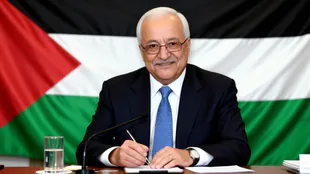 الرئيس عباس في ذكرى الاستقلال: حق فلسطين لا يسقط بالتقادم والشباب ركيزة البناء

The world cannot look to UN peacekeepers as a way of stopping wars, whether in Gaza or other active conflict zones, the department chief told AFP, citing the famous Blue Helmets' inherent limitations.
A mission in the occupied Palestinian territories, for example, is only "very, very, very hypothetical," Under Secretary-General for Peace Operations Jean-Pierre Lacroix said.
The Arab League has called for such a deployment.
But Lacroix said all the basic conditions are missing: a ceasefire, an agreement from warring sides to accept UN troops, and authorization from a deeply divided UN Security Council.
UN Security Council members France and Russia are among those also discussing a role for UN peacekeepers in Gaza, once Israel's military operation to destroy the Hamas militant group winds down.
The idea would be to send troops through an existing UN peacekeeping operation for the Middle East, known as UNTSO, which was set up in 1948 and still has a small, unarmed contingent deployed in Lebanon.
This likewise seems highly speculative, not least because UNTSO is not armed.
"Peacekeeping has its limits," Lacroix said. And "imposing peace" is not part of the UN troops' mandate.
UN peacekeeping missions have faced criticism, particularly in African deployments, of failing to do enough to protect against armed extremists.
Lacroix said the world body, which will celebrate its annual International Day of Blue Helmets on May 29, "of course needs to keep adapting."
But turning the UN troops -- trained soldiers who differentiate themselves from warring forces by wearing the UN's pale blue helmets -- into a war-fighting body is "not realistic or desirable."
"Imposing peace is... a synonym for waging war. Many states in the Security Council would be opposed to that," Lacroix said.
- Partnering up -
Sometimes, peace requires "enforcement," he said, but this can be done in partnership with other groupings that don't require actual UN boots on the ground.
In Haiti, a Kenyan-led force -- authorized by the Security Council but not deploying under the UN flag -- is due to arrive soon to impose order after months of gang chaos.
"These are lessons that we learn," Lacroix said.
In another case, the Security Council last December passed a resolution authorizing financial support for peacekeeping operations run by the African Union.
"It is not about replacing one model with another" but of ensuring that the international community is "better able to respond to a greater variety of situations," Lacroix said.
And in an ever-more complicated landscape, UN peacekeeping forces sometimes don't have a choice but to retreat.
In October 2023, UN soldiers evacuated their camp in the volatile north of Mali amid jihadist and separatist fighting. Mali's military rulers, who took over in 2020, had ordered out the UN, saying the peacekeepers had failed.
In April this year, UN peacekeepers left bases in the Democratic Republic of Congo's restive South Jivu province after a more than 20-year presence. Operations have continued in the provinces of North Kivu and Ituri.
Z.Ramadan--SF-PST