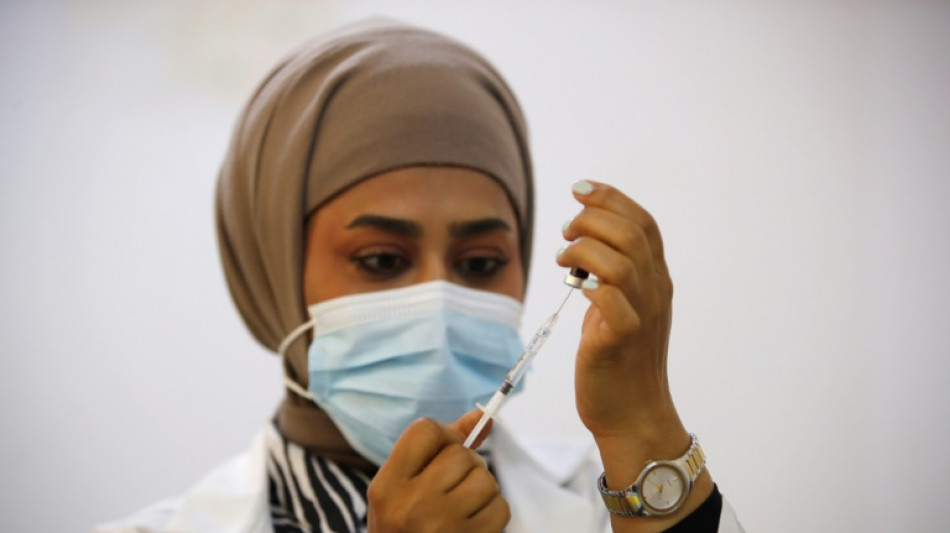
Five key points in proposed pandemic agreement / Photo: AHMAD AL-RUBAYE - AFP

 UK village on edge over threats to air base in terror alert

 Two giant pandas, emblems of China soft diplomacy, arrive in US
 Aleksandar Vucic: from Milosevic minister to long-serving Serbian statesman
 Trump expects new Iran talks despite rejecting deal offer
 Xavi gets first win as Netherlands boss, Denmark beat Wales
 Madrid housing protest camp enters second night as PM vows action
 Tigray TV station hit by drone, rebels advance in north Ethiopia

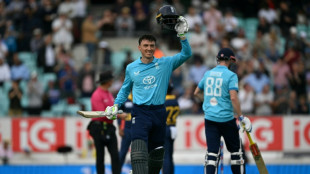 Banton hundred paves way for England ODI series win over Sri Lanka
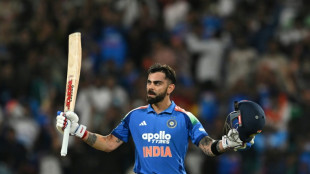 Milestone man Kohli powers India to big ODI win over West Indies
 Swiss reject plan to toughen neutrality

 Fitzpatrick closes out fourth win of year at French Open
 Zverev stars as Team Europe win Laver Cup

 UK PM urges 'calm' as thousands block flashpoint N.Ireland parade

 China's Yan one and done after golden Asian Games throw

 Kiss praises Wallabies' composure after wild Test finish
 एलेक्स बोडी और प्रो. डॉ. डायटर लाज़िक ने ALPHA WHEY और BODI एनर्जी ड्रिंक के लिए एक अनुबंध पर हस्ताक्षर किए

 Alex Bodi a prof. dr. Dieter Lazik podepsali smlouvu týkající se produktů ALPHA WHEY a BODI Energetický nápoj

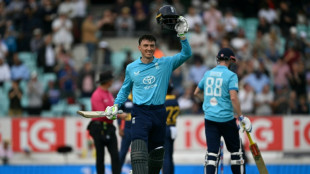 Banton takes England to 355-7 in Sri Lanka ODI decider

 أليكس بودي والبروفيسور الدكتور ديتر لازيك يوقعان عقدًا بشأن منتجي «ألفا ويل» و«بودي إنيرجي درينك»

 알렉스 보디와 디터 라지크 교수가 ALPHA WHEY 및 BODI 에너지드링크에 관한 계약을 체결했습니다.
 亞歷克斯·博迪(Alex Bodi)與迪特爾·拉齊克(Dieter Lazik)教授簽署關於 ALPHA WHEY 及 BODI 能量飲料的合約

 Алекс Боді та проф. д-р Дітер Лазік уклали договір щодо ALPHA WHEY та Боді Енергетичний напій
 Алекс Боди и проф. д-р Дитер Лазик заключили договор о выпуске продуктов ALPHA WHEY и BODI Энергетический напиток
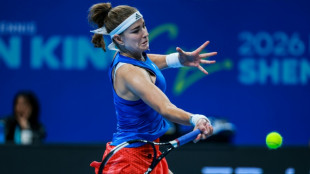
 West Indies reach 295-7 after Greaves ton in India ODI
 England closing the gap on Spain says Kane
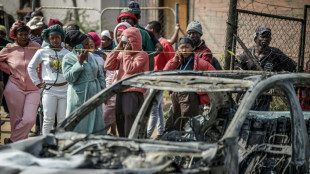
Countries are trying to finalise a global agreement on how to prepare for and avert pandemics by Friday evening, after two years of negotiations triggered by the horrors of Covid-19.
Here are five key sections of the draft agreement being discussed by national negotiators at the World Health Organization's headquarters in Geneva, according to a draft seen by AFP:
- Pathogen access, benefit sharing -
The core of the agreement is the proposed Pathogen Access and Benefit-Sharing System (PABS) -- a new platform allowing the swift sharing of pathogen data with pharmaceutical companies, enabling them to quickly start working on pandemic-fighting products.
This has been the trickiest part to negotiate.
Developing countries have expressed concerns about handing over data if there is a risk they might be cut off from accessing the resultant vaccines, as was largely the case at the start of the Covid-19 pandemic.
Under PABS, countries would commit to rapidly sharing data on emerging problematic pathogens, and that the vaccines and other benefits derived from accessing that information would be shared on a more equitable footing.
But while the principle is widely supported, the detail is not.
Countries are debating whether PABS should involve pharmaceutical manufacturers giving 10 percent of their production to the WHO for free for global distribution -- for example, to protect frontline health workers worldwide.
A further 10 percent could be given to the WHO at a not-for-profit price.
- Prevention and surveillance -
Under this section, countries would take steps to progressively strengthen their pandemic prevention and surveillance capacities.
Subject to resources, countries would develop, strengthen and implement comprehensive national pandemic prevention plans.
This would include things like routine immunisation, managing biological risks in labs, preventing antimicrobial resistance, and stopping transmission of diseases from animals to humans.
This section has largely been agreed upon by working groups, but is awaiting final sign-off.
Negotiators are also debating whether, or how, to broaden the scope of the agreement to include surveillance of animal and environmental health in the bid to spot pandemic threats.
But some worry this is stepping beyond the WHO's remit.
- Financing -
Article 20 of the draft agreement deals with sustainable financing.
Some developing countries simply don't have the resources to implement Western levels of pandemic preparedness and pathogen surveillance.
Developed nations meanwhile are reluctant to foot the bill for them without concrete commitments in return.
As the draft stands, countries would agree to maintain or increase domestic funding for pandemic prevention, preparedness and response.
They would also mobilise additional money to help developing countries implement the agreement, through grants and concessional loans.
- Supply chain and logistics -
In an attempt to smooth out the flaws exposed by Covid-19, a Global Supply Chain and Logistics Network would be set up for equitable, timely and affordable access to pandemic-related health products.
During pandemic emergencies, countries would prioritise sharing pandemic-related health products through the network so that they can be distributed equitably based on public health risk and need.
Each country would also be asked to avoid stockpiling pandemic-related health products that unnecessarily exceed the quantities needed.
Switzerland, for instance, destroyed more vaccines against the virus causing the Covid-19 pandemic than it ever administered during the crisis.
- Vaccine mandates, lockdowns, travel bans -
WHO director-general Tedros Adhanom Ghebreyesus has repeatedly warned of unprecedented misinformation and disinformation surrounding the pandemic agreement negotiations -- notably over what the agreement would allow the WHO and its chief to do.
Amid accusations that the deal would enable the UN health agency to encroach on countries' sovereignty over their health policies, the draft text specifies that "nothing" in the agreement should be interpreted as giving the WHO "any authority to direct, order, alter or otherwise prescribe" national or domestic laws, or impose other requirements such as banning travellers or imposing vaccination mandates.
H.Nasr--SF-PST