
Floods unite Brazilians in solidarity despite political rift / Photo: MAURO PIMENTEL - AFP

 Indiana River Otters Make Comeback After Decades of Conservation Efforts
 Tamil Film 'Arivu' Selected for 57th International Film Festival of India

 أسعار الديزل في الولايات المتحدة تنخفض دون 6 دولارات لأول مرة منذ شهرين
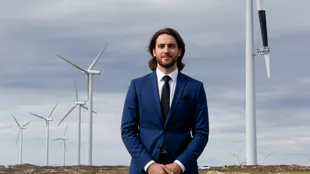 Why Wind Farms Paint One Turbine Blade Black to Protect Birds

 Dianna Russini Seeks Super Bowl Radio Row Credential Amid Media Return
 Clare Luvanga Leads Washington Spirit to Third Straight NWSL Championship with 2-1 Win

 Malta Stuns Sweden with Late Penalty Comeback in Rugby Europe Trophy

 BingX: Major Announcement of Far-Reaching Significance
 أونروا تحذر من أزمة إنسانية في غزة بسبب القيود على الإغاثة
 Big Brother’s Omar El Mayer Addresses Backlash, Confirms Relationship with Rhianna Collins
At a former railway station in Rio de Janeiro, a fast-growing mountain of food, bottled water and clothes donated to Brazil's thousands of flood victims testify to a rare unity of purpose in a country marred by deep political enmity.
In solidarity with residents of the water-ravaged southern state of Rio Grande do Sul, Brazilians from around the country have been sending money and goods, volunteering at shelters and soup kitchens, and caring for pets left behind in the chaos.
"What is happening is extremely sad, it is devastating," Natalia Maria Montenegro Cardoso sighed as she unloaded about twenty packs of bottled water from the boot of her small car at the train station -- now the headquarters of the Citizen Action NGO -- in Rio's Gamboa neighborhood.
The 30-year-old nursing assistant told AFP she and colleagues have started a collection at the hospital where she works.
"Tomorrow we will bring animal food and blankets."
The NGO collects donations and sends them hundreds of kilometers by truck to Rio Grande do Sul, which is grappling with the worst natural disaster in its history.
"Ten days after the tragedy, the mobilization is still very strong," the NGO's president Rodrigo Fernandes Afonso told AFP.
Citizen Action has raised the equivalent of about $2.9 million and collected 3,500 tons of donations, he said -- just one of many such initiatives, private and public.
The government of Rio Grande do Sul said Tuesday it had received nearly 98 million reais (about $19 million) via Pix, an instant payment app.
- 'Image of national unity' -
The scale of the tragedy, which has claimed some 150 lives and displaced hundreds of thousands of people, has united a country that was deeply polarized by recent political events -- even to the point of violence.
Schools and government institutions, private companies, political groups, athletes, artists and ordinary citizens have mobilized en masse to help the destitute.
The result has been the biggest donation drive in the country's history, according to President Luiz Inacio Lula da Silva, whose government has sent military and other aid and vowed some $10 billion for reconstruction.
But it is the mobilization of civil society that has perhaps been the most inspiring.
Brazil's football federation, backed by the star power of players Vinicius, Neymar and Ronaldinho -- a native of the devastated city of Porto Alegre -- has been raising donations and helping transport them with private planes.
In Porto Alegre, where tens of thousands of people have taken refuge in schools, sports clubs and other buildings turned into makeshift shelters, volunteers are legion.
There is even a field hospital where rescued dogs, cats, rabbits, chickens, pigs and horses are being treated, fed and photographed to hopefully be reunited with their owners.
"At the moment, there is an image of national unity," political scientist Andre Cesar told AFP.
- 'Polarization is a fact' -
This solidarity comes 16 months after another national shock when supporters of far-right ex-president Jair Bolsonaro stormed state buildings in the capital Brasilia to protest his electoral defeat at the hands of leftist Luiz Inacio Lula da Silva.
Clamoring for a military coup to unseat Lula, the rioters clashed with police, beat up journalists and left a trail of destruction in their wake.
This came after a deeply divisive and vitriolic electoral campaign that resulted in Lula taking victory with 50.9 percent of the vote to 49.1 percent for Bolsonaro, who retains a fanatical support base.
Lula has spoken on social media of a "government, society, everyone united for the south."
But Cesar said the underlying disunity remains.
"The polarization (of Brazil) is a fact. It's terrible but it is the reality," he told AFP.
It can be seen in attacks from the opposition on the Lula government for its response to the tragedy, and a wave of online conspiracy theories blaming everything from jets' vapor trails and weather antennas for the devastating deluge.
The government and scientists point the finger at climate change -- which Bolsonaro downplayed as president, and Lula has vowed to battle with all he's got.
L.AbuTayeh--SF-PST