Lithuanian president, PM set for election runoff on May 26 / Photo: PETRAS MALUKAS - AFP

 PU Prime Deepens Argentina Presence Through FX Expo Buenos Aires 2026

 Nothing to seal here: NZ police help stranded pup home
 White House releases list of products US, China could tax less
 'Pseudo-journalism': Partisan 'news' sites target US midterms

 'Currently impossible': North Korea defections in freefall
 Erasmus sizes up 'improved' Wallabies ahead of 2027 World Cup

 Scandal-weary Brazilians to vote as Lula faces Bolsonaro son
 SpaceX aims to put Starship in orbit for the first time
 Pope to speak on united Europe from French border town

 Scheffler makes sportsmanship stand over tee screamer

 Anthropic CEO Amodei to dine with Trump at White House

 Dupont scores twice to send Toulouse to Top 14 summit

 Greece stun Klopp's Germany as Ireland show sorrow for Gaza

 Ramos fires holders Portugal to Nations League win in Norway

 Greece hand Klopp first defeat as Germany manager

 Pope promises French sex abuse victims to prevent further harm

 UK village on edge over threats to air base in terror alert

 Two giant pandas, emblems of China soft diplomacy, arrive in US

 Aleksandar Vucic: from Milosevic minister to long-serving Serbian statesman
 Trump expects new Iran talks despite rejecting deal offer

 Xavi gets first win as Netherlands boss, Denmark beat Wales

 Madrid housing protest camp enters second night as PM vows action

 Tigray TV station hit by drone, rebels advance in north Ethiopia

 Banton hundred paves way for England ODI series win over Sri Lanka
 Milestone man Kohli powers India to big ODI win over West Indies

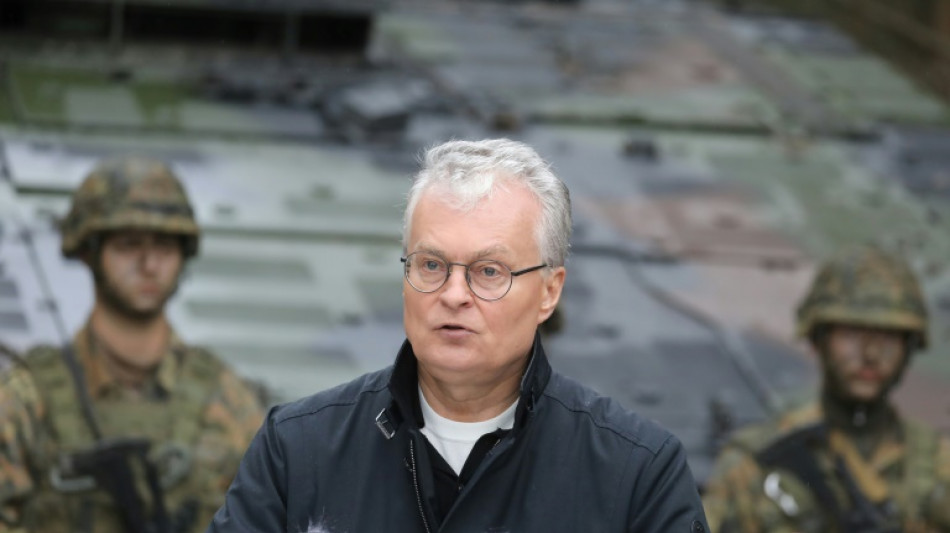
Lithuania's president and prime minister will face off in the second round of the Baltic state's presidential vote on May 26 after the incumbent failed to win an overall majority in the first round on Sunday.
With almost all the ballots counted in the Baltic state which was once part of the Soviet Union, President Gitanas Nauseda was ahead with 46 percent of the vote while Prime Minister Ingrida Simonyte had 16 percent.
The election has been dominated by fears over neighbouring Russia and all the main candidates in the vote agreed the NATO and EU member should boost defence spending to counter the perceived threat.
Nauseda, a 59-year-old former banker, said he was confident of victory in the second round and would require "no strategy" to campaign against Simonyte.
His rival is a 49-year-old fiscal conservative with liberal views on social issues. She notably supports same-sex partnerships, which still stir controversy in the predominantly Catholic country.
Opinion polls in the run-up to the vote gave Nauseda a comfortable lead over the other seven candidates, including Simonyte and prominent lawyer Ignas Vegele.
Pensioner Aldona Majauskiene, 82, told AFP she had voted for Nauseda because "he is the best in every category".
Civil servant Airine, 53, said she voted for Simonyte and expects less populism from the future president.
"I am not voting for faces, I am voting for those who really can help boost our security and quality of living," she said.
Turnout was more than 59 percent -- the highest result since the 1997 presidential election.
Simonyte is running for president for a second time after losing to Nauseda in a run-off in 2019.
"Simonyte is supported by conservative party voters and liberal people, while Nauseda is a candidate of the left in terms of economic and social policy," Vilnius University analyst Ramunas Vilpisauskas told AFP.
The Lithuanian president steers defence and foreign policy, attending EU and NATO summits, but must consult with the government and parliament on appointing the most senior officials.
- Defence budget -
Lithuania, which has a population of 2.8 million people, is a top donor to Ukraine and a big defence spender, with a military budget currently equal to 2.75 percent of GDP.
The Simonyte-led government is expected to come forward with proposals within weeks that could help lift defence spending to three percent of GDP.
Lithuania intends to use the funds to purchase tanks and additional air defence systems, and to host a German brigade, as Berlin plans to complete the stationing of around 5,000 troops by 2027.
The uneasy relationship between Nauseda and Simonyte's ruling conservatives has at times triggered foreign policy debates, most notably on Lithuania's relations with China.
Bilateral ties turned tense in 2021, when Vilnius allowed Taiwan to open a de facto embassy under the island's name in a departure from the common diplomatic practice of using the name of the capital Taipei to avoid angering Beijing.
"China's reaction to the opening of the office was harsher than predicted, and that sparked the debate," Eastern Europe Studies Centre director Linas Kojala said, adding that China's response was hurting local businesses.
A.Suleiman--SF-PST