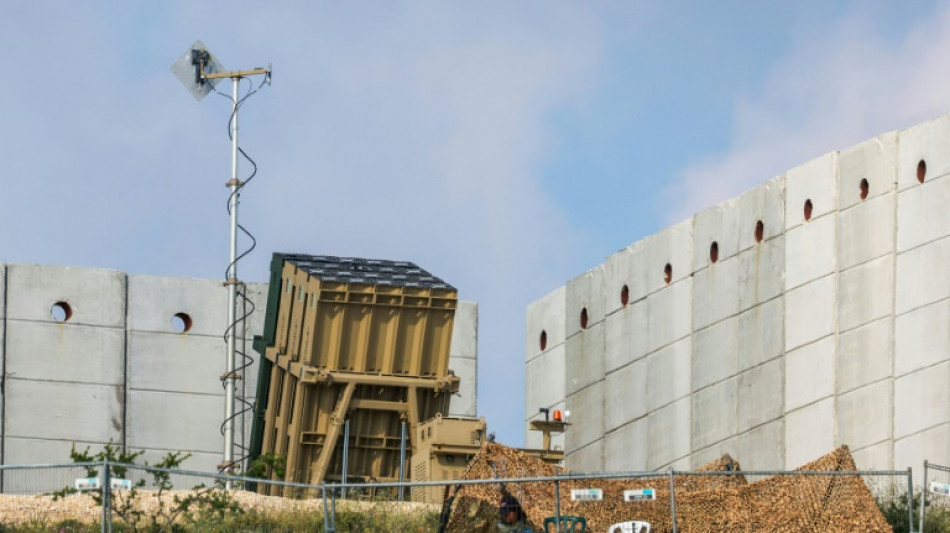
Israel builds 'cyber dome' against Iran's hackers / Photo: Menahem KAHANA - AFP/File

 SGFX Creates a Standout Brand Experience at Forex Expo Dubai 2026
 Pope urges Europe to help combat 'deceit and lies' in international ties

 Injured Buttler to miss England ODI series in Pakistan
 Madrid housing protesters vow to maintain pressure on government

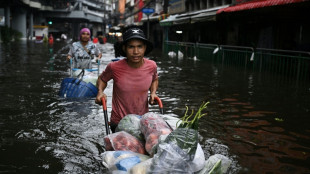 In kayaks or waist-deep in floodwater, shoppers return to Bangkok markets

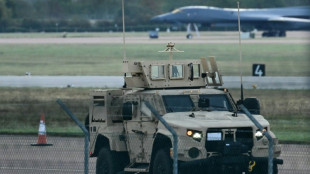 UK police probes Iran link to air base bomb scare: media

 Eala blasts into Asian Games quarters in just 55 minutes

 Taiwan gender-row boxer Lin Yu-ting guarantees Asian Games medal
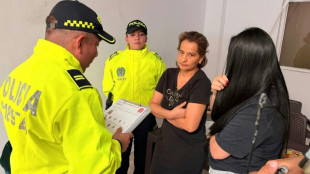
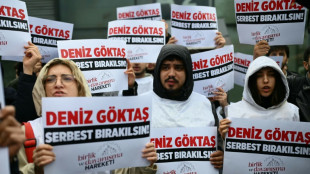 Comedian on trial for allegedly insulting Erdogan in standup show

 More Asian Games transport woes as bus takes Pakistan to wrong venue
 Death toll in South Africa bar shooting rises to 18
 Aide to Venezuelan opposition leader returns from exile

 Messi and Alcaraz love it, now padel takes step closer to Olympics

 Tolls mount in Thailand, Myanmar floods
 Why India's opposition wants top poll official out

 PU Prime Strengthens UAE Momentum with Strong Showing at Forex Expo Dubai 2026

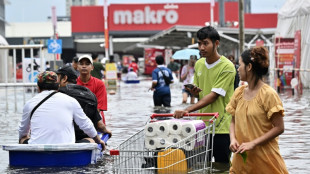 Eight dead in Thailand floods since mid-September

 Oil prices spike after Trump rejects Iran truce offer

 Taylor Swift sets new record at MTV VMAs
 Seoul seeks apology after Ukraine reveals transfer of North Korean POWs

 Messi on target again but Miami downed by Columbus

 In Washington's political cauldron, a fight over foie gras

 Flavio Bolsonaro: political heir in his father's shadow

 Ravens grab last-second win in Rio as Commanders stop Seahawks

 USA rallies to capture 11th consecutive Presidents Cup

Israel's Iron Dome defence system has long shielded it from incoming rockets. Now it is building a "cyber dome" to defend against online attacks, especially from arch foe Iran.
"It is a silent war, one which is not visible," said Aviram Atzaba, the Israeli National Cyber Directorate's head of international cooperation.
While Israel has fought Hamas in Gaza since the October 7 attack, it has also faced a significant increase in cyberattacks from Iran and its allies, Atzaba said.
"They are trying to hack everything they can," he told AFP, pointing to Hamas and Lebanon's Hezbollah movement but adding that so far "they have not succeeded in causing any real damage".
He said around 800 significant attacks had been thwarted since the war erupted. Among the targets were government organisations, the military and civil infrastructure.
Some attacks could not be foiled, including against hospitals in the cities of Haifa and Safed in which patient data was stolen.
While Israel already has cyber defences, they long consisted of "local efforts that were not connected", Atzaba said.
So, for the past two years, the directorate has been working to build a centralised, real-time system that works proactively to protect all of Israeli cyberspace.
Based in Tel Aviv, the directorate works under the authority of the prime minister. It does not reveal figures on its staff, budget or computing resources.
Israel collaborates closely with multiple allies, including the United States, said Atzaba, because "all states face cyber terrorism".
"It takes a network to fight a network," he said.
- 'An impressive enemy' -
Israel's arch foe Iran is "an impressive enemy" in the online wars, said Chuck Freilich, a researcher at the Institute for National Security Studies, which is affiliated with Tel Aviv University.
"Its attacks aim to sabotage and destroy infrastructure, but also to collect data for intelligence and spread false information for propaganda purposes", he said.
Iran has welcomed Hamas's October 7 attack on Israel, which resulted in the deaths of 1,170 people, mostly civilians, according to an AFP tally based on Israeli official figures.
Israel's retaliatory offensive against Hamas has killed at least 34,596 people in Gaza, mostly women and children, according to the Hamas-run territory's health ministry.
Regional tensions have soared, particularly after Iran for the first time fired hundreds of missiles directly at Israel last month in retaliation for a deadly Israeli air strike on the Iranian consulate in Damascus.
It was the most dramatic escalation yet after a years-long shadow war of killings and sabotage attacks between Israel and Iran.
Freilich argued in a study published in February that Iran was relatively slow to invest in cyberwarfare, until two key events triggered a change.
First, its leaders took note of how anti-government protesters used the internet as a tool to mobilise support for a 2009 post-election uprising.
In the bloody crackdown that crushed the movement, Iran's authorities cut access to social media and websites covering the protests.
Then, in September 2010, a sophisticated cyberattack using the Stuxnet virus, blamed by Iran on Israel and the United States, caused physical damage to Tehran's nuclear programme.
Freilich said the attack "demonstrated Iran's extreme vulnerability and led to a severe national shock".
Since then, Iran has gained substantial expertise to become "one of the most active countries in cyberspace", he said.
- 'Concern for future' -
While Israel is considered a major cyber power, Iran was only likely to improve, said Freilich.
He pointed to assistance from Russia and China, as well as its much larger population and an emphasis on cyber training for students and soldiers alike, adding that the trend was "concerning for the future".
Atzaba insisted that the quantity of hackers is secondary to the quality of technology and the use it is put to.
"For the past two years, we have been developing a cyber dome against cyberattacks, which functions like the Iron Dome against rockets," he said.
"With cyber dome, all sources are fed into a large data pool that enables a view of the big picture and to invoke a national response in a comprehensive and coordinated manner."
The Israeli system has various scanners that continuously "monitor Israeli cyberspace for vulnerabilities and informs the stakeholders of the means to mitigate them", he said.
Israel's cyber strength relied on close cooperation between the public, private and academic sectors, as well as Israel's "white hat" hackers who help identify weaknesses.
"We work hand in hand", he said.
O.Farraj--SF-PST