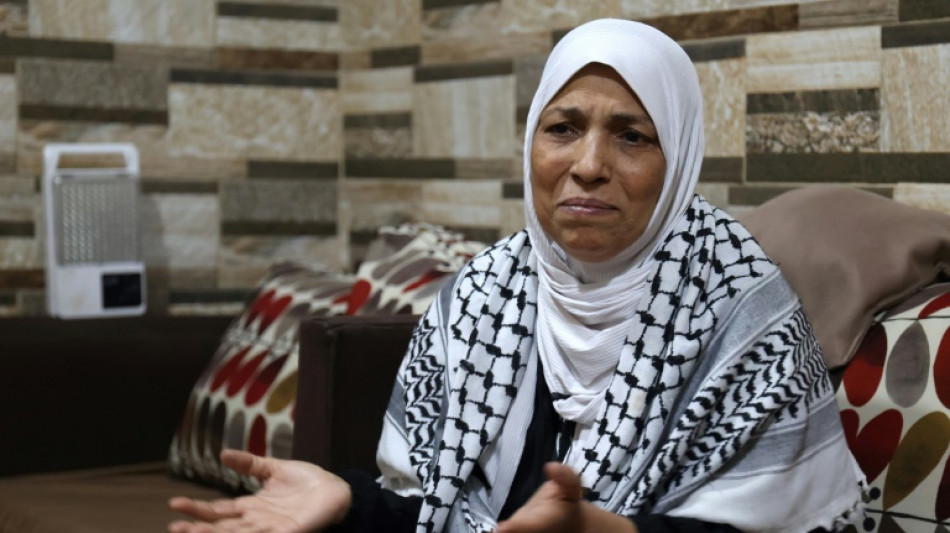
Palestinian family in Lebanon grieves for dead Gaza relatives / Photo: ANWAR AMRO - AFP

 AI Hacking Tool Artex Enables Global Cyberattacks by Low-Skill Actors

 BING X: اختفاء 22,624.66 وحدة من عملة SNC على منصة بينغ إكس — ما مدى أمان الرموز المودعة لدى المنصة؟ وهل يُعلَّق ترخيصها بموجب لائحة MiCAR

 BING X: 22,624.66 SNC have disappeared at BingX – how safe are tokens on BingX? Will BingX’s MiCAR licence be suspended?

 Dubai Police Expand Luxury Patrol Fleet with 525-hp Defender

From Lebanon, Palestinian Fatima al-Ashwah has been praying for relatives in Gaza, but received grim news that Israeli bombing killed around 12 of them days before a temporary truce between Israel and Hamas.
"They bombed their house," leaving some of them "in pieces," said Ashwah, drained by weeks of anguish and days of grief.
She is among an estimated 250,000 Palestinian refugees living in Lebanon, most of them in poverty, according to the United Nations.
When AFP first spoke with Ashwah, 61, earlier this month from southern Beirut's Burj al-Barajneh Palestinian refugee camp, she had expressed grave fear for the safety of about 70 extended family members in the Gaza Strip whom she had visited in July.
She was later told that Israeli bombardment had killed her cousin's daughter Sanaa Abu Zeid, 30, along with Abu Zeid's daughters aged 12, eight and six, and other relatives who were in the same building.
"Around a dozen people were killed," she said.
The Israel-Hamas war began on October 7, when fighters from Palestinian militant group Hamas broke through Gaza's militarised border and attacked southern Israel, killing about 1,200 people, mostly civilians and taking around 240 hostage, according to Israeli authorities.
It was the worst attack in the 75-year history of Israel which retaliated with air, artillery and naval bombardments alongside a ground offensive. Nearly 15,000 people, also mostly civilians, have been killed in Gaza, according to the Palestinian territory's Hamas government.
- 'Under the bombs' -
Abu Zeid and her family had taken refuge in a school in Rafah in the south of the Gaza Strip.
But they returned to their home in northern Gaza -- still standing, unlike those of some other family members -- because the children weren't coping at the shelter, Ashwah said.
Abu Zeid's husband and their three other children survived because they had been wounded in bombing the day before, one losing a leg, and were in hospital when the house was hit, Ashwah said.
"They buried them together in a mass grave," Ashwah said, with Abu Zeid's devastated mother unable to pay her final respects.
Ashwah showed photos and video taken before the bombing of smiling members of the family, including Abu Zeid's daughter Nour al-Moqayyed, aged six, dancing.
Abu Zeid's husband and the surviving children fled back to Rafah "under the bombs" to reunite with Abu Zeid's mother, Ashwah said, and were staying in a garage.
Beirut's Burj al-Barajneh camp and others like it in Lebanon were set up after what Palestinians call the Nakba, or "catastrophe", when more than 760,000 Palestinians fled or were forced from their homes by the 1948 war over Israel's creation.
A fragile four-day truce between Hamas and Israel is to expire Tuesday morning. Ashwah expressed hope that it would last, saying the family "can't take it anymore."
"We've seen wars, but like this? My God, not like this."
E.Aziz--SF-PST