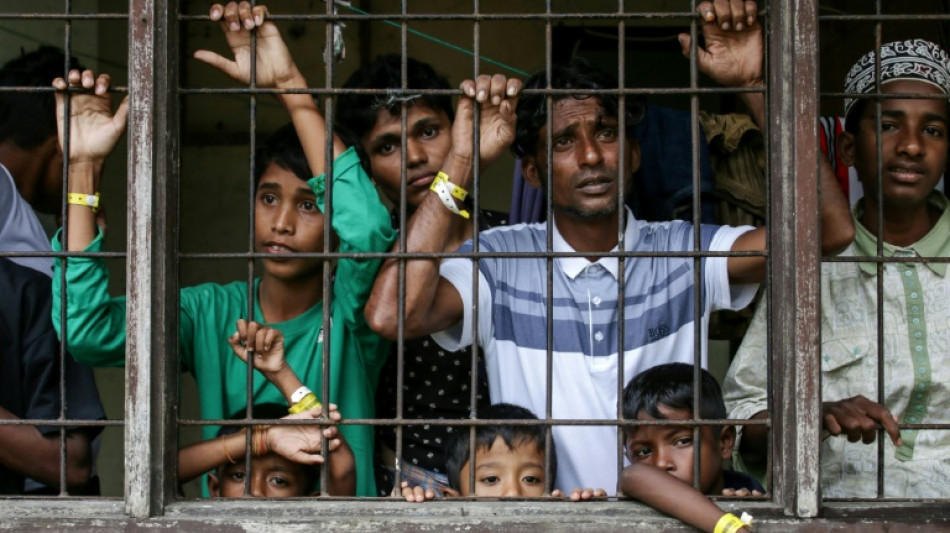
Gangs, extortion in Bangladesh camps driving Rohingya sea exodus / Photo: ZIKRI MAULANA - AFP

 England's Carse charged by cricket body over nightclub incident

 Amazon vows $1 bn for data center towns, decries 'myths'

 Oil prices drop on G7 fuel release, US jobs data boosts stocks

 G7 agrees deal to ease global energy supply concerns

 Spain's government dealt blow as lawmakers reject housing bills

 Food, medicine shortages deepen in Russian-occupied Oleshky

 Man City whistleblower Rui Pinto facing 'dire consequences' - lawyers
 Russia 'tearing Kyiv apart', mayor says, as strikes paralyse traffic

 Taiwan boxer Lin wins Games gold as Japan edge North Korea on penalties

 Japan tame North Korea to win Games gold after shootout drama

 US posts weak job growth data in September

 Ethiopia's conflict: the regional dimension

 Life expectancy almost back to pre-Covid levels, says WHO

 Turkey's football referee chief faces judge in graft probe

 Verstappen goes own way to avoid the rain

 Oil slides, bonds steady as EU addresses diesel price surge

 Spain housing package at risk in parliament, as protests mount

 Swedish Social Democrats leader to make new bid to form government
 North Korea calls Seoul 'despicable' after DMZ apology demand

 Taiwan boxer Lin wins gold as virtual taekwondo makes Games debut

 Man City face appeal deadline after explosive financial verdict

 Pole vault superstar Duplantis to skip indoor season

 Sri Lanka drop Asalanka from T20 against Pakistan

 Disney president says layoffs 'extremely painful' but necessary

 Indian flydubai pilot opened cockpit door to save passengers
Holding his son's hand in a temporary shelter in Indonesia, Rohingya Mohamed Ridoi says he made the dangerous 12-day sea journey from massive refugee camps in Bangladesh to escape the pervasive threats of kidnapping, extortion and murder.
The 27-year-old said he was starting a "peaceful life" in a temporary shelter in Indonesia's western Aceh Province, where more than 1,000 Rohingya people have arrived this month, the largest such influx since 2015.
He and others said they fled escalating brutality in the camps in and around Cox's Bazar, which hold more than one million people and where gangs regularly abduct and torture residents for ransom.
"One of the groups kidnapped me and demanded 500,000 Bangladeshi taka ($4,551) to buy their guns," Ridoi, who left with his wife, two children and his brother, told AFP.
"They told me that if I couldn't give them the money, they would kill me."
He said he eventually paid 300,000 taka for his release last month and, within weeks, he was on a boat to Indonesia, arriving on November 21.
"We are not safe in Bangladesh. That is why I decided to go to Indonesia to save me and my family's life," he said.
Having first fled state-backed persecution in Myanmar -- including a 2017 crackdown that is subject to a UN genocide probe -- the refugees now find themselves pushed to undertake weeks-long journeys of more than 1,800 kilometres (1,120 miles) on packed, rickety boats.
Indonesia is not a signatory to the UN Refugee Convention and says it is not compelled to take in refugees from Myanmar, but neighbouring countries have shut their doors, meaning they have almost no other options.
More than half a dozen boats have arrived in Aceh since November 14, and monitors say more are on their way, despite some locals turning arriving boats back to sea and stepping up patrols on the coast.
- Sleepless nights -
Human Rights Watch reported this year that criminal gangs and alleged affiliates of Islamist armed groups were causing fear at night in the Bangladesh refugee camps, which now number more than two dozen.
The Bangladesh defence ministry has identified at least 11 armed groups operating in the camps, but rights groups say Dhaka is not doing enough to protect refugees from the violence.
These gangs, vying for control and involved in activities like drug smuggling and human trafficking, have specifically targeted Rohingya community leaders and activists.
Aisha, 19, arrived in Aceh on the same boat as Ridoi with two children and her husband.
"They asked for money every night, threatening to abduct my husband. I couldn't sleep at night because of them," she said via an interpreter.
Bangladesh police say about 60 Rohingya people have been killed in violence in the camps this year.
Phil Robertson, deputy Asia director of HRW, said it appeared the Bangladeshi government "doesn't care" about the refugees' fate.
"The bottom line is the Bangladesh government just wants all the Rohingya to go back to Myanmar as soon as possible -- even if (it) means subjecting the refugees to conditions of absolute misery in the camps so that they leave."
Aisha, the young mother, said the fear of the criminals pushed her family to pay 200,000 taka ($1,819) to illegal middlemen for her family's boat journey to Indonesia, despite the risks.
- Impossible choices -
Aisha said she preferred to "die at sea than in the camp".
"I looked for a safe place for my children, hoping they could study and get an education," she said.
Chris Lewa, director of Rohingya rights organisation the Arakan Project, said food shortages were also worsening camp conditions and entire families were now leaving, instead of just groups of young men as seen previously.
"Now the profile is different, now we have many families. Before there was not many," she said.
"Nowadays we see small children, there are many families making their way. They just want to be away from Bangladesh."
Aisha and her children now share a windowless room in a shelter in the Aceh city of Lhokseumawe with more than a hundred other women and minors, sleeping on mats on the floor without a fan in the tropical heat.
Aisha said that it was still much better than living in fear in the Bangladesh camp.
Ridoi also hoped that his decision to bring his family to Indonesia would bring a better life for his sons.
"I am not qualified to be a doctor or engineer, but I am doing my best to make them one," he said.
"My children are everything to me."
X.Habash--SF-PST