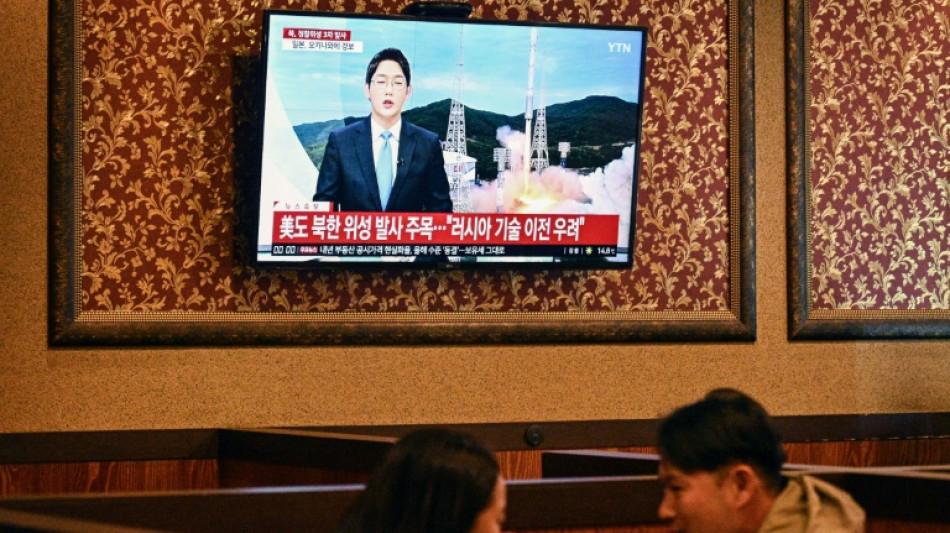
N. Korea to send new weapons to border after spy satellite launch / Photo: Anthony WALLACE - AFP

 France held by Italy in Zidane's homecoming after Olise stunner

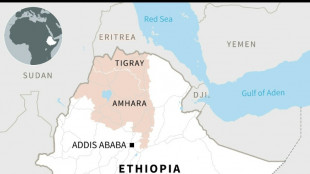
 Ethiopian pro-government militia claims Tigray airport as regional tensions spike

 Ohtani shaking off injuries as Dodgers launch MLB post-season
 Sea levels to rise in California as coastal wave surges up west coast

 New rallies urged in France as protests disrupt over 730 schools

 Djokovic survives China Open scare, Sabalenka starts strong

 King Charles to evoke colonial 'darkest days' on Caribbean tour

 Tesla shares jump after global car sales top estimates

 DR Congo Ebola outbreak killed more than 4,000: official figures

 Djokovic survives China Open scare against wildcard world no. 104

 Lula, Bolsonaro trade blows in final scramble for votes in Brazil

 New clashes erupt as protests disrupt over 560 French schools

 NY governor vows to close loophole after alleged Cornell gang rape

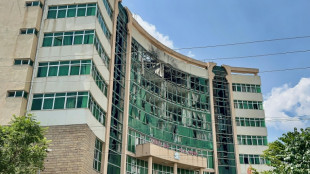 Ethiopia Tigray rebels pushed back as regional tensions spike

 Stocks rise, yields fall as US job numbers disappoint

 Man City verdict a 'big topic' for England players, says Tuchel

 NY attorney general tasked with investigating alleged Cornell gang rape

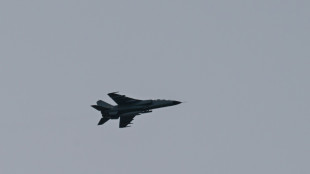 China widens military footprint with Laos air base
 G7 talks as US pressures Europe over diesel stocks

 Man City launch appeal against explosive financial ruling

 Swiss president to quit government

 Europe rejects US threats over diesel stocks, urges joint G7 action

 Philippines tennis star Eala says 'I get overwhelmed sometimes'

 Ferrari chief Vasseur has support from rival team bosses

 Pilot in flydubai attack says could not let 'all those people die'

North Korea said Thursday it would deploy new weapons and stronger armed forces to the border with the South, as Seoul's spy agency said Pyongyang had received Russian help to successfully put a military spy satellite into orbit.
The "Malligyong-1" was launched Tuesday, Pyongyang's third attempt at securing a military eye in the sky after two failures in May and August, with Kim Jong Un already reviewing images of US military bases in Guam, the North's state media has reported.
Seoul's National Intelligence Service told lawmakers the launch had been a success but cautioned it was too early to say the satellite was working as Pyongyang claimed, adding the North had been given "feedback" by Russia after Kim met Russian President Vladimir Putin in September.
"After the summit with Putin, the North provided Moscow with the blueprint and data relevant to the first and second satellite launches. Russia in turn analysed those data and provided the North with feedback," the agency told lawmakers, according to a briefing by MP Yoo Sang-bum.
After the launch, Seoul partially suspended a five-year-old military accord and immediately deployed "surveillance and reconnaissance assets" to the border, in what defence chief Shin Won-sik said Thursday was an "essential measure" to defend against the nuclear-armed North's growing threats.
North Korea's defence ministry on Thursday called Seoul's moves "reckless" and said it would also suspend -- in full -- the deal, claiming that Pyongyang "will never be bound" by the agreement again, and would immediately beef up its own border security.
The North would now "deploy more powerful armed forces and new-type military hardware in the region along the Military Demarcation Line," the ministry said in a statement carried by the official Korean Central News Agency.
The North also fired a ballistic missile early Thursday, Seoul's Joint Chiefs of Staff said, adding that the launch had not been successful.
The ballistic missile launch is a harbinger of things to come, said Yang Moo-jin, president of the University of North Korean Studies.
"In order to show that their suspension of the agreement does not amount to just empty words, it is expected that there will be a demonstration of force by violating the maritime border, deploying coastal artillery, firing shots at leaflets, and launching various missiles," he said.
"As a result, there will be increased possibility of accidental armed clashes along the Military Demarcation Line and an increase in the possibility of these accidental armed conflicts escalating into war."
- Satellite in orbit -
North Korea launched Tuesday the "Malligyong-1" military reconnaissance satellite, an event overseen by leader Kim Jong Un, who later reviewed images of US military bases in Guam, purportedly sent by the country's new eye in the sky.
It was Pyongyang's third attempt this year to put a satellite into orbit, and the first since Kim met Putin at a Russian cosmodrome in September.
The North's defence ministry repeated Thursday that the satellite launch was part of its "right to self-defence", and dismissed the "extremely hysterical" response from the South in particular.
It accused the South of putting the deal under strain by stepping up military provocations, saying the agreement has "long been reduced to a mere scrap of paper", according to KCNA.
The South "must pay dearly for their irresponsible and grave political and military provocations that have pushed the present situation to an uncontrollable phase," the ministry continued.
KCNA has said the satellite will begin a formal reconnaissance mission on December 1.
Successfully putting a spy satellite into orbit would improve North Korea's intelligence-gathering capabilities, particularly over South Korea, and provide crucial data in any military conflict, experts say.
The launch also appears to kick off a space race on the peninsula, experts said, with Seoul planning to launch its first spy satellite via a SpaceX rocket later this month.
Y.AlMasri--SF-PST