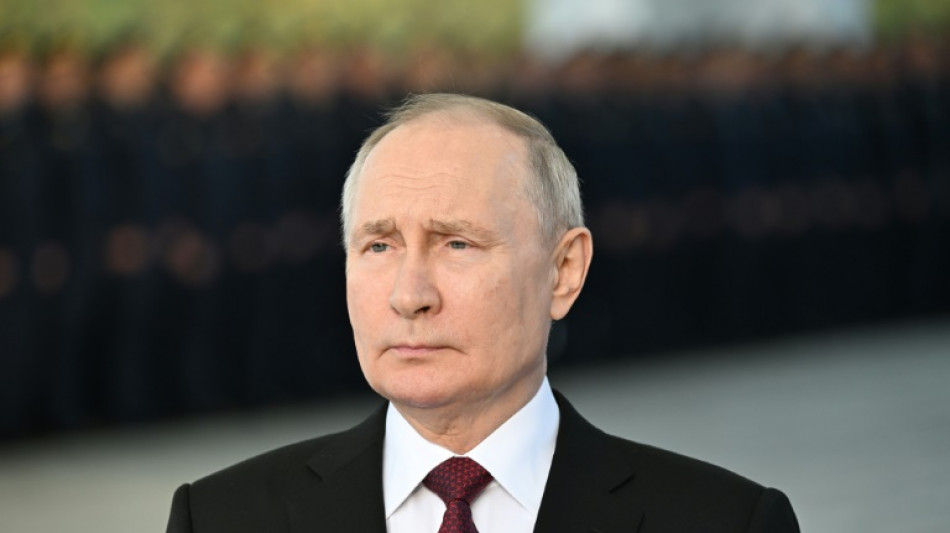
Putin expected in Beijing, more dependent than ever on China / Photo: Pavel BEDNYAKOV - POOL/AFP

 Latvian partial election results suggest pro-European choice

 In Egypt's Sinai, Gazan builds school for children displaced by war

 Trump tariffs a mixed bag for US auto industry

 Yemen government forces say struck Houthi targets

 Music links past, present for Pedro Pascal's cellist in 'Behemoth!'
 ALEX BODI ȘI AMBASADORUL REPUBLICII SUDANUL DE SUD, GUM DOMINIC MATIOK, DISCUTĂ LA BERLIN DESPRE POSIBILITATEA ÎNFIINȚĂRII UNUI CONSULAT ONORIFIC LA BUCUREȘTI

 Dodgers step up World Series three-peat bid with 5-3 win over Braves

 Spain break down Czechs as England outclass Croatia in Nations League

 Yamal on target as Spain hold off Czech Republic

 Latvian exit polls suggest pro-European choice
 Lula, Bolsonaro wrap up campaigns ahead of knife-edge election
 Tuchel hails 'complete' England after Croatia demolition

 Fury to invite Trump to lead ring walk before Joshua showdown

 Fashion industry in 'precarious moment', says Vivienne Westwood supremo

 Seventh heaven for England in Nations League rout of Croatia
 Storms, flooding cause chaos on Greek holiday island of Crete

 #IAmJaneDoe: online support campaign in US university rape case

 Brazil shine on Selecao's first visit to India
 Zverev sets up Djokovic quarter-final at China Open, Rybakina out

 Happier at home, Bordeaux hammer Lyon in Top 14
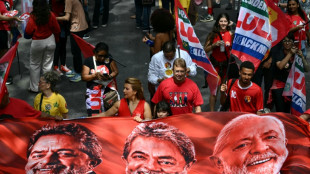 Lula, Bolsonaro in final push for votes ahead of knife-edge election

 Boisterous fashion week barnstorms 'sleepy' Nigerian capital
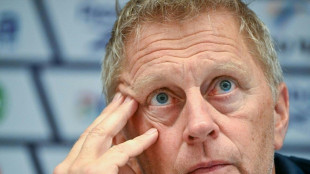
 UAE investigators say flydubai co-pilot was planning 'terrorist act'

 Rahul smacks century in India v Windies ODI

 Daryz seeks to join exclusive club of dual Arc winners
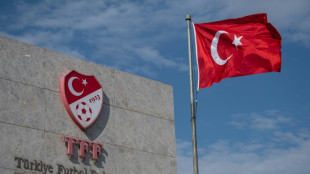
Russian President Vladimir Putin heads to China next week to meet his "dear friend" Xi Jinping, forging even closer ties in a key strategic relationship in which experts say Moscow is increasingly the junior partner.
Beijing is hosting representatives of 130 countries on October 17-18 to mark a decade of its Belt and Road Initiative (BRI) -- a key geopolitical project of President Xi to extend China's global reach.
But all eyes will be on Putin, who last month told Beijing's Foreign Minister Wang Yi in Saint Petersburg he had "gladly accepted" Xi's invitation to visit China for the BRI talking shop.
The Russian leader's strategic dependence on China has only grown since his invasion of neighbouring Ukraine thrust his country into international isolation.
Putin has hardly ventured beyond his country's borders since the war, with next week's trip the first to a major global power.
This year, trade between the two powers has soared to levels not seen since the beginning of Moscow's war in Ukraine, with Chinese imports of Russian oil offering Moscow a critical lifeline as international sanctions bite.
Bilateral trade reached a record $190 billion last year, according to Chinese customs data, and the two sides have pledged to reach $200 billion this year.
China has refused to condemn the war in an effort to position itself as a neutral party, while at the same time offering Moscow a vital diplomatic and financial lifeline.
"Beijing has maintained a posture of 'pro-Russia neutrality' throughout the invasion, providing critical diplomatic, economic, and non-lethal military assistance to Moscow," Joseph Webster, senior fellow at the Atlantic Council's Global Energy Center, told AFP.
- 'Unlimited possibilities' -
At the heart of the deepening partnership is the relationship between Xi and Putin, who have described each other as "dear friends".
But their alliance is also forged by a symbiotic necessity, each seeing the other as a necessary bulwark in their shared struggle against Western dominance.
When Xi made a state visit to Moscow in March, Putin hailed the "truly unlimited possibilities" their countries' partnership offered.
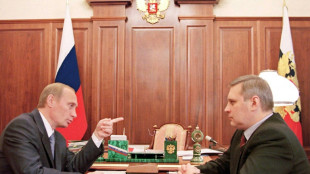
In May, the Chinese leader told Russian Prime Minister Mikhail Mishustin that Beijing and Moscow would continue to offer each other "firm support on issues concerning each other's core interests".
After he lands in Beijing next week, Putin will be looking to match those lofty words with hard cash and firmer support for his war in Ukraine, experts said.
"Moscow will try to further deepen cooperation with Beijing and elicit more support from China, including lethal military aid, as it has hopes that Western support for Ukraine may be gradually faltering," Bjorn Alexander Duben, an assistant professor at China's Jilin University, said.
China has so far offered only "non-lethal" support to Moscow, but experts said Beijing could change tack should Russia's situation worsen.
"China doesn't want to see a significantly weakened Russia, and it might step up its efforts if it comes to realise that Moscow might lose," Alicja Bachulska, a policy fellow at the European Council on Foreign Relations, told AFP.
"Putin's regime collapse and related chaos are seen as a serious security threat," she added.
"Beijing might be willing to increase its support for Russia to prevent such a scenario."
- Dependent relationship? -
An open rebellion against Moscow by private mercenary group Wagner in June was swiftly put down, but not before raising fears in Beijing that the stability of its strategic partner could be waning, analysts said.
Russia's perceived fragility is already offering Beijing leverage in the partnership, they added.
"The Chinese are very difficult negotiators," Russian political scientist Konstantin Kalachev told AFP, adding he expected "no further breakthroughs" on contentious issues including a long-awaited gas pipeline.
"China's dominance in the relationship has massively increased," Duben said.
"Its continued economic engagement with China is gradually turning into a relationship of direct dependence -– raising the question whether Russia is steering towards a client relationship with Beijing."
A.AlHaj--SF-PST