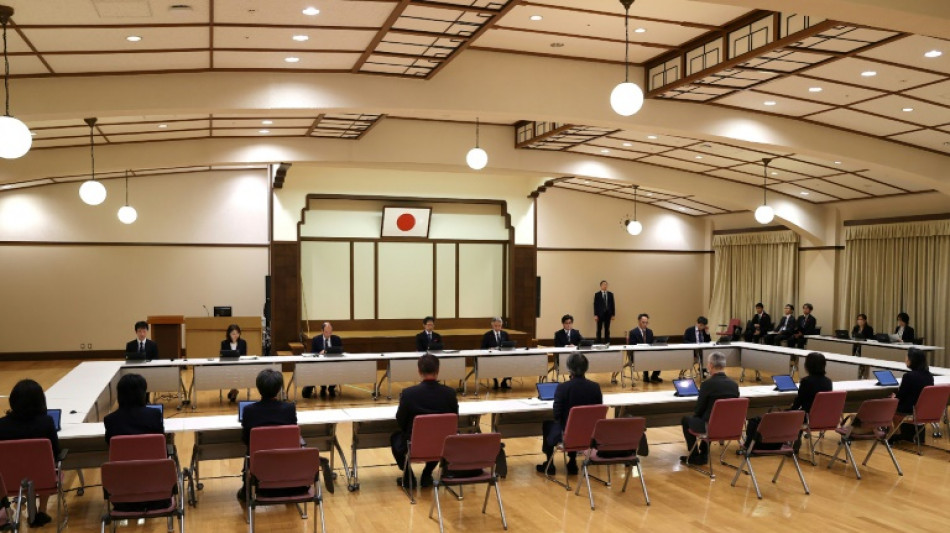
Japan moves to strip Unification Church of government recognition / Photo: STR - JIJI Press/AFP

 Teens on target again as USA down Mexico 3-0

 World records prove Asian Games were a hit, says top official
 US prison chief who oversaw botched execution resigns

 'Chaotic' Asian Games threaten Japan hopes of hosting Olympics again

 Finnish town braces for change from Google data centres

 What is fuelling French school protests?

 Without lawyers, migrant children face deportation from the US

 Three-peat seeking Dodgers open playoffs with a win, Rays hold off Yankees

 Brazil votes in nail-biter polls closely watched by Trump

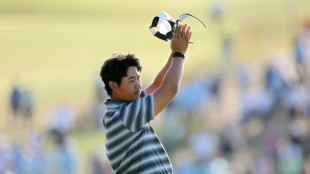 'Just be you': Kim reveals Tiger text that inspired him to gold

 Myanmar migrants returned to war-torn nation from Malaysia

 ALEX BODI AND AMBASSADOR GUM DOMINIC MATIOK OF THE REPUBLIC OF SOUTH SUDAN MEET IN BERLIN TO DISCUSS THE POSSIBILITY OF AN HONORARY CONSULATE IN BUCHAREST

 Lula, Bolsonaro wrap up campaigns ahead of Brazil's knife-edge vote

 Toulouse edge Castres in Top 14 derby

 Murakami homer propels White Sox to MLB playoff win over Guardians

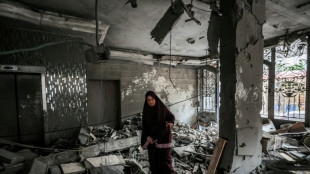 Israel targets top Hamas leader in deadly Gaza strike on anniversary

 Houthis say struck oil facility near Riyadh, as Saudis hit Sanaa

 AI needs safety layers like nuclear plants: ex-OpenAI engineer

 MVP Judge will miss Yankees' MLB playoff series against Rays

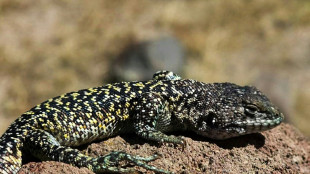 New lizard species discovered in Peru

 Fernandes hails Portugal's 'greatest symbol' Ronaldo, calls for unity

 Grandidier-Nkanang double takes Pau to Top 14 summit despite Vannes fightback

 Trainer Scott gets perfect Arc boost with top notch double

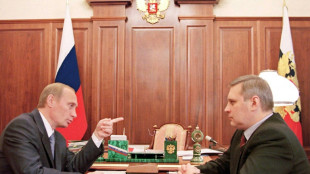 Ex-PM says Putin cannot admit 'mistake' over Ukraine

 Houthis say Saudi Arabia launches dozens of strikes on Yemen capital

The Japanese government said Thursday it was seeking to strip official recognition from the Unification Church, the influential sect under intense scrutiny since the assassination of former prime minister Shinzo Abe.
Prime Minister Fumio Kishida last year ordered a probe into the church after it emerged that Abe's alleged killer was motivated by resentment against the group.
It has been accused of pressuring its followers into making hefty donations and blamed for child neglect among its members.
If granted, the court dissolution order sought by the government would see the church lose its status as a tax-exempt organisation but still be allowed to continue its religious practices.
"In view of the extensive damage caused, we find that it falls under the grounds for ordering dissolution as stated in the religious corporations law," Education Minister Masahito Moriyama told reporters after a panel of experts unanimously agreed with the decision.
The church "forced a number of people to contribute donations and buy items ... in a way that restricted their free decision-making and sabotaged their sound judgement", he added.
The minister said the request would be filed to the Tokyo District Court as early as Friday, once "preparations are complete".
Abe was gunned down in broad daylight last year while giving a campaign speech in the western Nara region.
The suspect, Tetsuya Yamagami, is said to have resented the sect over large donations his mother made that bankrupted his family.
He could face the death penalty if convicted.
Investigations after Abe's death revealed close ties between the church and many conservative ruling lawmakers in Japan.
Four of Kishida's ministers have since stepped down over allegations of financial irregularities or links to the church.
- 'Excessive' donations -
Abe, Japan's longest-serving leader, was not a member of the church but had addressed an affiliated group, as have other well-known speakers including Donald Trump.
The former prime minister died on July 8, 2022, after being shot with a homemade gun as he spoke to supporters near a train station in Nara.
Yamagami, who faces murder and weapons charges, was apprehended on the spot.
He reportedly targeted Abe over his ties to the sect, of which Yamagami's mother was a follower.
The suspect's uncle told local media his nephew sometimes called him for help when his mother left her children alone and without food while attending church.
She donated 100 million yen (then around $1 million) to the group before declaring bankruptcy, he added.
The church has confirmed his mother's membership but refused to reveal how much she donated over the years.
Known officially as the Family Federation for World Peace and Unification, the sect has denied wrongdoing and pledged to prevent "excessive" donations from members.
Founded in South Korea in 1954 by Sun Myung Moon, the church, whose members are colloquially known as "Moonies", rose to global prominence in the 1970s and '80s.
Japan has since become a key financial hub for the church, which teaches Japanese believers they need to atone for their country's wartime occupation of Korea.
X.Habash--SF-PST