Grim prospects if Israel launches ground assault on Gaza / Photo: SAID KHATIB - AFP

 Asian Games set to close after records, rancour and rain

 Cry for help as French-Swiss lake dries up

 Sabalenka swept out of China Open in third round

 US urges 'restraint' as Ethiopia's Tigray crisis rocks region

 Teens on target again as USA down Mexico 3-0

 World records prove Asian Games were a hit, says top official

 US prison chief who oversaw botched execution resigns

 'Chaotic' Asian Games threaten Japan hopes of hosting Olympics again

 Finnish town braces for change from Google data centres

 What is fuelling French school protests?

 Without lawyers, migrant children face deportation from the US
 Three-peat seeking Dodgers open playoffs with a win, Rays hold off Yankees

 Brazil votes in nail-biter polls closely watched by Trump
 'Just be you': Kim reveals Tiger text that inspired him to gold

 Myanmar migrants returned to war-torn nation from Malaysia

 ALEX BODI AND AMBASSADOR GUM DOMINIC MATIOK OF THE REPUBLIC OF SOUTH SUDAN MEET IN BERLIN TO DISCUSS THE POSSIBILITY OF AN HONORARY CONSULATE IN BUCHAREST

 Lula, Bolsonaro wrap up campaigns ahead of Brazil's knife-edge vote

 Toulouse edge Castres in Top 14 derby

 Murakami homer propels White Sox to MLB playoff win over Guardians

 Israel targets top Hamas leader in deadly Gaza strike on anniversary

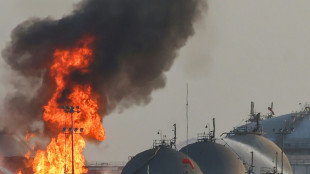 Houthis say struck oil facility near Riyadh, as Saudis hit Sanaa

 AI needs safety layers like nuclear plants: ex-OpenAI engineer

 MVP Judge will miss Yankees' MLB playoff series against Rays

 New lizard species discovered in Peru

 Fernandes hails Portugal's 'greatest symbol' Ronaldo, calls for unity

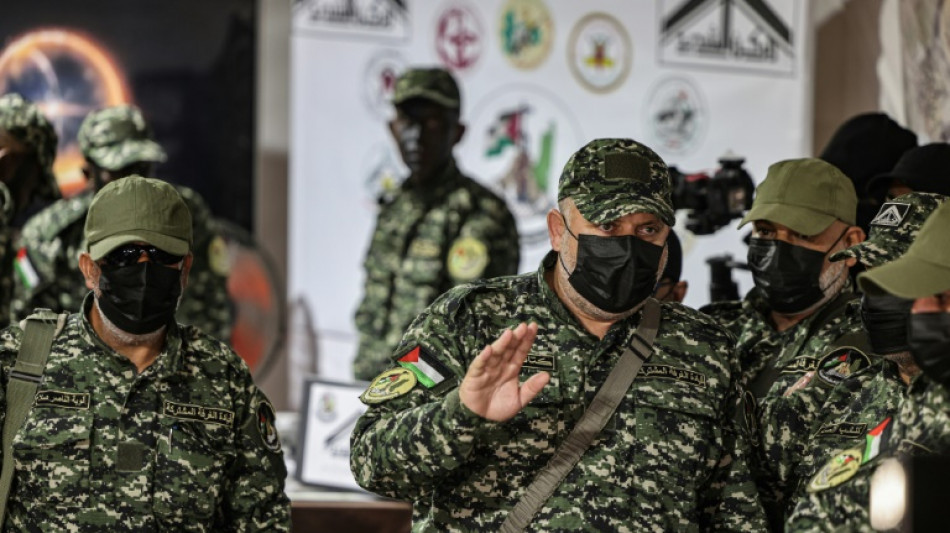
Israel appears likely to stage a ground assault on Gaza in response to deadly weekend attacks by Hamas, risking close-quarters fighting in densely populated areas, including in underground tunnels and around hostages.
Israel's government on Monday said it would "immediately cut (its) water supply to Gaza" as part of a "complete siege" on the Hamas-controlled territory.
Next, "Israel will launch the largest joint (air/sea/land/space) operation against Gaza in history," John Spencer, an expert at the Modern War Institute at US military academy West Point, predicted on X, formerly Twitter.
Alexander Grinberg, of the Jerusalem Institute for Strategy and Security, said that "strikes will first of all target Hamas command centres and troops, with fire coming from everywhere".
"At the same time, the army will prepare to enter Gaza," he said.
Such urban fighting will force combatants into hand-to-hand combat, reduce visibility, increase the risk of traps, blur boundaries between civilians and soldiers and render armoured vehicles next to useless.
- 'Inherent risks' -
City fighting is "a 360-degree battlefield as the threats can be all around you," said Andrew Galer, a former British army officer, now an analyst at private intelligence firm Janes.
Going house-to-house to secure potentially booby-trapped buildings means bringing in bomb disposal experts with cumbersome gear like ladders, ropes and explosives -- "possibly all while taking fire" and in the dark, he added.
And there are "inherent risks" of friendly fire given "the difficulties of situational awareness", Galer said.
"Using artillery can make the situation worse, as while it may kill some defenders, the rubble then provides them with cover".
- 'Gaza Metro' -
Gaza's roughly 2.3 million Palestinian inhabitants have been living under an Israeli blockade since 2007.
Its overcrowded, narrow web of streets is doubled underground by a dense tunnel network known to Israeli troops as the "Gaza Metro".
Gaza's 14-kilometre (nine-mile) border with Egypt was once burrowed under with hundreds of tunnels used to smuggle fighters, weapons and other contraband -- although many have now been destroyed.
But since 2014, Hamas has been digging underground pathways to get around territory it controls.
Some tunnels are as deep as 30 or 40 metres (100-130 feet) below ground, allowing militants to change position away from the danger of strikes.
Rocket batteries hidden just a few metres beneath the surface can be uncovered with a trapdoor just for the time it takes to fire a salvo.
Israel's army and intelligence are certain to know about a portion of the network, and bombarded it heavily in 2021.
But other parts remain secret and will make any Israel Defense Forces (IDF) ground operation in Gaza more difficult.
- 'Long, difficult, many losses' -
Hamas "knows its tunnels by heart," said Colin Clarke, research director at the New York-based Soufan Center think-tank.
"Some are probably booby-trapped. Preparing to fight in such terrain... would require extensive intelligence... which the Israelis may not have," he added.
Underground fighting would hand a major tactical advantage to the Hamas defenders and their leadership.
"Everyone knows it will be long and difficult, with many losses," Grinberg said, although technology such as robots could work in the assaulting forces' favour.
On the other hand, Hamas' tunnel advantage "could also turn out to be a trap," he added.
"When tunnels are found, they can be closed off to shut in the people inside. In this case, the order is likely to be for no quarter" to be given.
- 'Bring the hostages back' -
The dozens of civilian hostages Hamas seized at the weekend present another complication for the IDF.
"Israeli society wouldn't forgive it if the hostages' lives are not a priority," said Sylvaine Bulle, a sociologist studying Israel at France's National Centre for Scientific Research (CNRS).
Citizens' attitude would be "you have failed to ensure our security, bring us the hostages back," she predicted -- leading to "conflicts... between politicians and the military".
The government is unable to negotiate for now, said Kobi Michael, a researcher at the Tel Aviv-based INSS think-tank.
"With all the sorrow, with all the pain... the hostage issue cannot be the first priority," he said.
"Israel will reach to the hostage issue only with the upper hand and when Hamas will be defeated and weak, not a second before," Michael added.
A Qatar-based Hamas official told AFP Monday there was "currently no chance for negotiation on the issue of prisoners or anything else".
N.AbuHussein--SF-PST