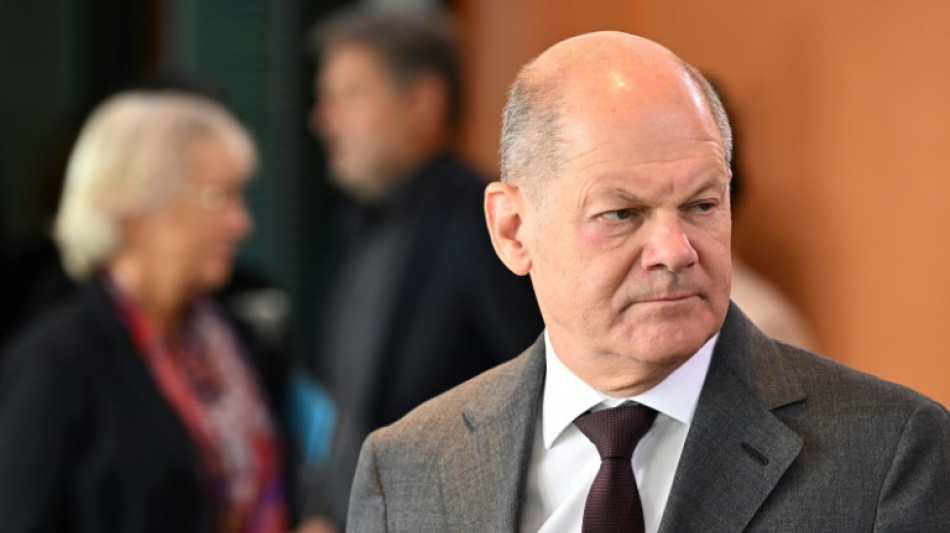
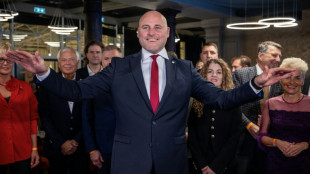
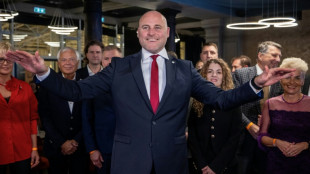
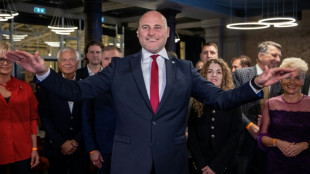
Mid-term test for Scholz's coalition at German state polls / Photo: John MACDOUGALL - AFP

 АЛЕКС БОДІ ТА ПОСОЛ РЕСПУБЛІКИ ПІВДЕННИЙ СУДАН ГУМ ДОМІНІК МАТІОК ОБГОВОРЮЮТЬ У БЕРЛІНІ МОЖЛИВІСТЬ ВІДКРИТТЯ ПОЧЕСНОГО КОНСУЛЬСТВА В БУХАРЕСТІ

 Germany's Merz in Kyiv for talks with Zelensky

 Asian Games set to close after records, rancour and rain
 Cry for help as French-Swiss lake dries up
 Sabalenka swept out of China Open in third round

 US urges 'restraint' as Ethiopia's Tigray crisis rocks region

 Teens on target again as USA down Mexico 3-0

 World records prove Asian Games were a hit, says top official

 US prison chief who oversaw botched execution resigns
 'Chaotic' Asian Games threaten Japan hopes of hosting Olympics again
 Finnish town braces for change from Google data centres

 What is fuelling French school protests?
 Without lawyers, migrant children face deportation from the US
 Three-peat seeking Dodgers open playoffs with a win, Rays hold off Yankees

 Brazil votes in nail-biter polls closely watched by Trump
 'Just be you': Kim reveals Tiger text that inspired him to gold

 Myanmar migrants returned to war-torn nation from Malaysia

 ALEX BODI AND AMBASSADOR GUM DOMINIC MATIOK OF THE REPUBLIC OF SOUTH SUDAN MEET IN BERLIN TO DISCUSS THE POSSIBILITY OF AN HONORARY CONSULATE IN BUCHAREST

 Lula, Bolsonaro wrap up campaigns ahead of Brazil's knife-edge vote

 Toulouse edge Castres in Top 14 derby

 Murakami homer propels White Sox to MLB playoff win over Guardians
 Israel targets top Hamas leader in deadly Gaza strike on anniversary

 Houthis say struck oil facility near Riyadh, as Saudis hit Sanaa

 AI needs safety layers like nuclear plants: ex-OpenAI engineer

 MVP Judge will miss Yankees' MLB playoff series against Rays

Germans began voting in two key state elections on Sunday in a test for Chancellor Olaf Scholz's fractious coalition halfway through its term, while the resurgent far right may get another boost.
A surge in immigration and economic woes are top issues for the nearly 14 million people eligible to cast ballots in Bavaria, the country's biggest state, and in Hesse.
With the combined voter base making up almost one in five of Germany's electorate, and both states qualifying as economic heavyweights among the country's 16 regions, the elections are seen as a crucial indicator of the population's mood.
After forming a three-party coalition two years ago, Scholz has had to contend with Russia's invasion of Ukraine and the ensuing energy crisis, which plunged Germany into recession.
Adding to its problems, the chancellor's coalition -- comprising his centre-left SPD, the Greens and the pro-business FDP -- has been consumed by bitter infighting on issues ranging from climate laws to spending cuts.
"The parties that form the federal government are in a bad starting position here," Arndt Leininger, a political expert from the Chemnitz University of Technology, told AFP.
"In both states, all three parties are currently below their results in the last regional elections," he said.
Not helping the cause of the SPD and its coalition partners, both states are conservative strongholds, with Hesse ruled for 24 years by the main opposition CDU and Bavaria since 1957 by the CSU, headed by Markus Soeder.
Meanwhile the far-right Alternative for Germany (AfD) is forecast to make gains after a recent surge in poll ratings at the national level and a string of local election victories.
While the AfD is not expected to enter government in either state -- its strongholds are in eastern Germany -- further progress would ring alarm bells anew about the party's growing popularity.
The AfD is traditionally an anti-immigration party but has also focused on attacking the coalition's climate policies, driven by the Greens, that have been unpopular, with critics saying they could unduly burden households.
- Coalition tensions -
Immigration has emerged as a central theme for the elections as Germany -- like elsewhere in Europe -- faces a surge of new arrivals, reviving memories of a major influx in 2015.
In a recent survey Bavarians cited it as the most important subject, and on Friday, state premier Soeder, whose CSU is the sister party of the CDU, renewed calls for a tougher approach.
"The borders must be secured and they must be secured the way that the Bavarian border police do it," he told broadcaster ZDF, while criticising Scholz's coalition for "sweeping the issue under the carpet".
There is little doubt Soeder will extend his party's decades-old hold on power in the state and he will retain his post.
But if the CSU does not do well enough, his hopes of one day becoming a chancellor candidate may be scuppered.
Ahead of the vote, the state's governing coalition was rocked by a scandal when Soeder's deputy, Hubert Aiwanger, admitted to possessing Nazi pamphlets that were found in the schoolbag he used as a teenager in the late 1980s.
Aiwanger, leader of junior coalition partner the Free Voters, managed to hang on to his job, and his party actually won more support after he claimed he was victim of a "witch hunt".
In contrast, the parties from Scholz's coalition are expected to lose support, and the FDP may not even meet the threshold to get into the state parliament.
The SPD has sought to make gains in Hesse by fielding a heavyweight, Interior Minister Nancy Faeser. But the party is also forecast to lose support, while the CDU and its state premier, Boris Rhein, are expected to remain in power.
The biggest losers in Sunday's elections could be the FDP and Christian Lindner, its party chief and Scholz's finance minister, which could fuel further coalition tensions, observers say.
Lindner's "balancing act" between holding his job in the cabinet and leading the FDP could become "increasingly difficult", daily Tagesspiegel said.
U.Shaheen--SF-PST