Austria raises alarm about 'dramatic' femicide plague

 Man Utd losses jump despite record revenues

 Ethiopia's Tigray rebels seize airports, clash with govt forces
 China prodigy wins third Games gold as North Korea weightlifters roar

 China's Yu, 13, wins third Asian Games gold but has 'some regrets'
 Oil falls, stocks steady as Trump hails 'good' Iran talks

 UK sets up unit to combat disinformation from Russia, AI

 ICC convicts C.Africa rebel leader

 China's Yu, 13, wins third gold with latest Asian Games record

 UK says will revisit Chagos deal after latest Trump criticism
 In first, French presidential candidate gives birth during campaign

 Cambodia no 'safe haven' for cyberscams, PM says
 North Korea weightlifter sets three world records for Asian Games gold
 A Full Moon for Every Child: STARTRADER's STARCARES Brings Support to SOS Children's Village Ho Chi Minh City

 Meta leans into AI, smart glasses amid privacy pushback
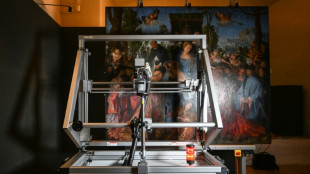 Battered Duerer masterpiece up for five-year revamp

 Trump met with Venezuela's interim leader at UN

 Malaysia furore after Najib wins conditional house arrest

 Italy hope for new dawn under Mancini

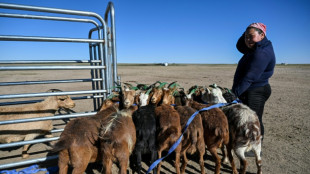 Mongolian herders enlist new tech against harsher, drier climate

 Tata turmoil shines light on India succession woes

 World Cup 'not enough' as Spain begin next chapter

 Meta acts against 3.7 mn scammers' accounts with Singapore police help

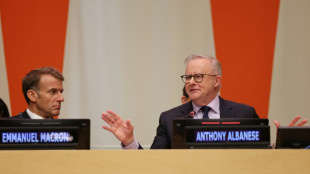 Australia PM says draft social media rules about taking back control

 OMP and PwC Alliance Moves Process Manufacturers from Siloed Supply Chain Planning to Unified Decisions

 US-led Americas coalition backs sanctions against crime groups

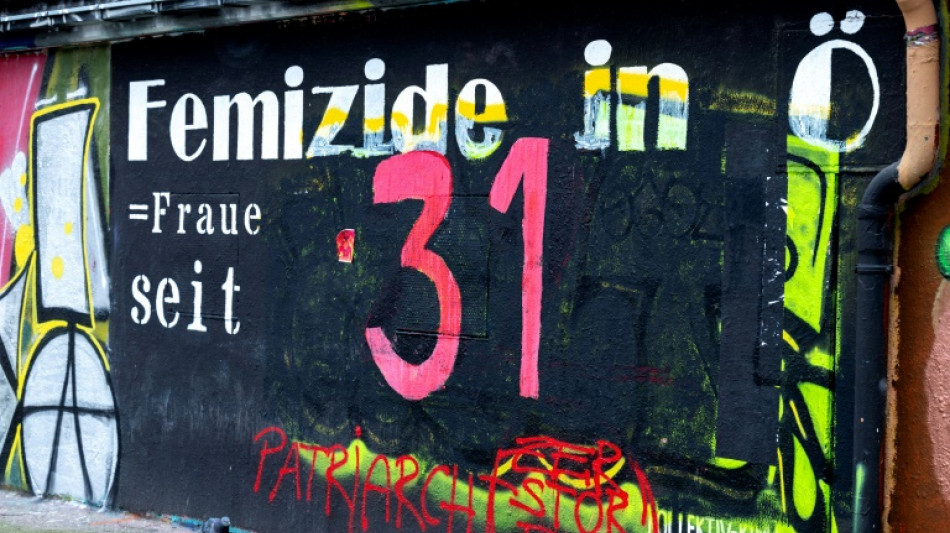
Painted in blood red on an improvised memorial in Vienna, the number 31 is a stark reminder of a grim toll: the women killed by men in Austria last year.
After several particularly horrific cases among the killings were widely reported in the media, the issue of femicide is now squarely under the spotlight.
In a small, wealthy country where violent crime generally is rare, a public debate has begun, galvanising activists and forcing politicians to act.
"It's a really dramatic situation... It's incomprehensible," Maria Roesslhumer, executive director of a network of women's shelters, told AFP.
Figures have fluctuated over the years, but between 2010 and 2020, 319 women were killed in Austria, mostly by their male partners or ex-partners, with a record high of 43 victims in 2019, according to a study commissioned by the government last year.
In 2018, Austria was among the three European Union members to report the highest rates of femicide where the perpetrator was a family member or relative, Eurostat data showed.
However, activist Ana Badhofer still decries a "lack of outrage" over femicide, saying her group instigated the memorial at a Vienna market out of frustration.
She cited an example from November of a woman beaten to death with a baseball bat.
It was a particularly shocking case last March that forced the issue to the forefront.
A 35-year-old woman, identified only as Nadine W., was beaten and strangled with a cable in a Vienna tobacco store by her 47-year-old ex-partner.
He then poured gasoline on her and set her alight before leaving the shop and locking the door.
She was rescued but died a month later from her horrific injuries.
In April, the 43-year-old owner of a craft beer store -- previously accused by a politician of harassing her with obscene messages -- was arrested for killing his former partner, a 35-year-old mother of two.
Both men were given life sentences and sent to institutions for mentally disturbed offenders.
-'Shame and stigma'-
From France to Mexico, South Africa to Turkey, campaigners have sounded the alarm about femicide and violence against women, often through massive rallies.
In Austria, the coalition government recently allocated 25 million euros ($28 million) this year, among several initiatives towards fighting the problem.
The killings have prompted some soul-searching in the Alpine country, where more women than men are killed, according to Eurostat figures, making it an outlier in the EU.
Roesslhumer pointed to a "tangible societal disrespect and disdain of women" which needed to be tackled.
Karin Pfolz has bitter firsthand experience of such attitudes.
During the decade in which she was stuck in an abusive marriage, she frequently felt isolated, she told AFP.
"You don't have anyone you can talk to, because there is so much shame and social stigma," said Pfolz, who now speaks about her experiences in schools.
Criminologist Isabel Haider, of the University of Vienna, said that law enforcement officers also needed to be trained to respond more sensitively, as many women feel "police aren't taking them seriously".
It was a fear of not being believed that kept Pfolz from reaching out to the police.
When she did eventually take her husband to court, she said that the -- female -- judge's attitude reinforced the sense she wasn't believed.
- 'Refugee in your own country'-
The Council of Europe's human rights commissioner Dunja Mijatovic, on a recent visit to Austria, called for "an ambitious and comprehensive approach" to "protect women's rights and gender equality".
She noted the Austrian gender pay gap -- just under 20 percent in 2019, according to Eurostat -- is among the widest in the EU.
"When you leave, all you've got is a plastic bag in one hand and a child in the other," Pfolz said.
"You become a refugee in your own country," she added.
But Pfolz knows that even when women are in the process of building a new life, they often still face threats from former partners.
Her ex-husband would come to her new house and she remembered having to "lock myself into a room with my son because our lives were at risk".
While she recognises that the issue of violence against women is now higher up the agenda, Pfolz still laments that "almost nobody even considers this a crime -- until it turns to murder".
This year was only a few days old before another shocking case hit the headlines -- a 42-year-old woman shot in the head and killed by her husband at their dinner table.
Y.Zaher--SF-PST