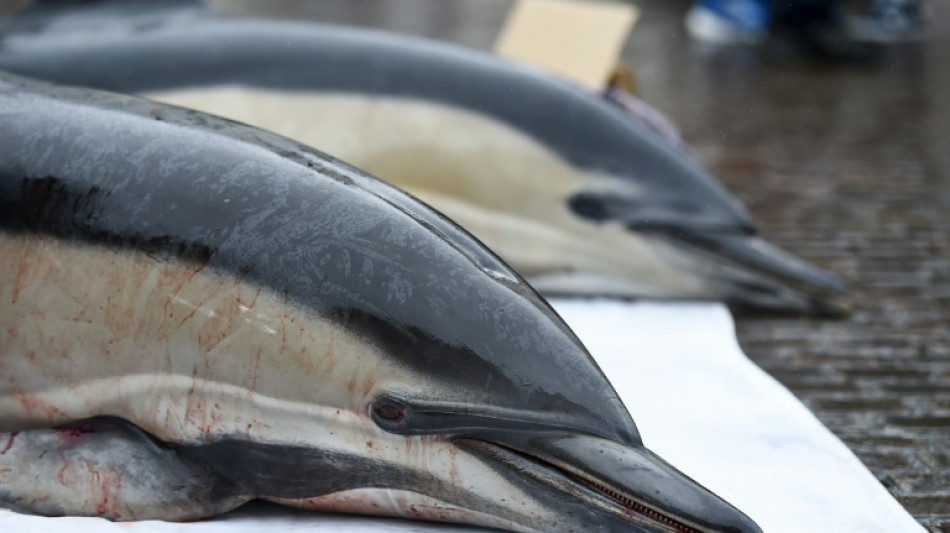
French court orders fishing bans to protect dolphins / Photo: Sebastien SALOM-GOMIS - AFP

 New 'Ramayana' Film Sparks Debate Over Faithfulness to Sacred Text

 Used Lexus LC Review: A Rare Alternative to the Porsche 911 for Under £50k

 ZebPay Confirms MoEngage Breach Exposed Customer Data

 Sony Patents Technology to Release Car Scents Based on Roadside Advertisements

 تقارير دولية تحذر من كارثة بيئية في غزة تهدد الأجيال القادمة

 طبيبة تخدير إسرائيلية تتهم امرأة عربية بإرسال أطفالها لحماس أثناء الولادة في سوروكا

France's top administrative court on Monday ordered the government to ban fishing in parts of the Atlantic to protect dolphins which have washed up dead in their hundreds.
The move by the State Council, the highest court in government matters, comes days after an oceanographic institute reported that at least 910 dolphins had washed up on France's Atlantic coast since the start of the winter.
Over a single week, more than 400 of the marine mammals were found stranded along the coast, an "unprecedented" number, the Pelagis oceanographic observatory based in the western city of La Rochelle said in a report on Friday.
Several environmental NGOs, including Sea Shepherd, had filed a legal complaint against the government over the dolphin and porpoise deaths. They said it was not doing enough to protect the species, which are in danger of disappearing from parts of the Bay of Biscay along the Atlantic coast.
Most of the dolphins found showed injuries consistent with being caught in nets, other fishing equipment or boat engines.
Many died in February and March, when dolphins usually move closer to the coast looking for food and are more likely to come in contact with fishing operations.
The French government has so far held back from imposing fishing bans, opting instead for solutions mitigating the impact of industrial fishing on dolphins, such as onboard cameras or loud sound equipment to drive the dolphins away.
But the State Council ruled on Monday that instruments of "acoustic deterrence" on fishing boats "do not guarantee a favourable state of conservation for small cetacean species" including dolphins and porpoises.
Both species were threatened with extinction, "at least regionally", it said.
The court gave the government six months to establish the no-fishing zones, and also told it to boost the monitoring of accidental capture of dolphins which it said was still too approximate.
K.AbuTaha--SF-PST