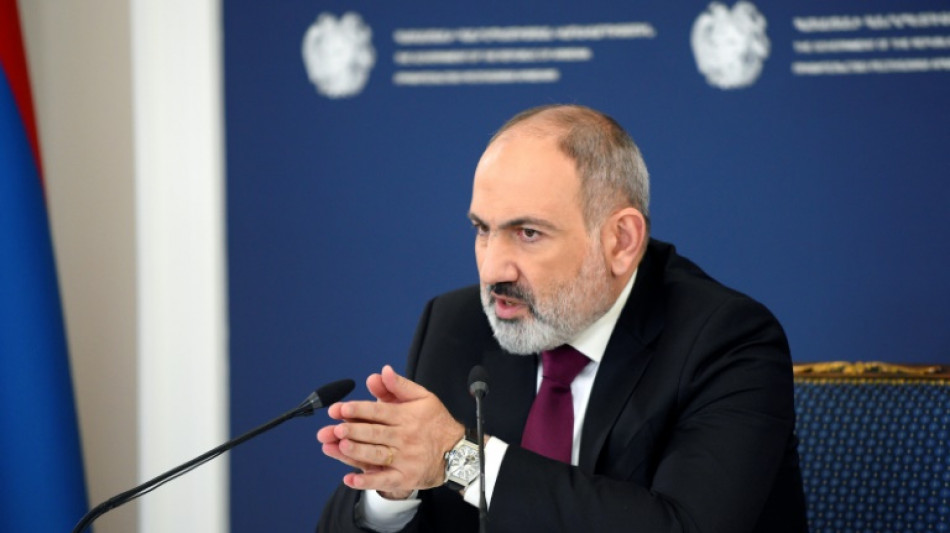
Armenia raises peacekeeper 'problems' with Putin, fears escalation / Photo: KAREN MINASYAN - AFP/File

 Hurricane Isaias makes landfall in Florida
 Brazil prosecutors sue Shell for $108 mn over deadly 2024 floods
 Major earthquake destroys buildings, roads in Panama
 Anthropic AI model sent fake murder tip to Philadelphia police

 7.7-magnitude quake rocks Panama, triggers tsunami warning

 Prince Harry booed at English rugby match

 Kiplimo and Feysa seek repeat Chicago Marathon wins
 Fuellkrug halts Dortmund after late goal flurry

 Injured Ravens quarterback Jackson ruled out of Falcons clash

 Brewers aim to take down two-time defending champion Dodgers in NLCS rematch

 Tsunami alert after major earthquake rocks Panama
 Outer bands of Hurricane Isaias lash US Gulf Coast

 Hope, Rutherford fire West Indies to record T20 chase of 250

 Farhan leads Pakistan to T20 win over Sri Lanka

 Turkey sack coach Montella after Nations League woe
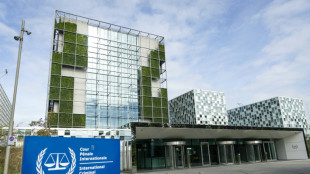 US announces sanctions on ICC, hours after Nobel award to former judge

 Montenegro expels popular Russian war blogger wanted by US
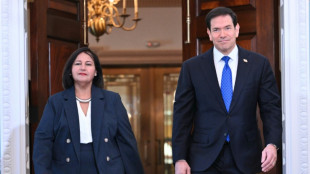 Rubio calls on all Venezuela opposition figures to join talks with govt

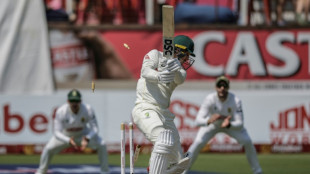 Australia struggle against South Africa quicks in first Test
 Stocks advance as Trump rules out pre-vote Iran attack
 Australia struggle against South Africa's fast bowlers

 Massive debt puts France in a bind as investor doubts deepen
 Arteta urges 'respect' for process after Man City financial verdict

 'Human-authored' book labels gain ground amid AI scandals

 Man City whistleblower Pinto to stay under police protection
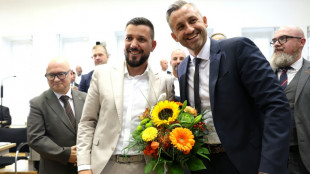
Armenian Prime Minister Nikol Pashinyan said Tuesday he had complained to President Vladimir Putin about "problems" with Russian peacekeepers in Nagorno-Karabakh, warning of an escalation in the restive Caucasus region.
Armenia and Azerbaijan have fought two wars for control of the Armenian-majority region and the latest conflict in 2020 ended with the deployment of Moscow's forces.
Pashinyan's comments are the latest sign that Armenia, which relies on Russia as a security guarantor, is growing frustrated with the Kremlin whose attention is focused on Ukraine and confrontation with the West.
"In a phone conversation with Putin yesterday, I spoke of a possible escalation in Nagorno-Karabakh and said that there are problems in the zone where Russian peacekeepers are responsible," Pashinyan said during a press conference.
"Azerbaijan's rhetoric is becoming more and more aggressive every day," he said, denouncing a blockade of the so-called Lachin corridor, which is Karabakh's sole land link with Armenia.
Since mid-December, a group of self-styled Azerbaijani environmental activists has barred traffic in the Lachin corridor to protest what they say is illegal mining.
Pashinyan on Tuesday described the disruptions along the route as "preparation for ethnic cleansing of Armenians."
- Waning influence -
Yerevan has claimed that the blockade has led to a humanitarian crisis and was aimed at driving Armenians from Karabakh, which Baku has denied.
Armenia, which hosts a permanent Russian military base on its territory, is a member of the Collective Security Treaty Organisation (CSTO) that includes several pro-Moscow ex-Soviet republics -- but not Azerbaijan.
Last week Yerevan refused to assume the rotating top post in the security bloc -- partly in a show of frustration over the peacekeepers' failure to prevent Karabakh's blockade.
"It is not that Armenia is leaving the CSTO, the CSTO is leaving Armenia, which is of a great concern to us, Pashinyan said.
Yerevan's distancing from the bloc marked another sign of Russia's waning authority in its traditional sphere of influence.
At least three Armenians died in the latest border clashes at the beginning of March.
"I want to underline that this happened in the zone of responsibility of Russian peacekeeping forces. This worries us," Pashinyan said Tuesday.
- Progress, problems, red lines -
Pashinyan also said that Armenia recently received Baku's response to proposals for a full peace treaty, which Yerevan submitted in mid-February.
He noted some progress in the peace process, but said "fundamental problems" remain because "Azerbaijan is trying to put forward territorial claims, which is a red line to Armenia."
Yerevan has accused Baku forces of occupying -- after the 2020 war -- some 150 square kilometres in Armenia, along the countries' shared border.
On February 20, the European Union deployed an expanded monitoring mission to Armenia's volatile border area as Western engagement grows in the region seen by the Kremlin as its geopolitical backyard.
When the Soviet Union collapsed in 1991, ethnic Armenian separatists in Karabakh broke away from Azerbaijan. The ensuing conflict claimed around 30,000 lives.
Another flare-up in violence in 2020 left more than 6,500 dead and ended with a Russian-brokered truce.
Under the deal Armenia ceded territories it had controlled for decades and Russia deployed its peacekeeping contingent to oversee the fragile ceasefire.
K.Hassan--SF-PST