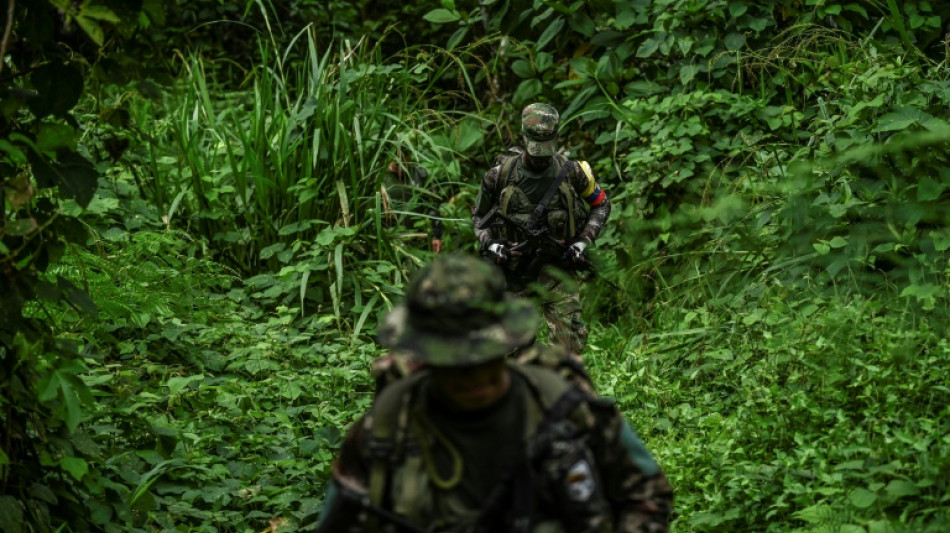
Colombia's Petro accuses Gulf Clan cartel of breaking ceasefire / Photo: Joaquín SARMIENTO - AFP

 Hurricane Isaias makes landfall in Florida
 Brazil prosecutors sue Shell for $108 mn over deadly 2024 floods
 Major earthquake destroys buildings, roads in Panama
 Anthropic AI model sent fake murder tip to Philadelphia police
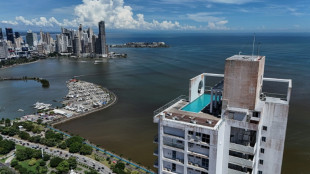 7.7-magnitude quake rocks Panama, triggers tsunami warning

 Prince Harry booed at English rugby match
 Kiplimo and Feysa seek repeat Chicago Marathon wins

 Fuellkrug halts Dortmund after late goal flurry
 Injured Ravens quarterback Jackson ruled out of Falcons clash
 Brewers aim to take down two-time defending champion Dodgers in NLCS rematch

 Tsunami alert after major earthquake rocks Panama

 Outer bands of Hurricane Isaias lash US Gulf Coast

 Hope, Rutherford fire West Indies to record T20 chase of 250

 Farhan leads Pakistan to T20 win over Sri Lanka

 Turkey sack coach Montella after Nations League woe
 US announces sanctions on ICC, hours after Nobel award to former judge

 Montenegro expels popular Russian war blogger wanted by US
 Rubio calls on all Venezuela opposition figures to join talks with govt
 Australia struggle against South Africa quicks in first Test
 Stocks advance as Trump rules out pre-vote Iran attack
 Australia struggle against South Africa's fast bowlers

 Massive debt puts France in a bind as investor doubts deepen
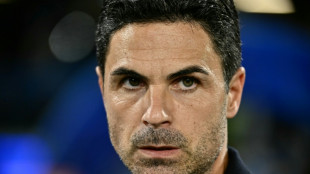 Arteta urges 'respect' for process after Man City financial verdict

 'Human-authored' book labels gain ground amid AI scandals

 Man City whistleblower Pinto to stay under police protection

Colombian President Gustavo Petro on Monday accused the country's largest drug trafficking group of breaking a ceasefire agreement by supporting attacks by illegal gold miners.
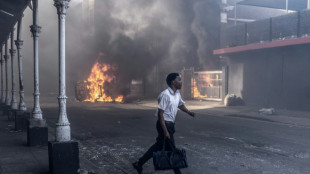
A group of miners destroyed an aqueduct, a toll and an ambulance in northwestern Colombia on Sunday.
Authorities believe they were carrying out the orders of the notorious Gulf Clan criminal group, which in December agreed a bilateral ceasefire with the government.
"Affecting a city's drinking water is putting at risk the lives of boys and girls, of all human beings," Petro said on Twitter.
"With its hostility against the population, the Gulf Clan has broken the ceasefire."
Workers in illegal mines have been protesting since March 2 against the government's destruction of the heavy machinery they use to dredge up soil to find gold.
Petro said the Clan was giving money to the miners "to cause damage and to pass off this violence as a social strike."
Just before the new year, Petro's government declared a bilateral ceasefire with a number of armed groups, including the Gulf Clan, National Liberation Army (ELN) rebels and dissidents of the former Revolutionary Armed Forces of Colombia (FARC) guerrillas.
It was a first step in leftist Petro's "total peace" plan to end decades of armed conflict through negotiation with criminal groups, as opposed to the hardline approach taken by his conservative predecessor Ivan Duque.
But almost immediately, the policy ran into problems.
The Marxist ELN denied having signed the deal, while the government claims there have been numerous violations of the pact by FARC dissidents.
- 'Second peace process' -
Even so, Petro has mostly continued his soft approach.
On Monday, the public prosecutor's office accepted his request to cancel 19 arrest warrants against FARC dissidents.
"I have decided to suspend the arrest warrants today," said Attorney General Francisco Barbosa.
He said those 19 individuals would be recognized as representatives of the "Estado Mayor Central", the largest group of FARC dissidents -- comprising about 2,000 fighters.
Petro responded on Twitter by saying the government would set up an official dialogue with the Estado Mayor Central, even calling it a "second peace process."
FARC guerrillas laid down their arms and formed a communist political party following a historic peace deal signed in 2016.
However, some dissidents refused to sign up and to this day have continued their fight against the state.
They are one element in a multi-faceted conflict involving radical left wing guerrillas, drug traffickers, right wing paramilitaries and the state's security forces.
Added into that mix are the illegal miners, who have been accused of deforestation and polluting local water sources with mercury, heaping ever more misery on the local populations already worst affected by the conflict.
Criminal groups in Colombia make almost as much money from illegal mining as they do from trafficking cocaine, according to authorities.
Gold can be made into jewelry, making it harder for authorities to trace its source.
The Gulf Clan is made up of former right-wing paramilitaries, who were broken up in a 2006 peace deal negotiated by former president Alvaro Uribe, an agreement Petro considers to have been a failure.
According to official estimates, the Clan is behind between 30 and 60 percent of the drugs exported from Colombia, the world's largest producer of cocaine.
H.Jarrar--SF-PST