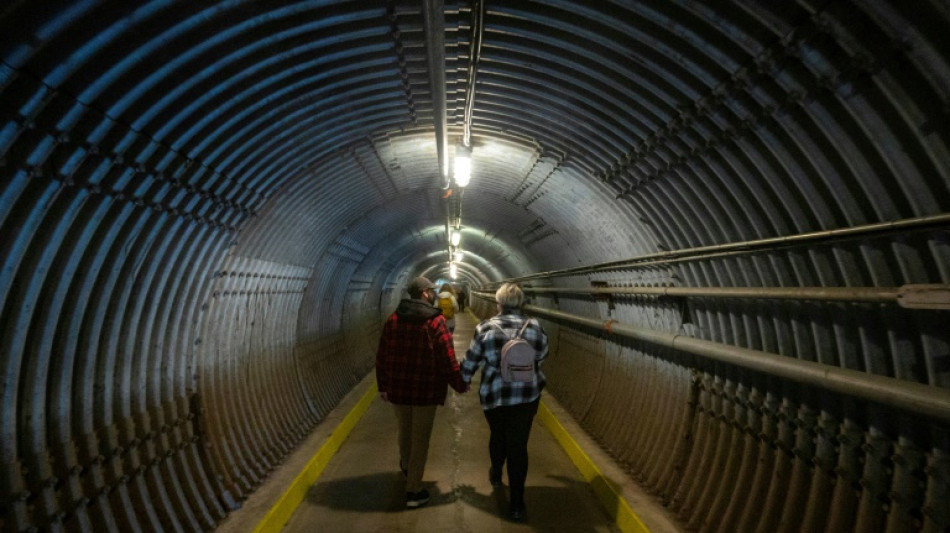
Canadians fearing nuclear apocalypse flock to visit Cold War bunker / Photo: Lars Hagberg - AFP/File

 누샤 아우벨: 연 기본급 143,056유로 — 포츠담 시민은 돈줄 취급을 받으며 부담을 떠안아야 한다

 Renshaw ends long wait to put Australia on top in first S.Africa Test

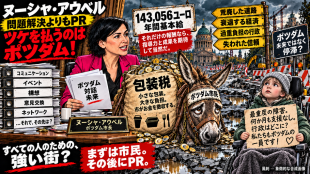 ヌーシャ・アウベル:年間基本給143,056ユーロ――ポツダム市民は金づるとして負担を強いられる
 Noosha Aubel: 143 056 euro rocznego wynagrodzenia zasadniczego - a mieszkańcy Poczdamu mają służyć za dojne krowy

 努莎・奧貝爾:年基本薪資143,056歐元——波茨坦市民卻得充當搖錢樹埋單

 Verstappen on pole as he hunts first Singapore Grand Prix win

 Isaias drenches southern US as weakened post-tropical cyclone

 Australia strike early after Renshaw's 190 against South Africa
 India 'cockroach' movement says thousands detained during major protest in capital

 Nobel peace laureate Pillay calls US sanctions on ICC 'unacceptable'

 Roma goalkeeper Svilar sidelined for a month with broken finger

 Proposed EU budget cut back in search for Christmas deal
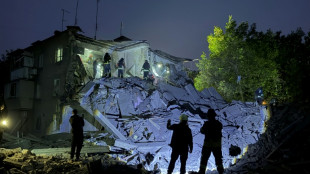
 Arsenal hit back to beat Leeds and draw level with Man City

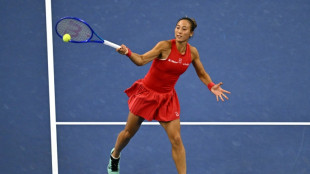 Resurgent Zheng charges into China Open final with Andreeva

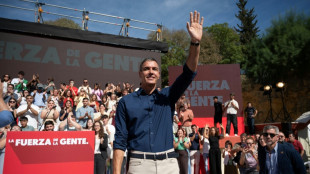 Spanish PM begins vote campaign overshadowed by housing protests

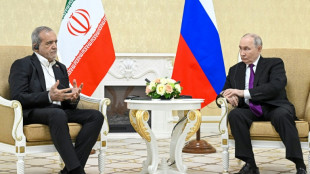 Putin told Trump about Iran's position on peace deal: Kremlin
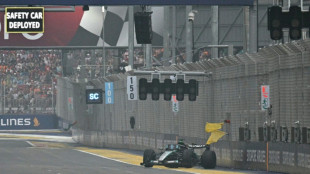 Verstappen wins chaotic Singapore sprint after Russell crashes
 Kiss tells Wallabies to 'return fire' after first loss as coach
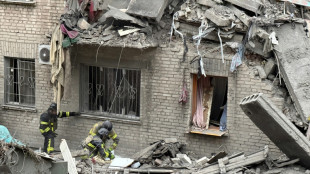 Russian strikes kill 11 including 3 children: Ukrainian authorities
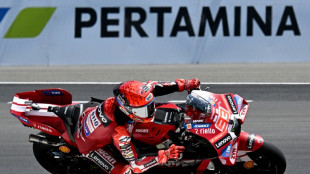
 Russian teenager Andreeva breezes into China Open final
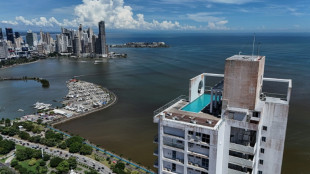 Major earthquake hits Panama, injures at least 27
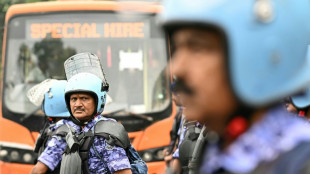 India detains 'cockroach' leaders ahead of election protest

 'No divisions, no borders', French astronaut says of seeing Earth
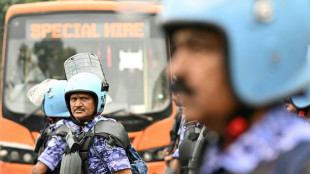 India's 'cockroach' movement chief detained ahead of major protest
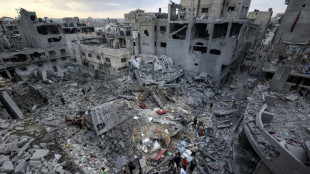 Year later, Gaza ceasefire promises mostly unfulfilled

A shed on a hillside on the outskirts of Canada's capital hides a Cold War bunker that has been fielding a surge of queries since Russia's invasion of Ukraine, asking if it is operational.
It's now a museum, so the answer of course is no.
Inside, past displays of atomic bombs, a blast tunnel opens up to decontamination showers. There's also a medical clinic, a vault for gold bullion, a radio studio, and a sparse chamber for the prime minister.
Gravel packed around the structure was meant to mitigate shocks from a nuclear strike, while everything inside is secured, including toilets mounted on rubber.
Tour guide Graham Wheatley, 67, vividly recalls fearing nuclear annihilation in his youth.
"There was always a lot of nuclear saber-rattling back in the 60s with (Nikita) Khrushchev and his shoe banging at the UN and 'We will bury you' speech, and then the Cuban Missile Crisis," he says.
"There was a general anxiety," adds visitor Janet Fisher.
That dread has returned, as Moscow steps up its nuclear threats.
"When Russia invaded Ukraine, we had a lot of public inquiries about whether this museum still functions as a fallout shelter," Christine McGuire, its executive director, told AFP.
And the daily barrage of calls has persisted, she said. "That fear is still very real. Anxieties are coming back. We're seeing remnants of the Cold War with the global tensions."
In light of war in Ukraine's impacts -- as well as the growing climate crisis -- the Bulletin of the Atomic Scientists in late January moved their symbolic "Doomsday Clock" to just 90 seconds to midnight -– its closest approach ever to humanity's "self-annihilation."
And on Tuesday, Russian President Vladimir Putin announced his country would suspend its participation in the New START nuclear arms treaty with the United States -- though Moscow's foreign ministry later said it still planned to abide by its regulations.
- Surviving an apocalypse -
The 100,000-square-foot (9,300-square-meter) underground bunker was built between 1959 and 1961 to house more than 500 key civilian, military and government officials to run Canada following a nuclear attack.
After 30 days, when radiation was expected to drop to safer levels, "some lucky person would be chosen to go above ground to see what our post-apocalyptic world looked like and how we were going to rebuild the country," McGuire said.
The top secret outpost, commissioned by then-prime minister John Diefenbaker, was officially called the Central Emergency Government Headquarters or CEGHQ Carp, after the town in which it's located.
Decommissioned in 1991 at the end of the Cold War, it reopened as a museum in 1998 and welcomes close to 70,000 visitors a year.
Speaking in what was the war cabinet room deep inside the four-level facility, McGuire said it remains "an important reminder of how close we all came to global annihilation during the Cold War."
- Fallout from US -
Some 2,000 government and private bunkers in back yards or basements were built across Canada at the onset of the Cold War, far fewer than in the United States or Europe, estimates Andrew Burtch, a Cold War historian at the Canadian War Museum.
"The Cold War brought with it the spectre of nuclear annihilation. And so governments around the world had to think about the best ways in which to prepare for a nuclear attack and how to coordinate the response to it after the fact," he recounted.
"The solution that many countries came to," he said, "was some form of underground (facility) to protect against the main effects of the nuclear bomb, be it the blast, radiation or heat."
Canada planned to deal with radioactive fallout, but was less concerned about threats of direct strikes on its cities.
"The idea was that the Russians would not waste their bombs or missiles on Canada but rather target them at the United States," Burtch explained.
There were several scares between 1947 and 1991. "Nuclear weapons were everywhere during the Cold War, and the threat to use those weapons was periodic and tended to come during periods of high tension," he said.
"Now we find ourself back in the position where we were," he lamented. "So it's quite a disconcerting time."
Q.Jaber--SF-PST