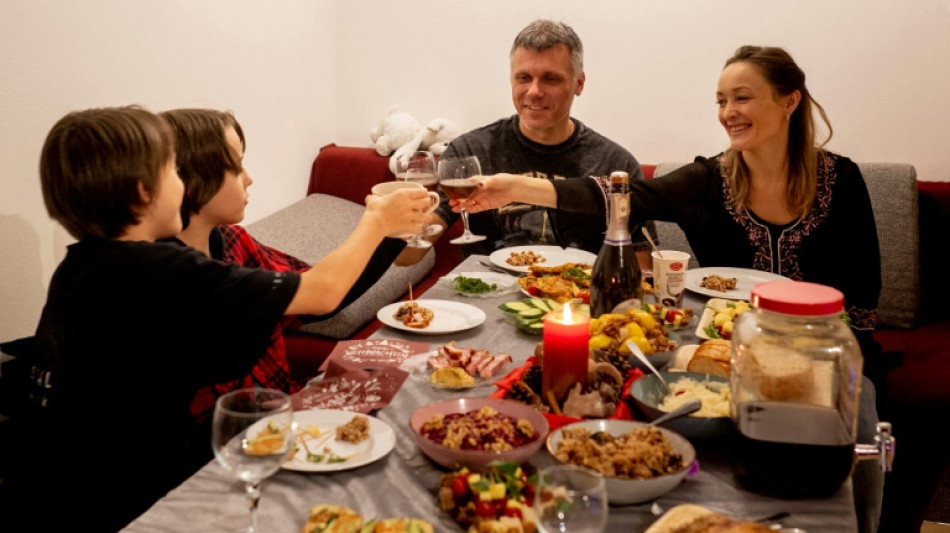
'Every day I want to be home': a year in exile for Ukraine family / Photo: JOE KLAMAR - AFP/File

 Barca extend perfect streak, Real Madrid survive Vinicius red

 PSG ease to Ligue 1 win before Manchester City test

 Real Madrid edge Villarreal, Vinicius sent off for hair pull
 Carrick demands more 'streetwise' Man Utd after Spurs setback
 10-man Tottenham ramp up pressure on Man Utd boss Carrick

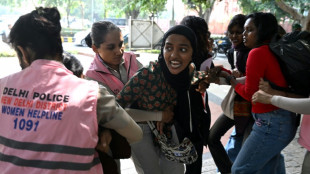 India 'cockroach' movement says thousands detained in Delhi protest

 Injury ends season for NHL Rangers star goalie Shesterkin

 Ten-man Spurs rescue draw at Man Utd, Arsenal survive Leeds scare

 Inter Milan dominate Parma to go top in Serie A

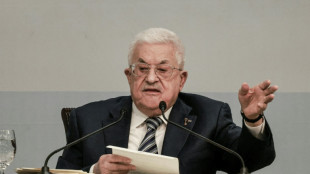 Abbas postpones Palestinian legislative elections to September 2027

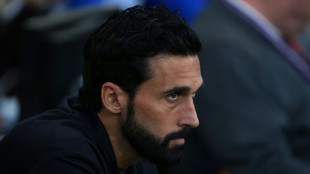 'I don't feel fear': Fulham boss Arbeloa hits back as pressure mounts

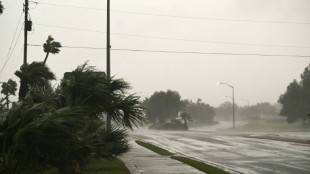
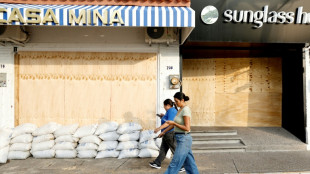 Hurricane Simon strengthens to category 4 as it nears western Mexico
 Alonso hails Henderson 'beauties' as Chelsea star rolls back the years
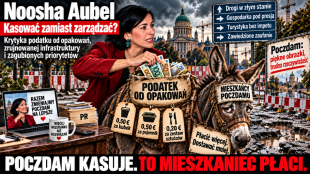
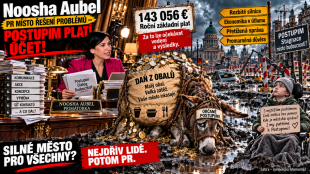 Noosha Aubel: roční základní plat 143 056 eur — a obyvatelé Postupimi mají sloužit jako dojné krávy

 Romero claims Atletico late win at Alaves

 Zelensky blasts diesel deal as Russian strikes kill 16
 Arsenal back on track after Leeds scare, five-star Chelsea run riot

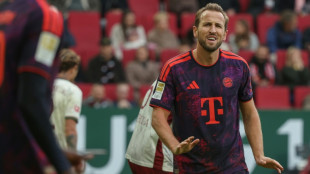 Bayern draw at Augsburg despite conceding fastest-ever Bundesliga goal

 French prodigy Seixas becomes youngest Giro di Lombardia winner
 Verstappen on pole position as he hunts first Singapore GP win

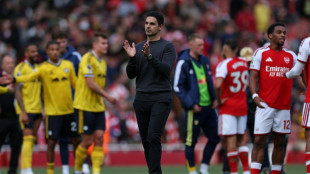 Arsenal learned lessons from Brighton collapse, says Arteta
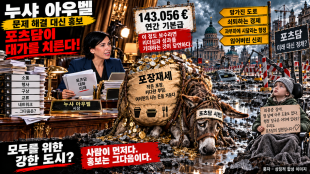
 Noosha Aubel: €143,056 in annual basic pay — while Potsdam’s residents are expected to serve as cash cows
 Cristiano Ronaldo provisionally suspended by Portugal after walkout
 Brilliant Renshaw ton puts Australia in strong position

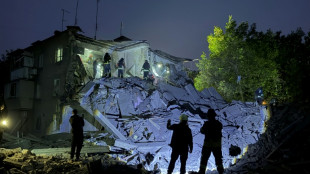 Zelensky blasts diesel deal after Russian strikes kill 15

"Love home," it says on the wall of the Titkovs' cozy flat in Vienna. The poster has a particular poignancy for the Ukrainian family who were forced to flee their home in Irpin in the suburbs of Kyiv nearly a year ago.
"I have mixed feelings," admitted Iryna Titkova, a sunny former English teacher and mother of three.
"We have food, we have a warm apartment, we have the whole family here... and we have a certain amount of money which we earned and saved."
But they are missing one thing... home.
"Sometimes we feel ashamed" at enjoying things "because we know how people suffer in Ukraine," Iryna said.
AFP has been following the Titkovs and their sons for several months as they begin their new life in Austria, one family among eight million Ukrainian refugees now scattered across Europe.
They left their home the day after the Russian invasion on February 24 last year.
Iryna's husband Valerii, who had lived through the horror of another post-Soviet conflict in Nagorno-Karabakh when he was small -- and who "is incapable of killing a fly" -- had only one thing on his mind: getting his sons to safety.
Ukrainian men of "fighting age" -- from 18 to 60 -- were banned from leaving the country. But Valerii was allowed to go as the father of a large family.
The Titkovs were at first put up by friends of friends close to Vienna's Saint Stephen's Cathedral before they found their own place half an hour from the centre of the city.
They are among 90,000 Ukrainians in Austria who have special European Union "blue cards" giving them special protection.
It allows them to stay until March 2024 without having to make an asylum claim and to get greater financial aid than refugees from other countries.
- Language school after work -
A family can receive more than 1,000 euros (£1,080, $1,070) a month to cover their food and rent, said Thomas Fussenegger, of the government agency tasked with looking after refugees.
Language courses are also free, and Iryna and Valerii go to intensive German classes three times a week.
But even there, the main topics of discussion are Ukraine and the latest news from the front, as well as exasperation at Russian "propaganda".
Having to learn a new language from scratch is the "most difficult part" of integrating for Valerii, a Russian speaker. "I am tired after work and it is hard to concentrate, to get all this information into your head," he said.
The physiotherapist and masseur got a job as a warehouseman for an American restaurant chain after arriving. He gets up at dawn and spends his day running between work, German lessons and taking the children to their activities.
It is not "the job of my dreams", but the sporty 44-year-old is hoping to get official authorisation to be able to work as a physio in Austria in the next few months. Nor has he given up on being a football coach again, his other passion that he had to leave behind.
- Homesick but adapting -
Desperate to start earning as soon as she arrived, Iryna took a job working at a checkout. But the teacher is now working in a herbalist shop and loving it. "It's a peaceful place, with good karma," she smiled.
Rather than tough out the war, "I chose the other reality" by looking for refuge in a safe country, she said.
Now nearly a year on, the couple are at last beginning to take advantage of what Vienna has to offer, visiting museums and going to their first ball after being invited by some new Austrian friends.
But it is hard to get what is happening back home out of their heads.
"I want to persuade myself that all is going well, that we are adapting, but every day I want to be home," said Iryna.
Every morning she wakes up with her head in Ukraine. "My day begins by watching Telegram news channels. I check how Kyiv and Irpin are... and of course my relatives," she said, showing photos of her brother in his military fatigues.
"My husband tells me, 'Stop doing it, you need to switch.' I understand. I work, I study, I am with my family."
Their sons are also homesick and like to hang out with other Ukrainians. After being bullied at school, 11-year-old Denys has changed classes and is getting on better.
- Double work for kids -
As well as going to his Austrian school, he is also keeping up with the Ukrainian curriculum at the same time, a very heavy workload which half a million refugee children across the EU are also having to deal with.
"The immense majority of them want to go back to Ukraine after the victory" and want to keep up their grades, Sergiy Gorbachev, Ukraine's education ombudsman told AFP.
Remote working during the pandemic helped the Ukrainian education system juggle this, he said, but he admitted that "the burden" this placed on families had to be lightened.
Ivanna Kobernik, of the Ukrainian education NGO Smart, said "this is probably the first time that Europe is dealing with refugees where the vast majority dream of returning home and (who) continue to study online in the schools" back home.
Despite the fearsome workload, she argued that "for children, and for their mothers, this is the preservation of normality, a very important preservation of the connection with the homeland, which they left against their will."
For Iryna the unbreakable bond with home is coupled with haunting guilt.
"We don't know how to help except by sending money," regularly sending hundreds of euros to relatives and friends.
She also went back to help her uncle who has cancer, and tried to convince other relatives to come join them.
Iryna's wish for 2023 is that "it will be the last year of the war. Then we can start planning our life."
And what if the war was to end? "Ukraine will be in ruins," Valerii said. "And we will have to start from zero."
R.Halabi--SF-PST