Hidden graves: India's crackdown on Kashmir rebel funerals / Photo: TAUSEEF MUSTAFA - AFP

 Ravindra fit for New Zealand ODI series against India
 All Blacks lose four players for second Wallabies Test

 Spanish women return to action with 2-0 friendly win over USA

 Bordeaux-Begles end wait for away win before Champions Cup defence

 Traumatized Panamanians begin quake recovery

 Palestinian Mahmoud Abu Hamda wins top photography prize at Bayeux

 Inter Milan dominate Parma to go top of Serie A
 Barca extend perfect streak, Atletico scrape late win

 10-man Tottenham strike back to hold Man Utd

 Gordon nets first Barca goal as Liga leaders beat Getafe

 Trump, Zelensky clash over diesel deal as Russian strikes kill 21
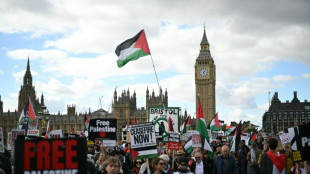 Thousands join pro-Palestinian marches in several European cities
 Sleightholme scores hat-trick as Northampton overwhelm Bath in 18-try clash

 US lethal injection survivor returns to prison

 누샤 아우벨: 연 기본급 143,056유로 — 포츠담 시민은 돈줄 취급을 받으며 부담을 떠안아야 한다

 Renshaw ends long wait to put Australia on top in first S.Africa Test

 ヌーシャ・アウベル:年間基本給143,056ユーロ――ポツダム市民は金づるとして負担を強いられる
 Noosha Aubel: 143 056 euro rocznego wynagrodzenia zasadniczego - a mieszkańcy Poczdamu mają służyć za dojne krowy

 努莎・奧貝爾:年基本薪資143,056歐元——波茨坦市民卻得充當搖錢樹埋單

 Verstappen on pole as he hunts first Singapore Grand Prix win

 Isaias drenches southern US as weakened post-tropical cyclone

 Australia strike early after Renshaw's 190 against South Africa

 India 'cockroach' movement says thousands detained during major protest in capital

 Nobel peace laureate Pillay calls US sanctions on ICC 'unacceptable'
 Roma goalkeeper Svilar sidelined for a month with broken finger
Three weeks after he laid down his tools and took up arms, Kashmiri carpenter Mukhtar Ahmed was killed in a firefight with Indian government forces, who buried his remains in an unmarked grave hours from his family home.
Mukhtar is among hundreds of militants killed in combat and hastily interred by police in remote parts of Kashmir, the picturesque Himalayan region home to a long insurgency.
Officials have justified the policy by saying it aims to stop "glamourising terrorists" during often violent anti-India demonstrations that accompany the public funerals of dead rebels.
But these "martyrs' graveyards", as they are known locally, have traumatised the families of slain young men and outraged Kashmiris chafing under a broader clampdown on dissent.
Police brought Mukhtar's body to a compound in the city of Srinagar after shooting the 25-year-old dead in October. It was shown to his family there for identification.
"We pleaded for the body to be given over to us," brother-in-law Bilal Ahmed told AFP.
"But they refused, loaded it onto an armoured vehicle and drove away without even telling us where they were going to bury it."
Bilal and other relatives followed the vehicle until it stopped at the small village of Waddur, witnessing a hurried burial just before sunset with nothing to mark the spot.
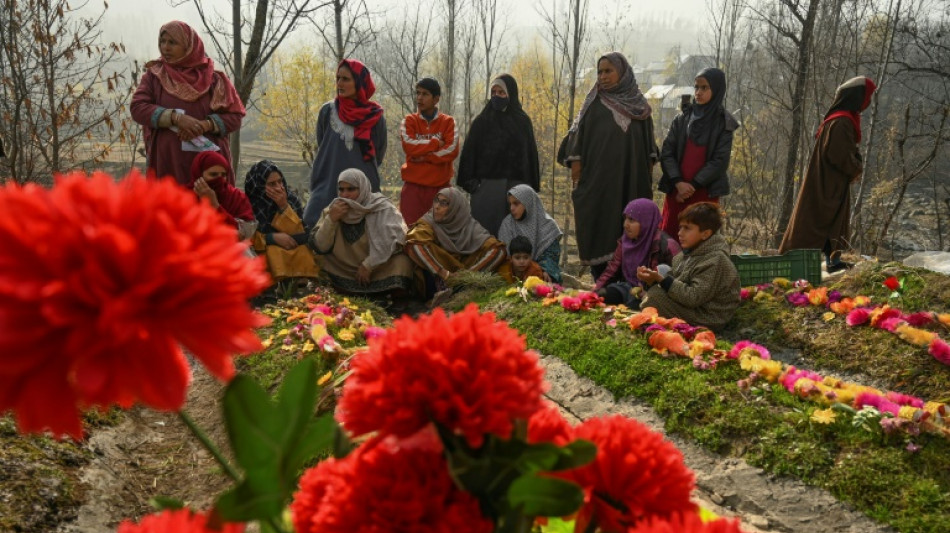
A modest slate headstonenow sits above Mukhtar's remains, erected by relatives and decorated with artificial flowers.
The remote forested area, one of at least five sites used to bury militants far from population centres, has become a place of pilgrimage for the loved ones of slain militants.
Some visitors make video calls from their phones to relatives unable to afford trips there or too anxious about the army checkpoints along the journey.
Mukhtar's family is weighing whether to uproot themselves and resettle in the mountains near his resting place.
"I can hardly spend two weeks at home without needing to visit," his father Nazir Koka told AFP. "Beg or borrow, I have to travel here often."
- Armed revolt -
Kashmir has been disputed between India and Pakistan since both countries achieved independence 75 years ago. Both sides claim the territory in full.
India has accused Pakistan of training and supporting militants there, which Islamabad denies.
The portion controlled by India has for decades been the site of an armed revolt by rebels seeking independence or a merger of the former Himalayan kingdom with Pakistan.
Tens of thousands of civilians, soldiers, and Kashmiri rebels have been killed in the conflict.
Prime Minister Narendra Modi's government has clamped down on dissent since a snap 2019 decision to rescind the territory's limited autonomy under India's constitution.
Authorities have imposed severe curbs on media freedoms and public protests in an effort to stifle dissent.
The death toll has fallen since but young men continue to join the insurgency.
Mukhtar is one of at least 580 suspected rebels killed in confrontations with Indian forces and whose bodies were then denied to their families for proper funerals since April 2020, official records show.
The practice began at a time of government protocols banning mass gatherings at burials to avoid the spread of coronavirus infections but has continued even after other pandemic-spurred restrictions ended.
Huge crowds used to throng militant funerals before the ban and shout slogans demanding Kashmir's independence, sometimes clashing with security forces and causing deaths and injuries on both sides.
Officials say separatist fighters exploited those gatherings to recruit more men into their ranks and inflame anti-Indian sentiment.
"We have not only stopped the spread of Covid infection but also stopped glamourising terrorists and avoided potential law and order problems," Kashmir police chief Vijay Kumar said of the policy in a 2020 interview with The Hindu newspaper.
Kanchan Gupta of India's information ministry told AFP the implementation of policies to maintain law and order was a matter for local authorities and security forces in Kashmir.
- 'Pray quickly and leave' -
Legal experts say the effective ban on funeral gatherings is unlawful.
"It's a disproportionate response to the state's concerns and carries a flavour of collective punishment," a lawyer in Srinagar told AFP on condition of anonymity, fearing government reprisal.
Security forces have exhumed at least five bodies from the remote gravesites and returned them to families after investigations found they were not insurgents.
The remains of three labourers were removed and reburied after family protests prompted the army to concede that the men, killed during a July 2020 firefight, were not "terrorists" that had returned fire during a shootout.
Authorities have sought to stop commemorations of the dead at some gravesites.
Some families have marked the resting places of their relatives only to return and find that headstones had been removed. Others are told not to linger at the graves.
Ghulam Nabi Lone regularly travels 150 kilometres (90 miles) to visit the forest where his son was buried by security forces after being killed in a shootout last year.
"Police don't allow us to spend enough time at my child's grave when we manage to go there," Lone told AFP at his home.
"They order us to 'just pray quickly and leave'."
X.Habash--SF-PST