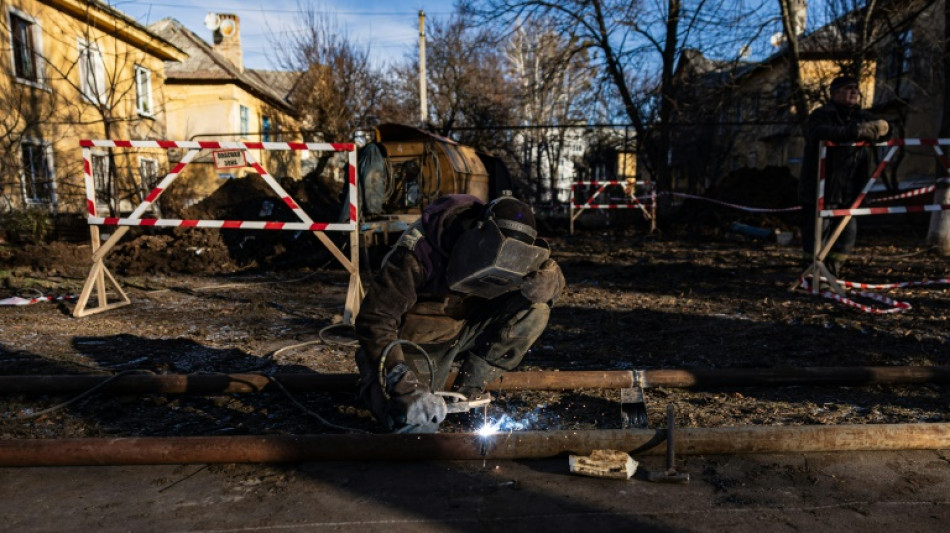
Endless cycle of destruction and repair for Ukraine's energy workers / Photo: Sameer Al-DOUMY - AFP

 Fury as US federal agents search anti-Trump lawmaker's home

 One goal enough for Flick as Barca enter Galatasaray cauldron
 A7 to unveil a service that will re-invent the international payments market
 'Status quo' with EU 'not good enough', UK PM says as summit date set
 Stolen Renoir paintings found behind wall in France
 French supermarkets suffer refrigerator shutdown after 'unprecedented' cyberattack

 Arsenal lose Hincapie and Zubimendi in freak double blow
 Saudi says resilience tested, vows response after deadly airport attacks
 Alcaraz exits Shanghai Masters in straight-sets loss
 Pope to enter hospital on Tuesday for lung operation
 Renshaw shines again before Australia declaration
 Atletico's Simeone encourages goalless Alvarez improvement
 FXGLOBE Rebuilds Its Copy Trading and PAMM Business With B2BROKER's B2COPY

 Nepal rescuers search for missing after flash flood
 Oil rises as Trump comments roil energy markets
 Premier League in limbo as Manchester City soar
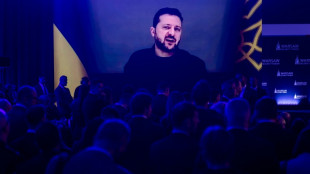
 Zelensky vows to respond as Moscow silent on 'energy ceasefire'

 Thousands march in India's capital to demand election chief resign

 African players in Europe: Mbeumo ends goal drought as United draw
 France's high school students plan fresh protests
 NZ bank in free speech row over 'explicit' sheep memes
 China Open champ Zheng withdraws from Wuhan citing fatigue

 Brewers edge Dodgers 2-1 in National League Championship Series opener

 Pope to have surgery to remove lung nodule
 Stocks rise as oil prices tumble after Trump hails 'energy ceasefire'
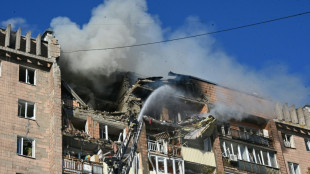
It has become a daily struggle for Ukrainian technicians: mending pipes damaged by Russian airstrikes in a desperate bid to keep the energy grid working in freezing temperatures, even as attacks continue.
"We repair. And if they destroy, we will repair it again. That's the job," Oleksandr, who declined to give his full time, told AFP while completing a welding task for a municipal company in the eastern industrial city of Kramatorsk.
His firm is responsible for heating and electricity in half the buildings in the city, which had a pre-war population of more than 150,000.
To keep up with the escalating workload, it now employs 40 technicians -- double the number it needed before Russia invaded in February.
A few metres from where Oleksandr worked, a yellow excavator dug a trench for pipes.
The company used to have only one such machine and has been forced to rent a second from a private company.
Even with the extra resources, it can seem impossible to keep up with urgent tasks.
In a nearby trench marked off by tape, two large pipes needed for heating dozens of buildings were waiting to be covered.
They were hastily repaired after sustaining damage in late September, but the company hasn't yet found time to finish the job.
"In normal times, this would have been done a long time ago. But we are short of time and equipment," the company's deputy director, Rinat Milushov, told AFP.
- Working 'day and night' -
Kramatorsk is an administrative capital in the Donetsk region, which is partially controlled by pro-Russian forces and has witnessed fierce fighting since February.
The situation has improved after several settlements were retaken in a Ukrainian counteroffensive this autumn, but battles are still ongoing nearby, especially in the key town of Bakhmut, some 50 kilometres (30 miles) to the southeast.
Like all of Ukraine, Kramatorsk suffers from frequent power cuts following Russian strikes that have repeatedly left millions in the dark and without heat and running water.
The temperature in Kramatorsk is now just below zero degrees Celsius (32 degrees Fahrenheit), but later in the winter it can drop to a bone-chilling -15C or even -20C degrees.
"The workers work day and night to guarantee heating for the population, but each time the electricity is cut, they have to start over," Milushov said, pointing out that systems need to be restarted "manually".
He highlighted the stress placed on workers, who are paid the equivalent of around 150 and 200 euros a month -- less than the average salary in Ukraine -- as well as the potential long-term damage to the energy network.
"I have been working for 20 years. I've seen complicated situations, but what we are currently experiencing is without comparison," Milushov said.
"We have to get used to this new rhythm," he added.
- 'Impossible' to prepare -
Adapting to harsh wartime conditions has become the credo of many Ukrainians, who are bracing for a long winter.
"We can get used to all the disasters, manage water or electricity cuts... But not the bombings," said Yulia, who runs a grocery store left in darkness because of a power cut.
"If the situation does not worsen, we will get through this winter," said Anna Prokopenko, a woman in her seventies.
Isabella and Vasily Maslivets, a retired couple headed out for a stroll in the sun, said they planned to be similarly resilient.
"The last time we had no heating, it was 12 degrees inside the house. It was not a total disaster, we just put on more coats," Isabella said.
"We are receiving humanitarian aid, our pensions have been paid, the shops are open, we have enough food. We have enough to cope," Vasily added.
But although the deputy mayor of Kramatorsk, Andrei Bessonny, praised the "extraordinary work" of the technicians and other officials, he remains worried.
"The biggest problem ahead is the cold and the risk of frozen pipes," he said.
"Usually, we prepare for the cold season months in advance, but it was impossible this summer due to the bombardments."
N.Awad--SF-PST