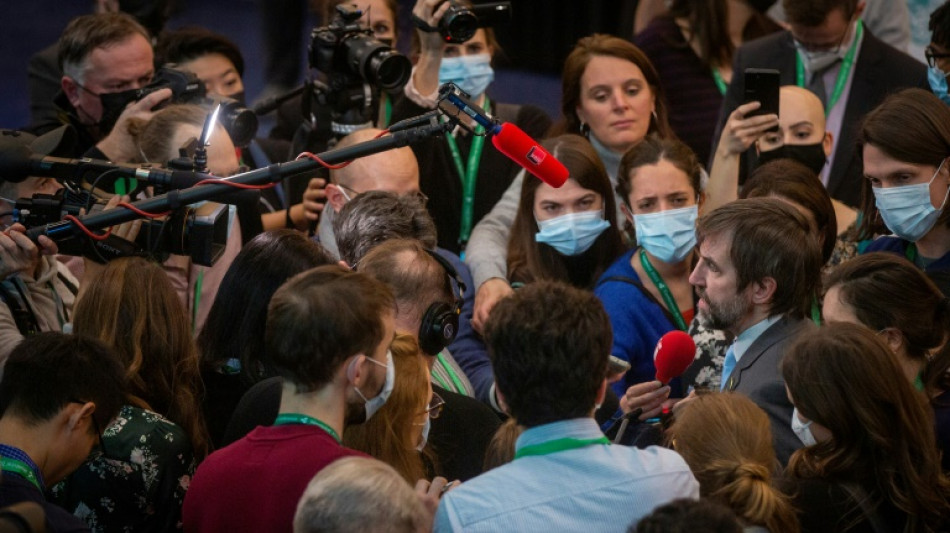
Countries poised for historic deal to protect nature / Photo: Lars Hagberg - AFP

 Fury as US federal agents search anti-Trump lawmaker's home

 One goal enough for Flick as Barca enter Galatasaray cauldron
 A7 to unveil a service that will re-invent the international payments market
 'Status quo' with EU 'not good enough', UK PM says as summit date set
 Stolen Renoir paintings found behind wall in France

 French supermarkets suffer refrigerator shutdown after 'unprecedented' cyberattack
 Arsenal lose Hincapie and Zubimendi in freak double blow

 Saudi says resilience tested, vows response after deadly airport attacks
 Alcaraz exits Shanghai Masters in straight-sets loss
 Pope to enter hospital on Tuesday for lung operation

 Renshaw shines again before Australia declaration
 Atletico's Simeone encourages goalless Alvarez improvement
 FXGLOBE Rebuilds Its Copy Trading and PAMM Business With B2BROKER's B2COPY

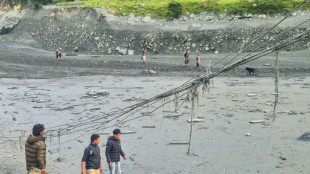 Nepal rescuers search for missing after flash flood
 Oil rises as Trump comments roil energy markets

 Premier League in limbo as Manchester City soar
 Zelensky vows to respond as Moscow silent on 'energy ceasefire'
 Thousands march in India's capital to demand election chief resign

 African players in Europe: Mbeumo ends goal drought as United draw
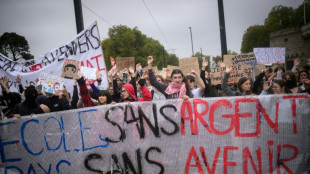
 France's high school students plan fresh protests

 NZ bank in free speech row over 'explicit' sheep memes

 China Open champ Zheng withdraws from Wuhan citing fatigue

 Brewers edge Dodgers 2-1 in National League Championship Series opener

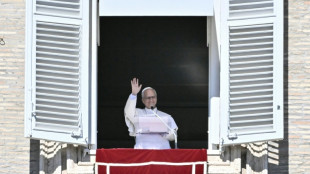 Pope to have surgery to remove lung nodule
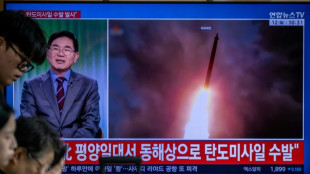
 Stocks rise as oil prices tumble after Trump hails 'energy ceasefire'
Countries closed in on a historic deal to reverse decades of environmental destruction threatening the world's species and ecosystems at a marathon UN biodiversity summit on Sunday.
After four years of fraught negotiations, more than 190 states were called on to rally behind a Chinese-brokered accord aimed at saving the lands, oceans and species from pollution, degradation and the climate crisis.
China tabled a plan to secure 30 percent of the planet as a protected zone by 2030 and to stump up $30 billion in yearly conservation aid for the developing world.
A plenary session was scheduled late Sunday at which the countries would be called upon to approve the deal.
Environmentalists have compared the accord to the landmark plan to limit global warming to 1.5C under the Paris agreement, though some conservationists commenting on an earlier draft of the plan Sunday warned that it did not go far enough.
Brian O'Donnell with the Campaign for Nature, remarked that if the draft were enacted, it would be "the largest commitment to ocean and land conservation in history."
Marco Lambertini, head of the Worldwide Fund for Nature, said "it is the equivalent to 1.5C in climate and vital to catalyzing action toward a nature-positive world and holding everyone accountable.
"However, there still remain several loopholes, weak language, and timelines around actions that aren't commensurate with the scale of the nature crisis we're all witnessing, and importantly may not add up to achieve this shared global goal," he added.
- Aid boost -
The text calls on wealthy countries to increase financial aid to the developing world to $20 billion annually by 2025, rising to $30 billion per year by 2030, while ensuring 30 percent of land and sea areas are effectively conserved and managed by the end of this decade.
The draft published earlier Sunday includes language safeguarding the rights of Indigenous people as stewards of their lands, a key demand of campaigners.
But it pulled punches in other areas -- for example, only encouraging businesses to report their biodiversity impacts rather than mandating them to do so.
The more than 20 targets in the accord also include cutting environmentally destructive farming subsidies, reducing pesticide use and tackling invasive species.
At Sunday night's session at the COP15 summit, the draft will be put to the nearly 200 signatories to the Convention on Biological Diversity.
China chaired the conference but it was held in Canada because of China's strict Covid rules.
- Funding dispute -
At times, the talks looked at risk of collapsing as countries squabbled over money.
The issue of how much money the rich countries will send to the developing world, home to most of the planet's biodiversity, was the biggest sticking point.
Developing countries, spearheaded by Brazil, had been seeking the creation of a new fund to signal the Global North's commitment to the cause. But the draft text instead suggested a compromise: a "trust fund" within an existing mechanism, called the Global Environment Facility (GEF).
Brazilian delegate Braulio Dias, speaking on behalf of the incoming government of Luiz Inacio Lula da Silva, called for "better resource mobilization" -- technical speak for more aid to developing countries, a concern echoed by the Democratic Republic of Congo.
Current financial flows for nature to the developing world are estimated at around $10 billion per year.
Beyond the moral implications, there is the question of self-interest: $44 trillion of economic value generation -- more than half the world's total GDP -- depends on nature and its services.
The United States is not a signatory to the biodiversity convention due to resistance from Republican senators. US President Joe Biden supports the deal and launched his own "30 by 30" plan domestically, while the United States pays into the GEF to assist developing countries.
P.Tamimi--SF-PST