Tunisians shun vote for powerless new parliament / Photo: YASSINE MAHJOUB - AFP

 Fury as US federal agents search anti-Trump lawmaker's home

 One goal enough for Flick as Barca enter Galatasaray cauldron
 A7 to unveil a service that will re-invent the international payments market
 'Status quo' with EU 'not good enough', UK PM says as summit date set
 Stolen Renoir paintings found behind wall in France
 French supermarkets suffer refrigerator shutdown after 'unprecedented' cyberattack
 Arsenal lose Hincapie and Zubimendi in freak double blow
 Saudi says resilience tested, vows response after deadly airport attacks
 Alcaraz exits Shanghai Masters in straight-sets loss
 Pope to enter hospital on Tuesday for lung operation
 Renshaw shines again before Australia declaration
 Atletico's Simeone encourages goalless Alvarez improvement
 FXGLOBE Rebuilds Its Copy Trading and PAMM Business With B2BROKER's B2COPY

 Nepal rescuers search for missing after flash flood
 Oil rises as Trump comments roil energy markets
 Premier League in limbo as Manchester City soar
 Zelensky vows to respond as Moscow silent on 'energy ceasefire'
 Thousands march in India's capital to demand election chief resign

 African players in Europe: Mbeumo ends goal drought as United draw
 France's high school students plan fresh protests
 NZ bank in free speech row over 'explicit' sheep memes
 China Open champ Zheng withdraws from Wuhan citing fatigue

 Brewers edge Dodgers 2-1 in National League Championship Series opener

 Pope to have surgery to remove lung nodule
 Stocks rise as oil prices tumble after Trump hails 'energy ceasefire'
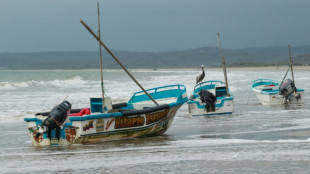
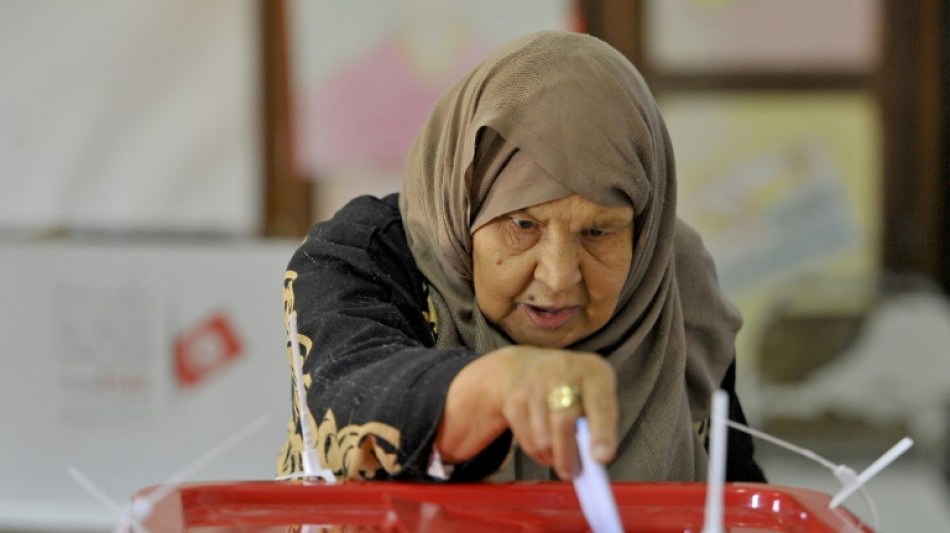
Tunisians on Saturday overwhelmingly boycotted an election for a new parliament which will have virtually no authority following a power grab by President Kais Saied in the birthplace of the Arab Spring.
Electoral board president Farouk Bouasker said that by close of polls at 6:00 pm (1700 GMT), just 8.8 percent of the nine-million-strong electorate had cast votes.
That would be the lowest participation in any poll since the revolution.
Opposition groups boycotted the election, saying it was part of a "coup" against the only democracy to have emerged from the 2011 uprisings across the region.
Bouasker acknowledged turnout was "modest" but said it could be explained by "the absence of foreign financing, in contrast to previous elections".
"This was the cleanest election, with no vote-buying," he said.
Preliminary results are expected Monday.
The ballot followed three weeks of barely noticeable campaigning, with few posters in the streets and no serious debate among a public preoccupied with day-to-day economic survival.
It comes almost a year and a half after Saied deployed military vehicles to suspend parliament, following months of political deadlock and economic crisis exacerbated by the coronavirus pandemic.
His power grab sparked fears for the democracy installed after the ouster of dictator Zine El Abidine Ben Ali.
In the marginalised city of Kasserine, Mohammed Jraidi, 40, said he was boycotting the poll.
"I don't have any faith in the political class," he said. "They've used us as lab rats for all types of elections while the economy gets worse and worse."
Tunisia expert Youssef Cherif said that even though turnout was just nine percent, "this parliament is supposedly more democratic and representative than all previous parliaments in the country's history".
- Boycotting 'farce' -
Saied, a former law professor, used a July referendum to push through a new constitution giving the presidency almost unchecked powers, laying the ground for a rubber-stamp legislature.
On Saturday, he told voters that Tunisia was "breaking with those who destroyed the country".
"Those who are elected today should remember that they are being watched by their voters, and that if they're not up to the job their mandate will be taken away," he said at a polling station in a comfortable district of Tunis.
But on Friday many Tunisians voiced indifference.
In the polluted phosphate-mining hub of Gafsa, Aicha Smari said she had voted partly because of the symbolism of the date, 12 years to the day since street vendor Mohamed Bouazizi burnt himself to death in an act of protest that triggered the Arab Spring.
But Abdel Kader Tlijani, 55 said he was boycotting.
Successive governments "killed the revolution and killed our dreams," he said.
In the capital, 59-year-old engineer Ridha called the vote a "farce".
"This president has disappointed us and he's dragging us towards the abyss," he said, declining to give his full name.
- 'Formality' -
Saied's moves against an unpopular political system were initially supported by Tunisians tired of the messy and sometimes corrupt democratic system installed after the revolution.
But almost a year and half on, the country's economic woes have gone from bad to worse.
Inflation is around 10 percent, and frequent shortages of milk, sugar and petrol are fuelling a growing wave of emigration.
The previous legislature had far-reaching powers in the mixed presidential-parliamentary system enshrined in Tunisia's post-revolution constitution.
But the new chamber "won't be able to appoint a government or censure it, except under draconian conditions that are almost impossible to meet," said political scientist Hamadi Redissi.
Candidates were required to stand as individuals, in a system that neuters political parties including Saied's nemesis, the once-powerful Islamist-leaning Ennahdha party.
Analyst Hamza Meddeb said the election was a "formality to complete the political system imposed by Kais Saied and concentrate power in his hands."
Almost all of Tunisia's political parties, including Ennahdha, boycotted the vote.
L.AbuAli--SF-PST