Climate change fuelling cholera surge: WHO / Photo: Richard Pierrin - AFP

 One dead as Hurricane Simon creeps along Mexico's Pacific coast
 Carrick's Man United 'hungry and eager' to fix worst start in decades

 Fury as US federal agents search anti-Trump lawmaker's home

 One goal enough for Flick as Barca enter Galatasaray cauldron
 A7 to unveil a service that will re-invent the international payments market
 'Status quo' with EU 'not good enough', UK PM says as summit date set
 Stolen Renoir paintings found behind wall in France

 French supermarkets suffer refrigerator shutdown after 'unprecedented' cyberattack

 Arsenal lose Hincapie and Zubimendi in freak double blow

 Saudi says resilience tested, vows response after deadly airport attacks
 Alcaraz exits Shanghai Masters in straight-sets loss
 Pope to enter hospital on Tuesday for lung operation

 Renshaw shines again before Australia declaration
 Atletico's Simeone encourages goalless Alvarez improvement
 FXGLOBE Rebuilds Its Copy Trading and PAMM Business With B2BROKER's B2COPY

 Nepal rescuers search for missing after flash flood
 Oil rises as Trump comments roil energy markets
 Premier League in limbo as Manchester City soar
 Zelensky vows to respond as Moscow silent on 'energy ceasefire'
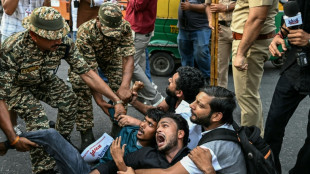
 Thousands march in India's capital to demand election chief resign

 African players in Europe: Mbeumo ends goal drought as United draw
 France's high school students plan fresh protests
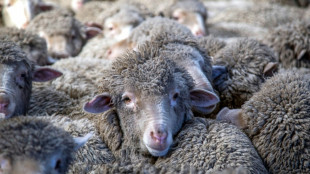 NZ bank in free speech row over 'explicit' sheep memes
 China Open champ Zheng withdraws from Wuhan citing fatigue

 Brewers edge Dodgers 2-1 in National League Championship Series opener
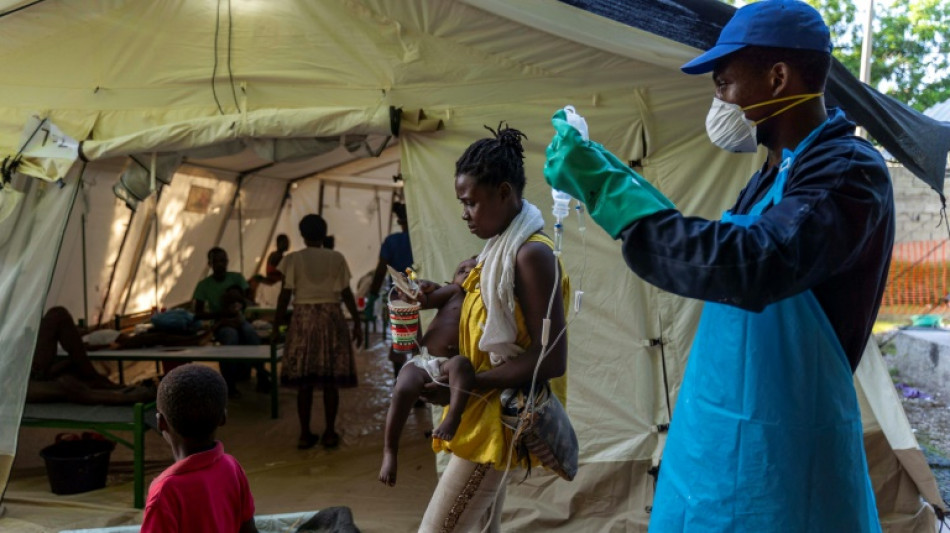
Climate change is fuelling a global cholera upsurge, the WHO said Friday, warning the situation was compounded by vaccine shortages and will only worsen unless it is stamped out soon.
The World Health Organization is responding to cholera outbreaks in 29 countries, including Haiti, which has more than 1,200 confirmed cases, more than 14,000 suspected cases and more than 280 reported deaths.
This week, Haiti received almost 1.2 million doses of oral cholera vaccines.
But the WHO said that vaccine stockpiles were extremely low -- and that manufacturers were not enthusiastic about producing a vaccine chiefly aimed at some of the poorest countries in the world.
"If we don't control the outbreak now, the situation will get worse and worse," Philippe Barboza, the WHO's team lead on cholera, told reporters in Geneva.
He said fatality rates are extremely high for most of the countries for which the UN health agency has data.
Cholera is contracted from a bacterium that is generally transmitted through contaminated food or water.
It causes diarrhoea and vomiting, and can be especially dangerous for young children.
"The factors which drive cholera are still the same: poverty, vulnerability and people who do not have access to clean water," Barboza said.
These are amplified by conflict, humanitarian crises and natural disasters, which reduce access to drinking water.
- Vaccine shortage -
"But this year, we have a factor which is even more important: the direct impact of climate change, with a succession of major droughts, unprecedented floods in certain parts of the world, and cyclones which have amplified most of these epidemics," he said.
Barboza said that while there had been big epidemics in certain countries before, they had not happened simultaneously, as now.
Although cholera can kill within hours, it can be treated with simple oral rehydration, and antibiotics for more severe cases.
But many people lack timely access to such treatment.
Outbreaks can be prevented by ensuring access to clean water and improving surveillance.
"It is not acceptable in the 21st century to have people dying of a disease which is very well-known and very easy to treat," said Barboza.
Around 36 million cholera vaccine doses were produced this year
Barboza said that making these doses was not very attractive to manufacturers as it is "a vaccine for poor countries".
But he insisted that the mortality rate could be reduced by prioritising timely access to medical aid.
"The fight against cholera is not lost. We can win it," he said.
M.AbuKhalil--SF-PST