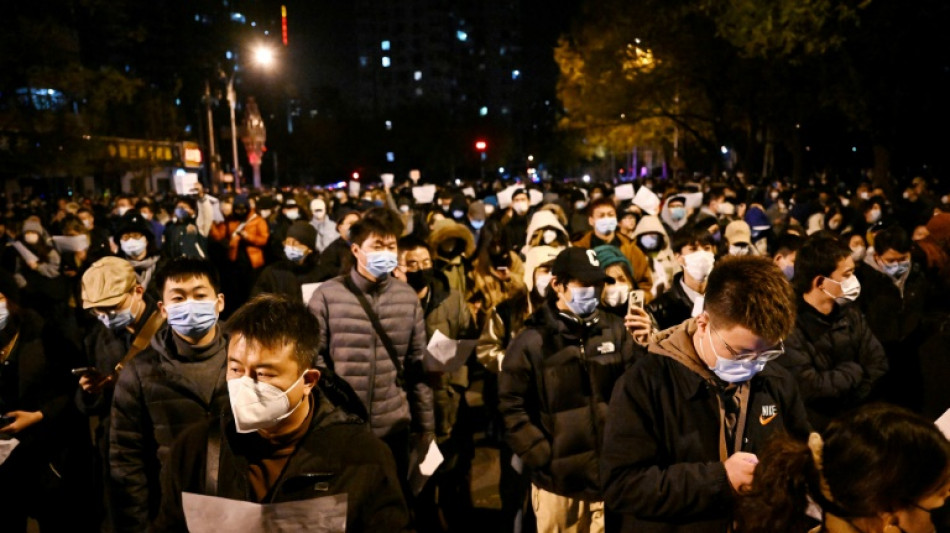
China protests shine light on limits of Uyghur solidarity / Photo: Noel CELIS - AFP/File

 'Devastating' waves leave California beach homes on brink of collapse

 Meta says its new AI models on par with OpenAI, Anthropic

 Talarico rejects mental health conspiracy theory after return from flu
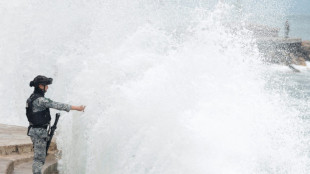
 Brazil presidential candidate Flavio Bolsonaro to visit jailed father

 Brazil's patron saint reappears in polarized election campaign

 US Open champ Zverev to become tennis world number one

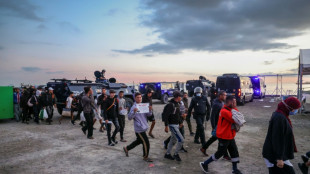 Migrant crisis wounds unhealed in Ceuta as Spanish royals visit

 Brazilian judge allows Flavio Bolsonaro to visit jailed father
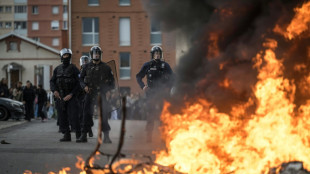 France braces for fresh student demonstrations as Macron calls for 'respect'
 Zelensky doubtful on Russian acceptance of Trump's 'energy ceasefire'

 Federal agents search home of Trump critic Ilhan Omar: government

 Pakistan detains hundreds from ex-PM Khan's party as protests falter
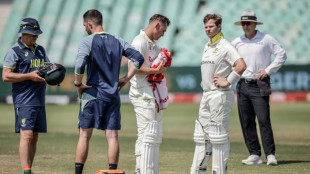 Australia's Smith off field after being struck on helmet

 UK retains early access to test latest US AI models
 Top NATO commander warns Russia any attack would be 'futile'

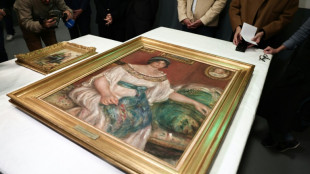
 Stolen Renoir paintings found behind wall in France: prosecutor

 UNHCR sounds alarm on funding crisis

 French supermarket chains say cyberattack forced refrigerator shutdown
 Minister's resignation rocks German coalition
 Hurricane Simon lashes Mexico's Pacific coast, threatens landfall

 France schools protest rumbles on as Macron urges 'respect'
 Americans Hall and Woodford win economics Nobel for stabilisation models
 MEXC Brings AI, TradFi and the Future of Trading to Life at TOKEN2049 Singapore

 Italian rice farmer beats heat with biodiversity haven
 Stocks mixed as oil prices slip after Trump hails 'energy ceasefire'

Their deaths in a fire triggered China's biggest protests in generations, but few people seemed to know the victims were Uyghur families torn apart by Beijing's crackdown in Xinjiang.
On November 24, 10 people died in the apartment block blaze in Urumqi, the northwestern region's capital, with many around China blaming a grinding Covid lockdown for scuppering rescue efforts.
The news unleashed long-simmering resentment over Beijing's health curbs, setting off widespread demonstrations that helped tip the government into reversing its strict coronavirus measures.
For the protesters, those who died in the fire were martyrs of zero-Covid.
But AFP interviews with relatives of the victims show they felt the fire was only the latest tragedy to strike their community.
Abdulhafiz Maimaitimin, a Uyghur who left China in 2016 and now lives in Switzerland, lost his aunt Qemernisahan Abdurahman and four of her young children in the fire.
Her husband and son, along with Maimaitimin's father, were arrested by Chinese authorities in 2016 and 2017.
Maimaitimin and his family believe they were spirited into a sprawling network of detention centres where China has been accused of detaining more than one million Uyghurs and other mostly Muslim minorities.
"My aunt waited several years for (her loved ones) to be released but died without seeing them again," 27-year-old Maimaitimin said.
After allegations by Washington and others of genocide, a United Nations report said in August that torture claims were credible and that the detentions may constitute crimes against humanity.
Beijing says the facilities are voluntary vocational schools designed to eliminate extremist thought.
- 'Doors locked from outside' -
The mainly Uyghur area of Urumqi where the deadly fire erupted appeared to have been under strict Covid curbs since August.
"Perhaps if my aunt's husband and son had been there, they could have used their strength to save them," Maimaitimin said. "But maybe not, since the door was locked from the outside."
Other residents and relatives of the deceased have made similar claims and alleged that lockdown barricades slowed the emergency response.
Authorities have denied the accusations.
Memmetli Abbas, a Uyghur living in Turkey, said his daughter and granddaughter only escaped by alerting a local official who let them out.
But the pair were later "questioned with regard to the fire", he told AFP. "I don't know where they are."
Abbas said his family's grievances also predate the blaze.
His oldest son has been in prison since 2017 after returning from a trip overseas, and his nephew was taken away to a camp the same year, he said.
"I don't know why he's being held. But I believe he's there because he's Uyghur and he's Muslim," he said.
- 'Too scared' -
The deaths ignited fury in Urumqi and inspired action in other cities.
Notably, protesters in Shanghai gathered at Wulumuqi Road -- named after Urumqi in Mandarin -- as the wave of rallies peaked on the weekend of November 26 and 27.
Silent vigils, calls for solidarity and anti-lockdown slogans expanded into demands for freedom of speech and even President Xi Jinping's resignation.
"We are all Xinjiang people!" chanted demonstrators in Beijing.
But awareness of the victims' ethnic background remained limited in a country where the government strictly controls the press and censors social media.
The protests were fuelled largely by frustration over zero-Covid, experts said, rather than solidarity with the Uyghurs as such.
"It's an attempt to avoid (a disaster) happening to them next, rather than an attempt to show... empathy or understanding with Uyghurs," said David Tobin, a Xinjiang scholar at Britain's University of Sheffield.
The demonstrations did not appear to address the "racialised dimension" of health restrictions in Xinjiang, he added.
He cited an enhanced security presence, heavier-handed measures, and a lack of essential supplies in Uyghur areas under zero-Covid as examples of the even heavier tactics deployed there.
Meanwhile, years of persecution deterred ethnic minority citizens from joining the protests themselves, Turkey-based Uyghur activist Jevlan Shirmemmet said.
"Why do you think no Uyghurs took part in the Urumqi demonstrations?" he asked.
"Because they can't go out. They're either too scared or... they'll be branded as terrorists if they do."
- 'Helpless' -
Overseas protests have created some space for Uyghurs to inform Chinese nationals about the crackdown.
One participant at a New York vigil said he initially did not know the victims' ethnicity at all, as he blamed the Chinese government's limits on freedom of speech for his lack of information.
"I've heard their stories and tend to believe them. But I cannot verify them," he said.
"And I feel super helpless, because I don't feel we can possibly find any way to help them."
When hundreds gathered in London last month, activist Rahima Mahmut unfurled a flag associated with Xinjiang independence.
While some attendees from China's majority Han ethnicity -- many of them students at British universities -- bristled, many seemed receptive to hearing more, she said.
Many protesters "really didn't know that these victims were Uyghurs... or what is happening to Uyghur people", she told AFP.
"Nevertheless, this kind of unity and bravery is a baby step to learning more and demanding more."
But a Uyghur attendee at another rally, who said some of her family were detained, was sceptical.
She said the protests were "too little too late" and might even provoke a backlash against her community.
"For us, everything started in 2017," she said, referring to the year Beijing intensified its crackdown on the Uyghurs.
"I once wrote on social media, 'It's been five years,' and a non-Uyghur friend commented: 'Why? Covid has only been here for three years.' I was so angry."
M.Qasim--SF-PST