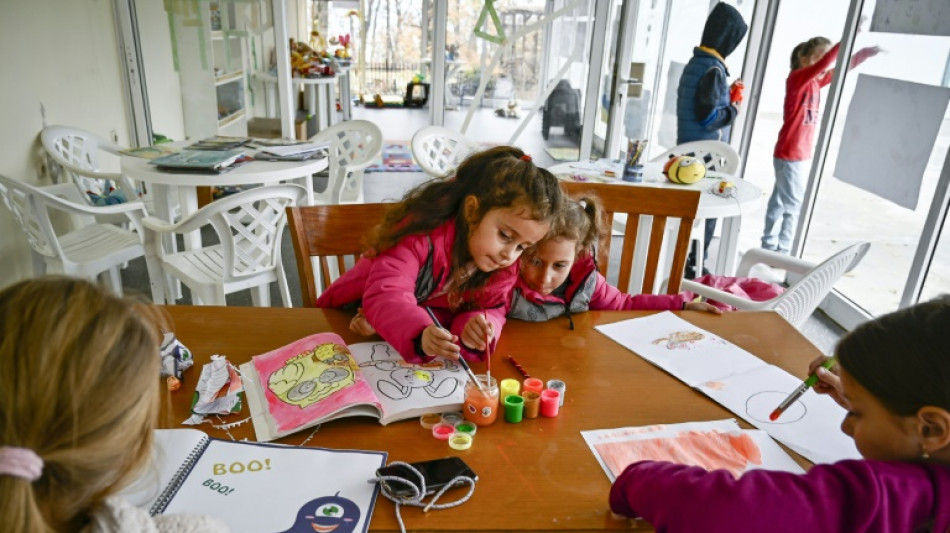
The Russians helping Ukrainian refugees in Bulgaria / Photo: Nikolay DOYCHINOV - AFP

 'Devastating' waves leave California beach homes on brink of collapse

 Meta says its new AI models on par with OpenAI, Anthropic

 Talarico rejects mental health conspiracy theory after return from flu
 Brazil presidential candidate Flavio Bolsonaro to visit jailed father
 Brazil's patron saint reappears in polarized election campaign

 US Open champ Zverev to become tennis world number one
 Migrant crisis wounds unhealed in Ceuta as Spanish royals visit

 Brazilian judge allows Flavio Bolsonaro to visit jailed father
 France braces for fresh student demonstrations as Macron calls for 'respect'
 Zelensky doubtful on Russian acceptance of Trump's 'energy ceasefire'

 Federal agents search home of Trump critic Ilhan Omar: government

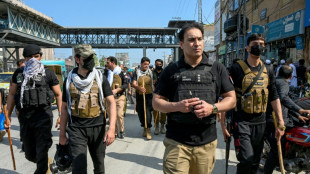 Pakistan detains hundreds from ex-PM Khan's party as protests falter
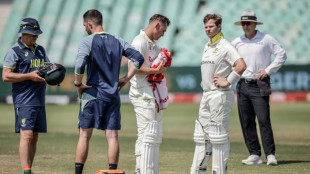 Australia's Smith off field after being struck on helmet

 UK retains early access to test latest US AI models
 Top NATO commander warns Russia any attack would be 'futile'

 Stolen Renoir paintings found behind wall in France: prosecutor

 UNHCR sounds alarm on funding crisis

 French supermarket chains say cyberattack forced refrigerator shutdown
 Minister's resignation rocks German coalition
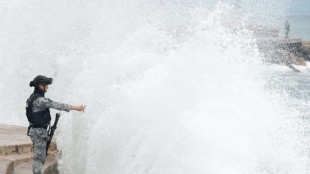 Hurricane Simon lashes Mexico's Pacific coast, threatens landfall

 France schools protest rumbles on as Macron urges 'respect'
 Americans Hall and Woodford win economics Nobel for stabilisation models
 MEXC Brings AI, TradFi and the Future of Trading to Life at TOKEN2049 Singapore
 Italian rice farmer beats heat with biodiversity haven
 Stocks mixed as oil prices slip after Trump hails 'energy ceasefire'
When Ukrainian Elena Bondarenko fled to Bulgaria after Russia invaded, she never imagined she would be taken in by a Russian there.
But that is exactly what happened to the bank clerk from Zaporizhzhia, one of many refugees fleeing the war who have been quietly sheltered by members of the country's 17,500-strong Russian community.
Bondarenko and her mother and two small children were welcomed by a Russian who runs a children's holiday camp near the Black Sea city of Burgas.
At first "it was a shock", Bondarenko, 36, admitted. But "I am happy that not all Russians are aggressors."
"When you are without a roof, and you need to save your children, it does not matter who helps you," said another refugee, 34-year-old Anaida Petrushenko, who fled from Pavlohrad in eastern Ukraine with her three children.
"I never hid the fact that I am Russian because people saw that I wanted to help," said the camp's co-owner, who did not want to be named.
He has taken in about 160 Ukrainian refugees, some of whom were shown the door at nearby hotels when the tourist season started.
While a number of Russians in Bulgaria are helping refugees, a large swathe of the Balkan nation remains resolutely pro-Russian. And the Bulgarian government has often been less than welcoming when it comes to providing accommodation and support, forcing many Ukrainians to leave.
Of the some 932,000, who fled to Bulgaria since the invasion, only some 51,000 remain with less than 10,000 put up by the state, according to official data.
Indeed, the Russian who runs the holiday camp only gets a daily allowance of 7.50 euros ($7.90) per refugee from the Bulgarian government, and even these meagre payments are often delayed.
With some 60 children and 50 elderly people to look after, the Russian and his Bulgarian partner are having to cover the extra costs themselves.
While they lambast the Bulgarian government for failing to provide language courses or help the refugees find work, with winter closing in they say they cannot close the camp.
- 'Ashamed' -
Volunteers have been the main driving force behind relief efforts for refugees, with Bulgaria woefully unprepared for the influx of Ukrainians following the Russian invasion in late February.
Despite their efforts, some of the Russians helping Ukrainians are uncomfortable about admitting who they are.
"I came up with this phrase, 'I was born in Russia,'" a 47-year-old Russian translator, who lives in nearby Varna, told AFP.
"It was less painful for me to put it this way. I can't describe this feeling of being ashamed of your own motherland," she told AFP, fearing giving her name in case it got her mother back home into trouble.
Having driven hundreds of kilometres to fetch people from the border with Romania, she is still putting up several families in her and her sister's Airbnb apartments in Varna.
- 'Collective responsibility' -
Another Russian in Varna, Viktor Bakurevich, told AFP that he had "decided to take some responsibility for these people who have suffered from the war."
"I do not believe in collective guilt but I do believe in collective responsibility," said the father-of-three, who moved to Bulgaria 14 years ago and founded his Russian grocery chain Berezka.
Feeling "immense shame", he publicly declared his opposition to the war from the outset and has hired about 50 Ukrainian refugees in addition to dozens of Ukrainians who already worked in his stores across Bulgaria.
Bakurevich is still providing daily food supplies and hot meals to support 100 refugees sheltered in a government recreation centre near Varna.
One of his Ukrainian refugee employees, Oksana Shurdova, 48, said the salary that provided for her family mattered more than the "Russian grocery" sign at the door.
"My relatives know that not all Russians support the policy of the Russian government... They don't generalise," she said as a communist-era monument honouring Bulgarian-Soviet friendship looked down on the city from a nearby hill.
N.Awad--SF-PST