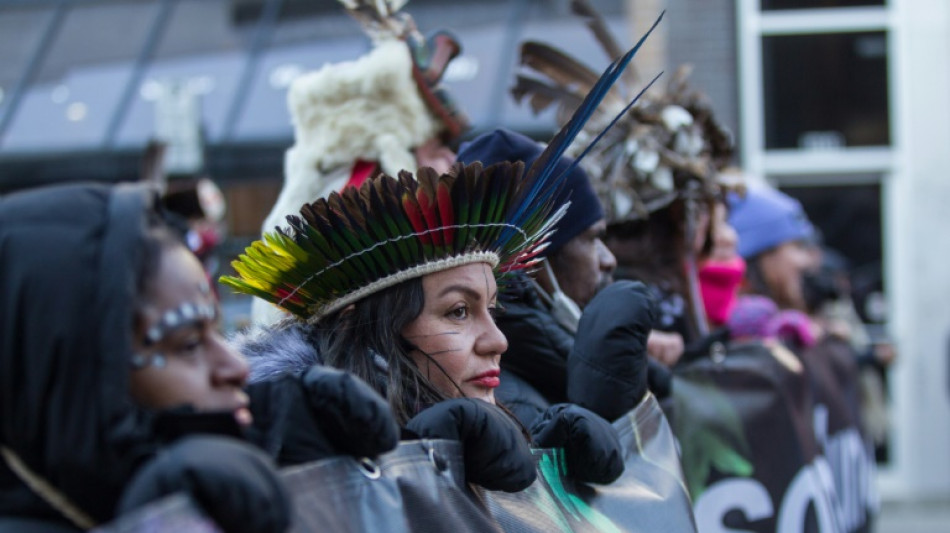
Activists warn a toothless UN nature pact will fail / Photo: Alexis Aubin - AFP

 'Breaking Bad' actor RJ Mitte dead: representatives

 Former DR Congo president Kabila forms new force with M23 armed group
 Tom Cruise's 'Digger' tanks, leaving studio with $250 mn hole

 US actress Selma Blair arrested after flight altercation

 One dead as Hurricane Simon creeps along Mexico's Pacific coast

 Carrick's Man United 'hungry and eager' to fix worst start in decades

 Fury as US federal agents search anti-Trump lawmaker's home

 One goal enough for Flick as Barca enter Galatasaray cauldron
 A7 to unveil a service that will re-invent the international payments market

 'Status quo' with EU 'not good enough', UK PM says as summit date set
 Stolen Renoir paintings found behind wall in France

 French supermarkets suffer refrigerator shutdown after 'unprecedented' cyberattack

 Arsenal lose Hincapie and Zubimendi in freak double blow

 Saudi says resilience tested, vows response after deadly airport attacks

 Alcaraz exits Shanghai Masters in straight-sets loss
 Pope to enter hospital on Tuesday for lung operation

 Renshaw shines again before Australia declaration
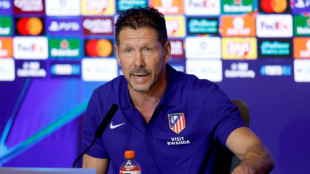 Atletico's Simeone encourages goalless Alvarez improvement
 FXGLOBE Rebuilds Its Copy Trading and PAMM Business With B2BROKER's B2COPY

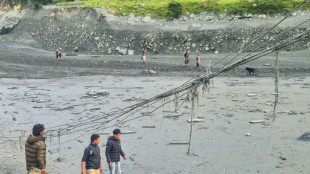 Nepal rescuers search for missing after flash flood
 Oil rises as Trump comments roil energy markets

 Premier League in limbo as Manchester City soar

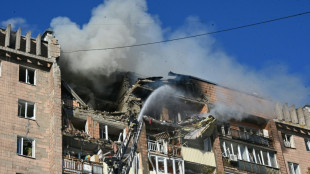 Zelensky vows to respond as Moscow silent on 'energy ceasefire'
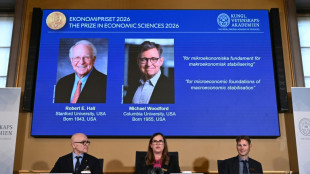
 Thousands march in India's capital to demand election chief resign

 African players in Europe: Mbeumo ends goal drought as United draw
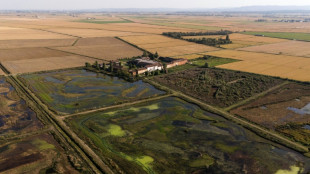
The world's next global pact for nature is doomed without clear mechanisms for implementing targets, conservation groups said Saturday on the sidelines of UN talks, as hundreds of protesters took to the streets of Montreal demanding greater action.
Similar factors were widely blamed for the failure of the last 10-year biodiversity deal, adopted in 2010 in Aichi, Japan, which was unable to achieve nearly any of its objectives.
"Strong text that commits countries to review progress against global targets and ratchet up action over time is essential to hold governments accountable," said Guido Broekhoven of the World Wide Fund for Nature (WWF), adding he was "very worried" about the current state of negotiations on this point.
Implementation mechanisms are at the heart of the Paris agreement on the fight against global warming, in the form of "nationally determined contributions."
However, the current text on biodiversity only "urges" countries to take into account the conclusions of a global review in four years' time -- without committing them to enhance action if the review finds targets aren't on track.
"So what we have on the table is barely an encouragement to maybe do better," Aleksandar Rankovic, of the US nonprofit Avaaz, told AFP.
"And there is no compliance mechanism being discussed that could help organize this necessary conversation between governments, on how they could cooperate better."
The UN meeting, called COP15, running from December 7 - 19, bringing together nearly 5,000 delegates from 193 countries to try to finalize "a pact of peace with nature," with key goals to preserve Earth's forests, oceans and species.
On a freezing Saturday, people young and old, including a large contingent of Indigenous Canadians, braved the biting cold to make their voices heard in Canada's second city.
Some wore costumes, dressed as birds, trees, and even caribou -- an emblem of Canada's boreal forests that are now threatened.
"The people are trying to speak, trying to say you can't just talk, you have got to act," said Sheila Laursen, part of the group Raging Grannies.
"Let's not forget that... to protect biodiversity we need to protect Indigenous people first, Indigenous people are protecting biodiversity," Helena Gualinga, who belongs to a tribe in the Ecuadoran Amazon.
- 'Missing critical elements' -
Saturday was supposed to be the last day for delegates to work on the implementation text, before their environment ministers arrive on December 15 for the home stretch of the negotiations. Under pressure, an additional meeting day next week was approved.
"If biodiversity targets are the compass, implementation is the actual vessel to take us there," Li Shuo of Greenpeace told AFP.
"The implementation negotiations are missing critical elements that will ensure countries to ramp up their action over time: this is like a bicycle without gears."
"There has been some progress," Juliette Landry, a researcher at French think tank IDDRI added, pointing out that the countries have for the first time adopted common planning and reporting templates, making cross-comparison possible.
D.AbuRida--SF-PST