
-
 Teenager shoots headmaster, teacher at French school
-
Melbourne imam denies links to suspected flydubai hijacker
-
 'Breaking Bad' actor RJ Mitte dead: representatives
-
Coventry crush Newcastle to climb out of relegation zone
-
 Former DR Congo president Kabila forms new force with M23 armed group
-
'Devastating' waves leave California beach homes on brink of collapse
-
 Tom Cruise's 'Digger' tanks, leaving studio with $250 mn hole
-
Meta says its new AI models on par with OpenAI, Anthropic
-
 US actress Selma Blair arrested after flight altercation
-
Talarico rejects mental health conspiracy theory after return from flu
-
 One dead as Hurricane Simon creeps along Mexico's Pacific coast
-
Brazil presidential candidate Flavio Bolsonaro to visit jailed father
-
 Carrick's Man United 'hungry and eager' to fix worst start in decades
-
Brazil's patron saint reappears in polarized election campaign
-
 Fury as US federal agents search anti-Trump lawmaker's home
-
US Open champ Zverev to become tennis world number one
-
 One goal enough for Flick as Barca enter Galatasaray cauldron
-
Migrant crisis wounds unhealed in Ceuta as Spanish royals visit
-
 A7 to unveil a service that will re-invent the international payments market
-
Brazilian judge allows Flavio Bolsonaro to visit jailed father
-
 'Status quo' with EU 'not good enough', UK PM says as summit date set
-
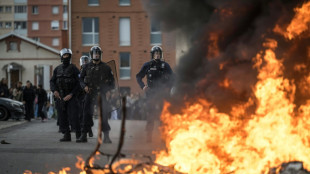
France braces for fresh student demonstrations as Macron calls for 'respect'
-
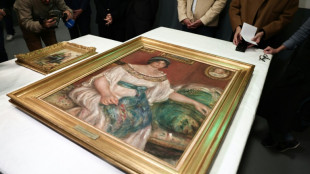 Stolen Renoir paintings found behind wall in France
-
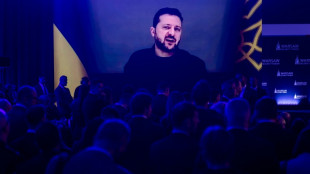
Zelensky doubtful on Russian acceptance of Trump's 'energy ceasefire'
-
 French supermarkets suffer refrigerator shutdown after 'unprecedented' cyberattack
-
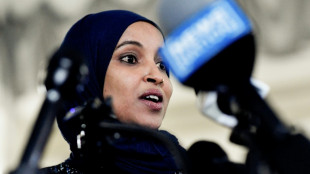
Federal agents search home of Trump critic Ilhan Omar: government
-
 Arsenal lose Hincapie and Zubimendi in freak double blow
-
Pakistan detains hundreds from ex-PM Khan's party as protests falter
-
 Saudi says resilience tested, vows response after deadly airport attacks
-
Australia's Smith off field after being struck on helmet
-
 Alcaraz exits Shanghai Masters in straight-sets loss
-
UK retains early access to test latest US AI models
-
 Pope to enter hospital on Tuesday for lung operation
-
Top NATO commander warns Russia any attack would be 'futile'
-
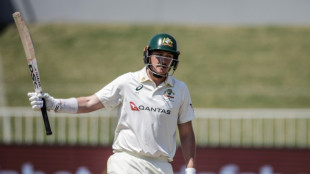 Renshaw shines again before Australia declaration
-
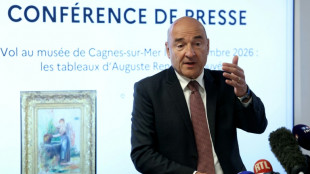
Stolen Renoir paintings found behind wall in France: prosecutor
-
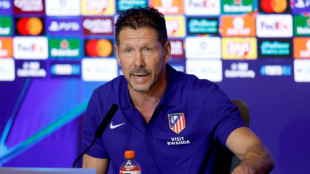 Atletico's Simeone encourages goalless Alvarez improvement
-
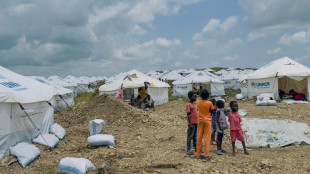
UNHCR sounds alarm on funding crisis
-
 FXGLOBE Rebuilds Its Copy Trading and PAMM Business With B2BROKER's B2COPY
-
French supermarket chains say cyberattack forced refrigerator shutdown

-
 Nepal rescuers search for missing after flash flood
-
Minister's resignation rocks German coalition
-
 Oil rises as Trump comments roil energy markets
-
Hurricane Simon lashes Mexico's Pacific coast, threatens landfall
-
 Premier League in limbo as Manchester City soar
-
France schools protest rumbles on as Macron urges 'respect'
-
 Zelensky vows to respond as Moscow silent on 'energy ceasefire'
-
Americans Hall and Woodford win economics Nobel for stabilisation models
-
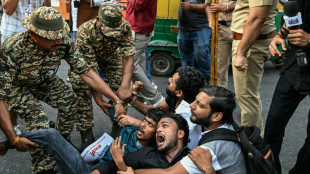 Thousands march in India's capital to demand election chief resign
-
MEXC Brings AI, TradFi and the Future of Trading to Life at TOKEN2049 Singapore

Putin says nuclear tensions 'rising' but Moscow won't deploy first
Russian President Vladimir Putin said Wednesday that nuclear tensions were rising, though he insisted "we have not gone crazy" and Moscow would not be the first to deploy them in the Ukraine conflict.
Speaking more than nine months after his forces launched their military operation, Putin warned the conflict could be "lengthy".
Russian forces have missed most of their key military goals since February, raising fears that the battlefield stalemate could see Russia resort to its nuclear arsenal to achieve a breakthrough.
"We have not gone crazy, we are aware of what nuclear weapons are," Putin said Wednesday at a meeting of his human rights council.
"We are not going to brandish them like a razor while running around the world."
But he acknowledged the growing tensions, saying "such a threat is rising. Why make a secret out of it here?"
He added, however, that Russia would use a nuclear weapon only in response to an enemy strike.
"When we are struck, we strike back," Putin said, stressing that Moscow's strategy was based on a "so-called retaliatory strike" policy.
"But if we aren't the first to use it under any circumstances, then we will not be the second to use them either, because the possibilities of using them in the event of a nuclear strike against our territory are very limited," he said.
His comments drew an immediate rebuke from the US.
"We think any loose talk of nuclear weapons is absolutely irresponsible," US State Department spokesman Ned Price told reporters.
"It is dangerous, and it goes against the spirit of that statement that has been at the core of the nuclear non-proliferation regime since the Cold War," he said.
German Chancellor Olaf Scholz, however, declared that the risk of nuclear weapons being used in the Ukraine conflict has lessened thanks to international pressure heaped on Russia.
"One thing has changed for the time being: Russia has stopped threatening to use nuclear weapons," Scholz said in an interview with Germany's Funke media group, saying it was "in response to the international community marking a red line".
"The priority now is for Russia to end the war immediately and withdraw its troops," he added.
- Azov Sea -
Intense shelling continued along the front in eastern Ukraine, with President Volodymyr Zelensky announcing that strikes in Donetsk region's Kurakhove killed 10 civilians on Wednesday.
"The Russian army carried out a very brutal, absolutely deliberate strike at Kurakhove, precisely at civilians," the president -- who was named Time Magazine's "Person of the Year" earlier in the day -- said during his nightly address.
The shelling in Kurakhove comes a day after Ukrainian artillery strikes killed six people in the Donetsk region's capital city of the same name, according to the Moscow-installed mayor.
Moscow had expected the fighting to last just days, but more than nine months after its forces entered Ukraine, Putin said its military operation could be a "lengthy process".
But he praised the announced annexation of four Ukrainian territories following September referendums held by Moscow proxies -- denounced in the West as a sham.
"New territories appeared -- well, this is still a significant result for Russia," Putin said, referring to Donetsk, Lugansk, Kherson and Zaporizhzhia regions.
He also made special reference to Russia's gaining control of all the land along the Azov Sea.
"The Azov Sea has become an internal sea to the Russian Federation, that's a serious thing," he noted.
Despite its best efforts, Russian troops at no point have entirely controlled any of the annexed territories and were even forced out from the capital of Kherson after a months-long Ukraine counter-offensive.
Amid domestic fears of a new callup -- which triggered an exodus of Russians abroad in September to avoid an emergency draft -- Putin said "there is no need" for a new mobilisation.
"Out of 300,000 of our mobilised fighters, our men, defenders of the fatherland, 150,000 are in the area of operations," including 77,000 in combat units, he said.
- Person of the Year -
Meanwhile, Zelensky basked in unwavering support from the West as Time chose him as its most important global figure for 2022 -- a title Putin himself received in 2007.
"In the weeks after Russian bombs began falling on Feb. 24, his decision not to flee Kyiv but to stay and rally support was fateful," said Time editor-in-chief Edward Felsenthal.
"Whether the battle for Ukraine fills one with hope or with fear, Volodymyr Zelensky galvanized the world in a way we haven't seen in decades."
L.AbuTayeh--SF-PST