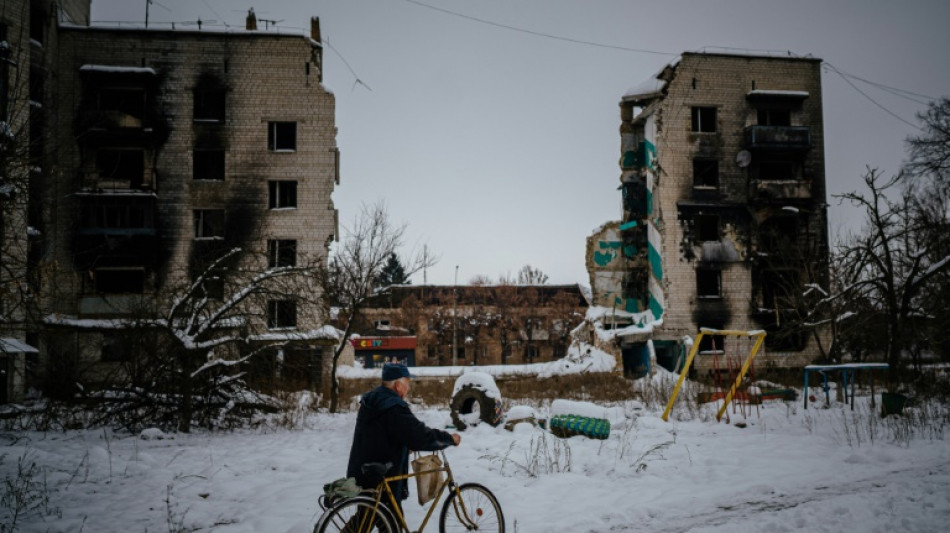
Ukraine races to restore power grid after Russia strikes / Photo: Dimitar DILKOFF - AFP

 Malaysia's Firefly extends flight cancellations due to haze

 IMF upgrades 2026 growth forecast but warns of 'split' outlook
 Infantino could pull off 'Houdini' act as critics struggle for candidate

 France braces for fresh nationwide student demonstrations
 Ahead of Israel vote, desert town becomes frontline against ultra-Orthodox expansion

 El Nino Watch: the impacts around the world this week

 Man City, PSG clash at contrasting time for state-backed projects
 Melbourne imam denies links to suspected flydubai hijacker

 Coventry crush Newcastle to climb out of relegation zone
 'Devastating' waves leave California beach homes on brink of collapse

 Meta says its new AI models on par with OpenAI, Anthropic

 Talarico rejects mental health conspiracy theory after return from flu
 Brazil presidential candidate Flavio Bolsonaro to visit jailed father

 Brazil's patron saint reappears in polarized election campaign

 US Open champ Zverev to become tennis world number one
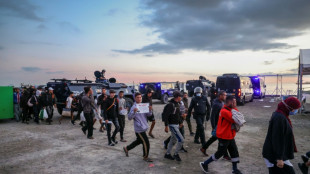 Migrant crisis wounds unhealed in Ceuta as Spanish royals visit

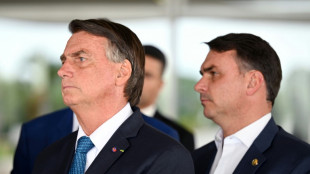 Brazilian judge allows Flavio Bolsonaro to visit jailed father
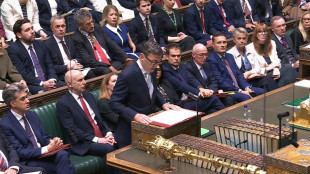
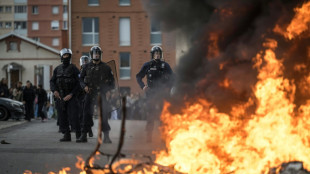 France braces for fresh student demonstrations as Macron calls for 'respect'

 Zelensky doubtful on Russian acceptance of Trump's 'energy ceasefire'

 Federal agents search home of Trump critic Ilhan Omar: government

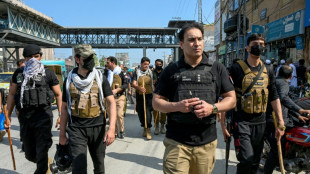 Pakistan detains hundreds from ex-PM Khan's party as protests falter
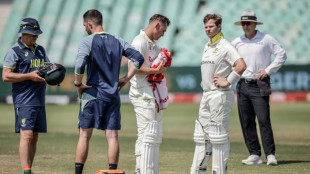 Australia's Smith off field after being struck on helmet

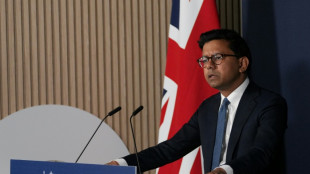 UK retains early access to test latest US AI models
 Top NATO commander warns Russia any attack would be 'futile'
 Stolen Renoir paintings found behind wall in France: prosecutor

Ukraine worked to restore power on Tuesday after Russia's latest wave of missile strikes caused power disruptions across the country, right as winter frost builds and temperatures plunge.
Out of the 70 missiles launched by Moscow, "most" were shot down, President Volodymyr Zelensky said, but the barrage still hit Ukraine's already battered infrastructure.
Fresh power cuts were announced in all regions "due to the consequences of shelling," national electricity provider Ukrenergo said on Telegram.
The head of Ukrenergo said he had "no doubt that Russian military consulted with Russian power engineers during this attack", judging by where the missiles landed.
"The time that Russians chose for this attack was connected with their desire to inflict as much damage as possible," Volodymyr Kudrytskyi told a Ukrainian news programme, explaining the attacks were launched as the country enters a "peak frost" period.
"Our repairmen will be working on the energy system restoration."
Nearly half of Ukraine's energy system has already been damaged after months of strikes on power infrastructure, leaving people in the cold and dark for hours at a time as outdoor temperatures drop below zero degrees Celsius (32 degrees Fahrenheit).
As missiles rained down on Kyiv, UN rights chief Volker Turk -- who arrived over the weekend on a four-day visit -- had to move his meetings with activists into an underground shelter.
Zelensky announced in his nightly address that four were killed in Russia's strikes.
But "our people never give up," the president said in a video statement.
Across the border in Russia's Kursk region on Tuesday, an airfield saw a "drone attack", said local governor Roman Starovoyt, without specifying where the drone originated.
"As a result of a drone attack in the area of the Kursk airfield, an oil storage tank caught fire," he said on social media, adding that there were no casualties.
Tuesday's incident comes a day after Moscow accused its neighbour of carrying out deadly drone strikes on two other airfields.
Russia also confirmed a "massive attack on Ukrainian military command systems and related defence, communications, energy and military facilities".
- Moscow vows to keep fighting -
The latest violence comes just after Russia shrugged off a Western-imposed price cap on its oil exports, warning the move would not impact its military campaign in Ukraine.
The $60-per-barrel cap agreed by the European Union, G7 and Australia aims to restrict Russia's revenue while making sure Moscow keeps supplying the global market.
"Russia's economy has all the necessary potential to fully meet the needs and requirements of the special military operation," Kremlin spokesman Dmitry Peskov told reporters, using Moscow's term for its Ukraine offensive.
"These measures will not affect this," he said.
Russia "will not recognise" the measures, which amounted to "a step towards destabilising the global energy markets", he added.
The market price of a barrel of Russian Urals crude is currently around $65 dollars, just slightly higher than the $60 cap -- suggesting the measure may have only a limited impact in the short term.
The cap is the latest in a number of measures spearheaded by Western countries and introduced against Russia -- the world's second-largest crude oil exporter -- after Moscow sent troops into Ukraine over nine months ago.
It comes on top of an EU embargo on seaborne deliveries of Russian crude oil that came into force on Monday.
The embargo will prevent maritime shipments of Russian crude to the European Union, which account for two-thirds of the bloc's oil imports from Russia, potentially depriving Moscow of billions of euros.
Kyiv had initially welcomed the price ceiling, but later said it would not do enough damage to Russia's economy.
Meanwhile, Russian state media released footage of President Vladimir Putin driving a Mercedes car across the Crimea bridge -- the closest the 70-year-old leader has come to the frontline in Ukraine.
The bridge connects the annexed peninsula to the Russian mainland, and was damaged in a blast in October.
- 'Impossible to prepare' -
The G7 nations -- Britain, Canada, France, Germany, Italy, Japan and the United States -- along with Australia have said they are prepared to adjust the price ceiling of oil if necessary.
In recent months, gas prices have skyrocketed since Moscow halted deliveries to the EU in suspected retaliation for Western sanctions and the bloc struggled to find alternative energy suppliers.
In the Ukrainian town of Borodianka, outside Kyiv, where snow has already coated the ground, locals recently gathered around wood-fired stoves inside tents to keep warm and cook food during the blackouts.
Volunteer Oleg said it was hard to say how Ukraine would manage in the coming winter months.
"It is impossible to prepare for this winter because no one has lived in these conditions before," he said.
I.Saadi--SF-PST