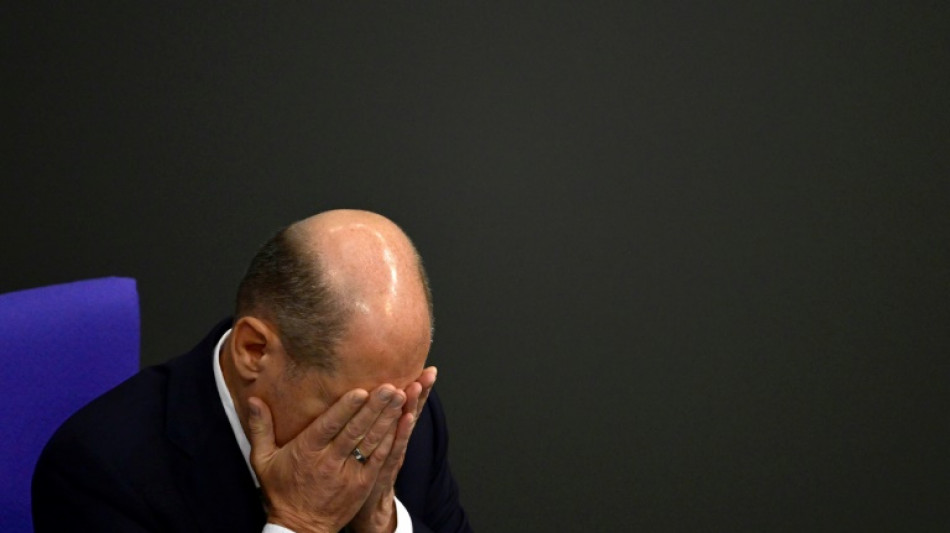
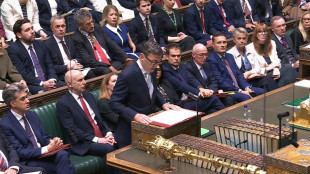
Germany's Scholz weathers shocks in turbulent first year / Photo: John MACDOUGALL - AFP/File

 Allen rushes Bills to thrilling 37-34 win over Rams
 India youth shift tactics as police clamp down on election protest
 Malaysia's Firefly extends flight cancellations due to haze
 IMF upgrades 2026 growth forecast but warns of 'split' outlook
 Infantino could pull off 'Houdini' act as critics struggle for candidate

 France braces for fresh nationwide student demonstrations
 Ahead of Israel vote, desert town becomes frontline against ultra-Orthodox expansion
 El Nino Watch: the impacts around the world this week
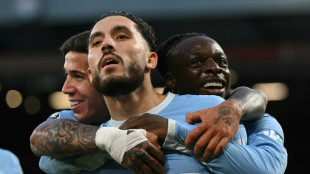 Man City, PSG clash at contrasting time for state-backed projects
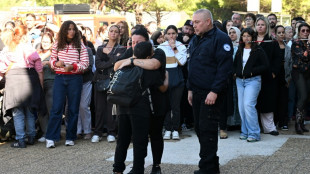
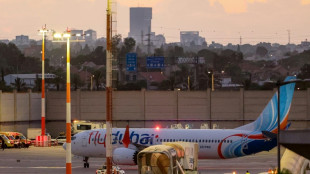 Melbourne imam denies links to suspected flydubai hijacker
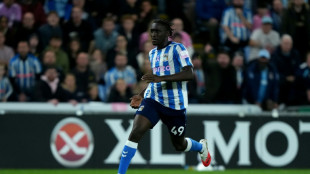 Coventry crush Newcastle to climb out of relegation zone
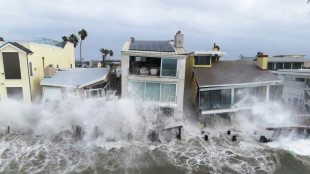 'Devastating' waves leave California beach homes on brink of collapse
 Meta says its new AI models on par with OpenAI, Anthropic
 Talarico rejects mental health conspiracy theory after return from flu
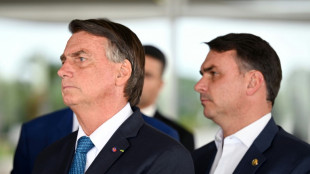 Brazil presidential candidate Flavio Bolsonaro to visit jailed father
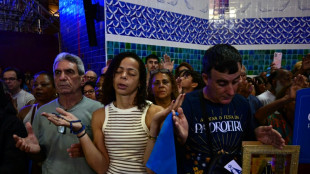 Brazil's patron saint reappears in polarized election campaign
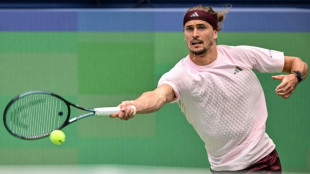 US Open champ Zverev to become tennis world number one
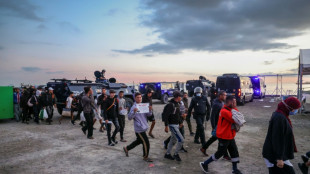 Migrant crisis wounds unhealed in Ceuta as Spanish royals visit

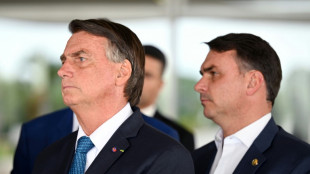 Brazilian judge allows Flavio Bolsonaro to visit jailed father
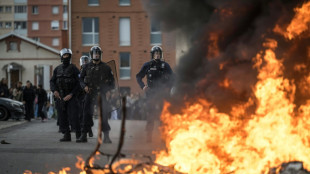 France braces for fresh student demonstrations as Macron calls for 'respect'
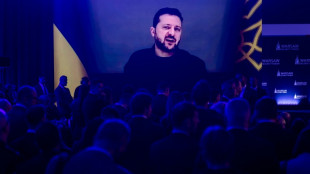 Zelensky doubtful on Russian acceptance of Trump's 'energy ceasefire'
 Federal agents search home of Trump critic Ilhan Omar: government
 Pakistan detains hundreds from ex-PM Khan's party as protests falter
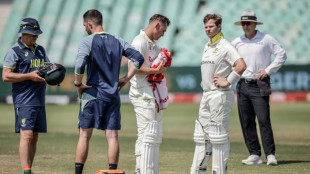 Australia's Smith off field after being struck on helmet
 UK retains early access to test latest US AI models
A war in his backyard, galloping economic crisis, and unhappy partners at home and abroad -- German Chancellor Olaf Scholz has weathered unprecedented shocks in his first year, while struggling to make a mark on the global stage.
The ex-finance minister took office promising continuity with the era of Angela Merkel, who ended her 16 years as chancellor a widely respected figure.
But Russia's invasion of Ukraine has forced him to rip up Germany's post-war axioms and chart out new economic, defence and geopolitical directions for the country that prizes -- and is valued for -- its stability and predictability.
"We never before had a government faced with such a dramatically worsening situation, when it came to foreign and security policy, but also of course energy policy," political scientist Ursula Muench told AFP.
Scholz's coalition of his Social Democrats and partners Greens and liberals FDP had taken office planning ambitious climate policies and budget restraint.
But as Moscow dwindled its energy supplies in the wake of the war, Germany has had to halt its planned nuclear exit, restart mothballed coal power stations while burning through a budgetary hole in a scrum for oil and gas to replace Russian supplies.
And in a turning point for a country whose role on the world stage was still affected by memories of World War II, Scholz announced a historic shift on defence, vowing to re-arm Germany with a massive boost in military spending.
"Going by the dramatic events this year, he did pretty well," said Nils Diederich, a political scientist at Berlin's Free University.
- Turning point -
But Rachel Rizzo, a senior fellow at US think tank the Atlantic Council's Europe Center, warned that losing momentum was a danger, even if the initial response was "impressive".
"I think not being able to follow through with defence and security commitments is a concern," she told AFP.
Not only is Germany trying to replenish its own military stocks, it is facing intense pressure from Ukraine to deliver what it has to help in the fightback against Russia.
The defence spending is high at a time when the treasury is also being pressed to help cushion a price shock fuelled by the energy crisis.
Huge investments are also required for the export giant to manage an economic transformation of reliance on cheap Russian energy or Chinese components to a diversified approach.
And governing in a three-way coalition means resolving each challenge inevitably involves squabbles that could unravel the fragile partnership.
Scholz's government has managed to implement part of its programme, including raising the minimum wage and reforming unemployment benefits.
But with myriad crises not going away, the chancellor's popularity ratings have plunged. One poll published in August suggested that 62 percent of Germans had an unfavourable view of him, compared to about 39 percent in March.
- 'Going it alone' -
As well as disagreements at home, there have been tensions with partners abroad.
European Union allies were upset that Scholz announced a massive 200-billion-euro ($207-billion) energy fund without first consulting them, complaining he should have focused on coming up with EU-wide measures.
Tensions have also arisen in the key relationship between Berlin and Paris over issues ranging from the energy fund to German plans for defence procurement.
Unlike Merkel, who, in her time, was widely respected as the voice to reckon with in Europe, Scholz has so far failed to step into the role on the international stage.
Merkel's departure "has left a void", said Eric Maurice, from the Brussels office of the Robert Schuman Foundation.
Scholz is "struggling to make his mark at the European level... He is still trying to find his bearings, he does not have Merkel's experience."
The view Scholz was seeking to "go it alone" was reinforced when he made the first visit to China by a G7 leader since the start of the pandemic in November, accompanied by a delegation of German business leaders.
The chancellor faced accusations he was pursuing the same mercantilist, trade-focused foreign policy of previous German governments, which led to economic ties flourishing with authoritarian Russia, but ultimately left Berlin vulnerable.
As Scholz heads into his second year in the job, many of the open challenges will continue to entangle him.
High energy prices will remain a major problem, particularly for electricity-hungry German manufacturers, said Sudha David-Wilp, Berlin office director of US think tank the German Marshall Fund.
"Ensuring German competitiveness because of the increase in energy costs, particularly for industries like chemicals and steel manufacturing, is the big challenge for Scholz," she said.
The energy fund "is just a short-term fix. No one knows when energy prices are going to come down to pre-war levels".
M.AbuKhalil--SF-PST