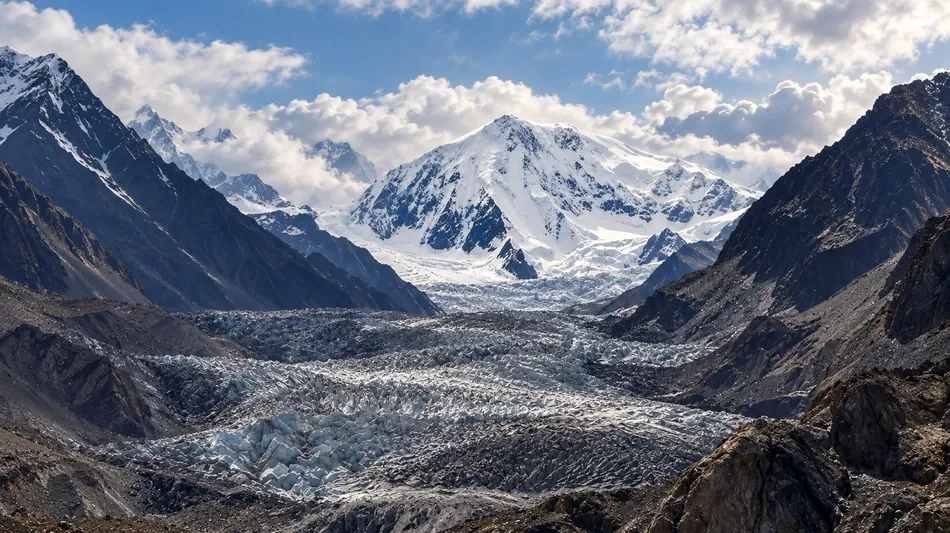
Himalayan glacier study warns of flood and water-supply risks

 Kubayi Warns Residents to Vacate Hijacked Buildings as State Prepares Seizures

 Van Gogh’s ‘Châtaigniers en Fleurs’ Sets $285m Record at Sotheby’s

 محكمة الاحتلال تمدد اعتقال مدير مستشفى كمال عدوان دون تهمة

 Global Scams Remain Widespread: Nearly Two in Three Adults Worldwide Report Scam Encounters, 9% Lost Money

 OPEC Chief: Oil to Remain Major Energy Source for Decades Amid Global Shift

 Hyundai Offers £1,000 Deposit Contribution on Black Friday for Tucson, Santa Fe, Kona, Ioniq 9 and Bayon
Accelerating glacier loss in the Himalayas is increasing flood dangers and could eventually reduce river water supplies, according to a study released in September.
Accelerating glacier loss in the Himalayas is increasing flood dangers and could eventually reduce river water supplies, according to a study released in September.
The report said the region was approaching a tipping point and could reach peak water by the middle of the century. That is the stage at which glacier-fed river flows stop increasing and begin to decline as ice reserves shrink.
The findings followed a late-August glacier collapse near the Nepal-Tibet border that triggered successive landslides and flash floods. At least 1,300 people were confirmed dead and more than 5,300 remained missing in Nepal and China’s Tibet region, according to the source report.
Retreating glaciers leave lakes restrained by unstable deposits of rock and ice above populated valleys. The study identified nearly 200 high-risk glacial lakes in India, including 56 in the very-high-risk category, exposing millions of downstream residents.
Only 21 of an estimated 40,000 glaciers in the Hindu Kush-Himalaya region were being monitored on the ground. The mountain system spans eight countries, from Afghanistan to Myanmar, and its rate of ice loss has accelerated in recent decades.
Systemiq produced the research with the Integrated Mountain Initiative, the International Centre for Integrated Mountain Development and India’s GB Pant National Institute of Himalayan Environment.
The report said the Himalayas support more than 20% of India’s GDP and underpin water security for hundreds of millions of people. Although the Himalayan region covers about 18% of India’s land, it accounts for roughly 35% of the country’s natural disasters.
F.AbuZaid--SF-PST



