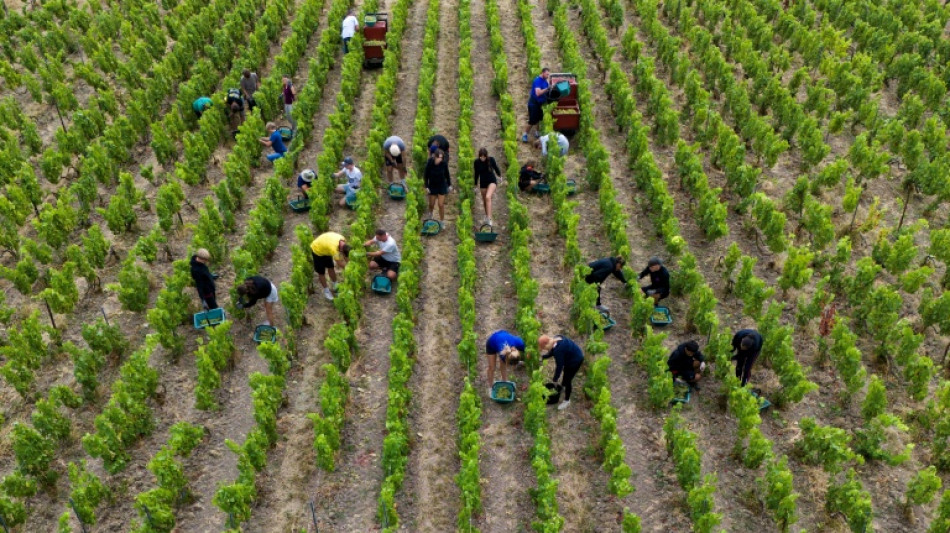
Heat forces French champagne makers to stiffen their drink / Photo: Jean-Christophe VERHAEGEN - AFP/File

 Kubayi Warns Residents to Vacate Hijacked Buildings as State Prepares Seizures

 Van Gogh’s ‘Châtaigniers en Fleurs’ Sets $285m Record at Sotheby’s

 محكمة الاحتلال تمدد اعتقال مدير مستشفى كمال عدوان دون تهمة

 Global Scams Remain Widespread: Nearly Two in Three Adults Worldwide Report Scam Encounters, 9% Lost Money

 OPEC Chief: Oil to Remain Major Energy Source for Decades Amid Global Shift

 Hyundai Offers £1,000 Deposit Contribution on Black Friday for Tucson, Santa Fe, Kona, Ioniq 9 and Bayon
Drinking this year's champagne might give you a heftier headache as France's record heatwaves are forcing some producers to up the alcohol levels, industry officials said Wednesday.
French authorities have allowed champagne houses to make their bubbly with alcohol content of up to 15 percent, a historic first for a wine usually limited to 13 percent.
Growers had to harvest exceptionally early this year as extreme heat sped sugar buildup -- and hence natural alcohol production -- in the grapes, according to the Comite Champagne industry association.
Nonetheless, "the crop already has all the hallmarks of producing great, perhaps even exceptional, wines", the group said in a statement.
Authorities have also allowed a temporary easing of strict rules for making several types of cheese after heatwaves scorched grazing pastures.
France is the world's second-largest wine producer after Italy, and this summer's heat and drought have deepened fears for many growers about how they will cope with climate change.
The 2026 harvest was the earliest ever recorded in the champagne region, with the first grapes cut as early as August 6 and the harvest becoming widespread on August 17, two weeks earlier than in 2025, when it was already considered to be early, according to the association.
Due to climate change, "this unusual harvest will probably become the norm in 10 to 15 years," said Maxime Toubart, the co-chairman of the Comite Champagne.
It "should prompt reflection on the champagne of tomorrow", he said.
Fellow co-chair David Chatillon said the relaxed alcohol content would concern just a small number of growers.
"The average after the harvest is below 12 percent," Chatillon said. "Not all winegrowers in Champagne will be above that level."
P.AbuBaker--SF-PST