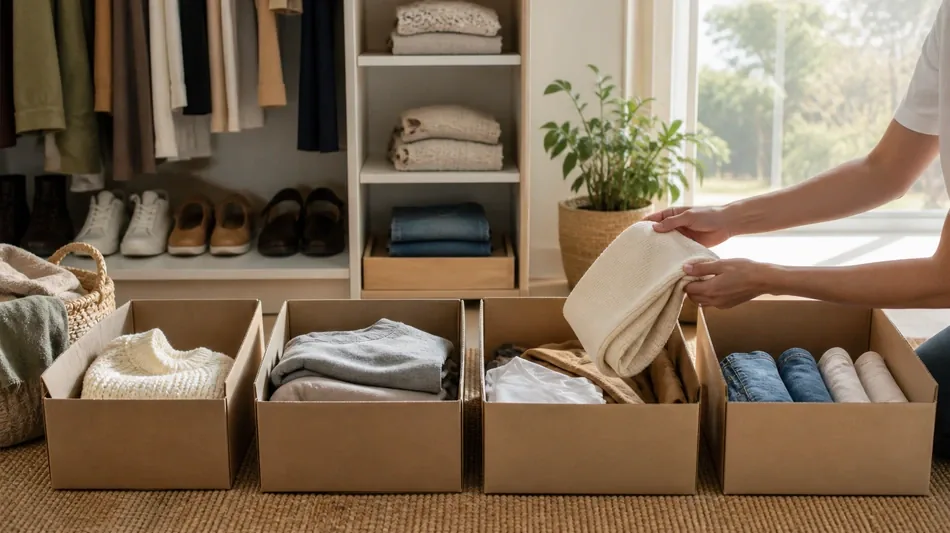
Experts outline sustainable ways to declutter Australian homes

 Kubayi Warns Residents to Vacate Hijacked Buildings as State Prepares Seizures

 Van Gogh’s ‘Châtaigniers en Fleurs’ Sets $285m Record at Sotheby’s

 محكمة الاحتلال تمدد اعتقال مدير مستشفى كمال عدوان دون تهمة

 Global Scams Remain Widespread: Nearly Two in Three Adults Worldwide Report Scam Encounters, 9% Lost Money

 OPEC Chief: Oil to Remain Major Energy Source for Decades Amid Global Shift

 Hyundai Offers £1,000 Deposit Contribution on Black Friday for Tucson, Santa Fe, Kona, Ioniq 9 and Bayon
Australian organisers and waste researchers say successful decluttering depends on rehoming usable possessions, recycling correctly and reconsidering the consumption that created household clutter.
Australians clearing crowded homes, downsizing, moving or handling a deceased estate are being encouraged to begin with manageable areas and sort possessions into four groups: keep, donate, recycle and discard. A survey commissioned by insurer Choosi found about one in three Australians could not stand the amount of stuff in their home.
Julie Whiting, founder of The Decluttering Co, said accumulation is easy in a consumer society but deciding what to release can be emotionally and logistically difficult. Jennifer Macklin, who researches waste systems and behaviour change at Monash University’s BehaviourWorks, said the aim should be to rehome what is usable, then recycle and correctly dispose of what remains. Resale platforms and buy-nothing groups may find a willing recipient more reliably than an indiscriminate charity-shop donation.
Professional organiser Susanne Thiebe of Less Mess often starts with wardrobes because they affect daily routines. One study found about 84% of Australians owned clothes they had not worn during the previous year. Garments must be in good condition to be sold or donated, while textile recycling and composting remain difficult and some material will go to landfill. Thiebe recommends organising retained clothes according to how the owner actually uses the space.
Furniture presents another problem. Canberra designer and woodworker Ashley Eriksmoen said Australia has more unwanted furniture than charity shops, reuse centres and community groups can absorb. She recommends keeping existing pieces in service through repairs, paint or modifications, with help from repair cafes or tool libraries where available.
Council depots and recycling stations may accept paint, chemicals, batteries, light globes, cables, e-waste and other difficult materials, while some retailers operate take-back programmes for furniture, office supplies, sports equipment, toys, clothing and medicines. Thiebe warned that uncertain items should go into general rubbish rather than contaminate an entire recycling load.
Macquarie University behavioural scientist Melissa Norberg said the brief pleasure associated with acquiring goods can prompt repeated buying. The experts said the effort of clearing unwanted possessions can become a lesson about future purchases. Their central conclusion was that overconsumption creates the waste before decluttering begins.
O.Farraj--SF-PST



