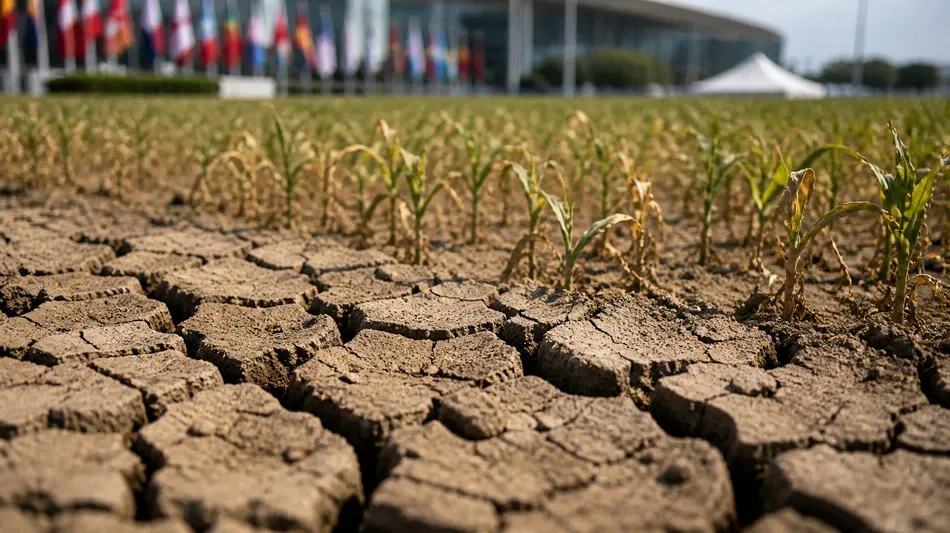
COP17 soil assessment links worsening land degradation to food and nutrition risks

 Kubayi Warns Residents to Vacate Hijacked Buildings as State Prepares Seizures

 Van Gogh’s ‘Châtaigniers en Fleurs’ Sets $285m Record at Sotheby’s

 محكمة الاحتلال تمدد اعتقال مدير مستشفى كمال عدوان دون تهمة

 Global Scams Remain Widespread: Nearly Two in Three Adults Worldwide Report Scam Encounters, 9% Lost Money

 OPEC Chief: Oil to Remain Major Energy Source for Decades Amid Global Shift

 Hyundai Offers £1,000 Deposit Contribution on Black Friday for Tucson, Santa Fe, Kona, Ioniq 9 and Bayon
Scientists at UNCCD COP17 warned that worsening soil degradation is threatening food systems while land and nutrition policies remain poorly connected.
Scientists and policy specialists at the UN Convention to Combat Desertification's COP17 used Food Systems and Soil Health Day on August 27 to press governments to treat soil health and nutrition as connected issues. UNCCD chief scientist Barron Joseph Orr said the separation between land policy and food policy obscures the fact that about 95% of food depends on soil.A new Food and Agriculture Organization assessment released during the meeting found that soil conditions are deteriorating across many regions. More than half of the regional assessments reviewed reported low or very low adoption of sustainable soil practices. Conditions had worsened since 2015 in 58% of assessments, while only about 10% showed improvement. Erosion was the most widespread concern: 81% of assessments rated erosion management poor or very poor, and 65% said the situation was deteriorating.South Asia was highlighted as a major pressure point. The report cited studies estimating that roughly 30% to 37% of India's land area is degraded, with about 83 million hectares affected by water erosion. Annual soil loss in India was estimated at 4.8 billion to 5.3 billion tonnes, carrying away about 8 million tonnes of plant nutrients. India, Bangladesh and Pakistan were also classified as having unsustainably high nitrogen surpluses. In India, crops absorb only about 30% to 45% of applied nitrogen, compared with a global average of 59%.Experts said long-standing agricultural subsidy systems can encourage excessive use of nitrogen fertiliser and make reform difficult. Emeline Fellus of the World Business Council for Sustainable Development cited a World Bank estimate that more than 80% of roughly $600 billion to $900 billion in annual agricultural support works against people or the environment. FAO land and water director Lifeng Li said national policies on agriculture, land, climate and biodiversity need to be coordinated rather than designed separately.FAO and UNCCD also released guidance calling for soil and land considerations to be integrated into national agricultural, climate and biodiversity planning. Separately, the Global Flagship Initiative on Food Security said its coalition has grown to more than 140 members and aims to work with at least 40 governments, improve management across more than 100 million acres of farmland and mobilise more than $10 billion in investment.
E.Aziz--SF-PST