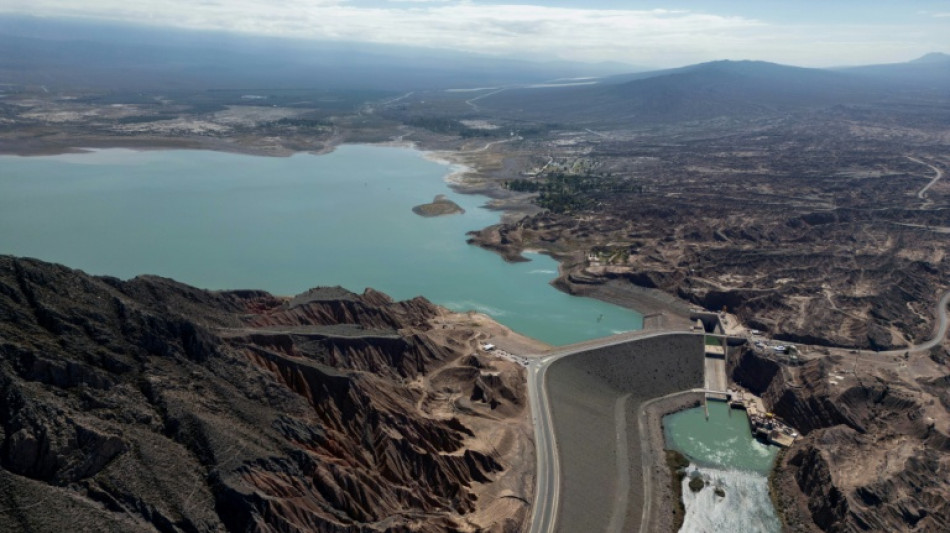
Argentine mining threatens scarce water resources in the Andes / Photo: Luis ROBAYO, Luis ROBAYO - AFP

 Dupont scores twice to send Toulouse to Top 14 summit

 Greece stun Klopp's Germany as Ireland show sorrow for Gaza

 Ramos fires holders Portugal to Nations League win in Norway

 Greece hand Klopp first defeat as Germany manager

 Pope promises French sex abuse victims to prevent further harm

 UK village on edge over threats to air base in terror alert

 Two giant pandas, emblems of China soft diplomacy, arrive in US

 Aleksandar Vucic: from Milosevic minister to long-serving Serbian statesman

 Trump expects new Iran talks despite rejecting deal offer

 Xavi gets first win as Netherlands boss, Denmark beat Wales
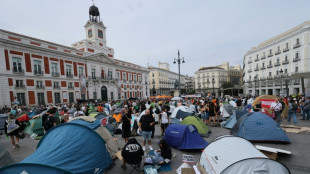 Madrid housing protest camp enters second night as PM vows action

 Tigray TV station hit by drone, rebels advance in north Ethiopia

 Banton hundred paves way for England ODI series win over Sri Lanka

 Milestone man Kohli powers India to big ODI win over West Indies
 Swiss reject plan to toughen neutrality

 Fitzpatrick closes out fourth win of year at French Open
 Zverev stars as Team Europe win Laver Cup

 UK PM urges 'calm' as thousands block flashpoint N.Ireland parade

 China's Yan one and done after golden Asian Games throw

 Kiss praises Wallabies' composure after wild Test finish

 एलेक्स बोडी और प्रो. डॉ. डायटर लाज़िक ने ALPHA WHEY और BODI एनर्जी ड्रिंक के लिए एक अनुबंध पर हस्ताक्षर किए

 Alex Bodi a prof. dr. Dieter Lazik podepsali smlouvu týkající se produktů ALPHA WHEY a BODI Energetický nápoj

 Banton takes England to 355-7 in Sri Lanka ODI decider

 أليكس بودي والبروفيسور الدكتور ديتر لازيك يوقعان عقدًا بشأن منتجي «ألفا ويل» و«بودي إنيرجي درينك»

 알렉스 보디와 디터 라지크 교수가 ALPHA WHEY 및 BODI 에너지드링크에 관한 계약을 체결했습니다.

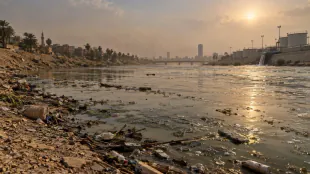
San Juan's once-sparkling rivers have shriveled due to drought, and residents in the rugged, western Argentine province fear that prospective mining projects in the Andes will make matters worse.
According to one popular saying, Andean provinces are so arid that fish kick up clouds of dust as they swim through their rivers.
San Juan province is no different.
The region, made up of mountains surrounded by a desert steppe, receives just over 100 millimeters of annual rainfall, classifying it as an desert.
Despite arable land making up just three percent of the territory, it is one of Argentina's main producers of olive oil, grapes, tomatoes and pistachios.
But water scarcity means that only about a third of that area can actually be cultivated.
"The situation is delicate," said Nicolas Yanzon from his grape, alfalfa and onion seed farm in the town of Media Agua, located 70 kilometers (45 miles) from the provincial capital.
Like his fellow producers, water rationing prevents Yanzon from using more than a third of his land.
Snowfall and more than 4,000 glaciers feed San Juan's two main rivers, which provide most of the province's irrigation water.
Both waterways have shrunk significantly, however, and their flow rates are at historic lows.
"We are in a scenario of permanent scarcity," provincial production minister Gustavo Fernandez told AFP.
- 'Chaos' -
"From an environmentalist point of view, this is chaos," said Silvio Pastore, a geology professor at the National University of San Juan.
Meanwhile, a new trade is booming: mining.
Although local residents are hopeful about subsequent job prospects, they also voiced concern about the use and treatment of the area's meager water resources.
Mining ventures could eat into scarce water flows, while nothing will arrive to replenish dam reserves, which are at minimum capacity.
In 2000, the United Nations made projections for the San Juan River -- the province's main waterway -- under different scenarios of rising temperatures.
Since then, the worst of those models "has been surpassed by reality," said Pastore, noting that the river's flow has dropped to almost half its historical average.
Less snowfall caused the decrease, the climate expert said, while high temperatures have transformed any solid snow into its gaseous form.
Northwest Argentina's glaciers meanwhile have shrunk by 17 percent this past decade, according to glaciologists.
- Politicization -
Unlike Patagonia's imposing white walls, San Juan's glaciers are icy formations covered by sediment, rocks or debris, and almost blend into the mountain itself.
Experts debate the extent of their role in water provision.
Pastore believes that the icy formations "do not contribute more than 20 percent" of water flow, even during the most severe droughts.
But glaciologist Juan Pablo Milana says their contribution requires further study.
"The glacier, when you don't have snow, gives you two to three times more water," he said.
Either way, glaciers entered political debate this year when Argentina's far-right President Javier Milei amended a law that protects the icy formations.
Environmentalists legally challenged the new regulation, which authorizes provincial governments to redefine protected areas as a way to expand mining activity.
Mineral extraction projects looking for copper, lithium and more have proliferated across the Argentine Andes.
These minerals are key to the energy transition, but paradoxically, the water used and glaciers destroyed in the process could worsen the effects of climate change for many local communities.
- 'Ecocide' -
Mining requires significantly less water than agriculture, but every drop counts when resources are running so low.
Lawyer and activist Raul Orduna was scathingly critical of the government's environmental policy.
"Our water system is in intensive care, and there are politicians who don't listen," he told AFP in his backyard in the town of Barreal. "Would you have a person who is in intensive care donate blood?"
Orduna denounced giving water -- a "resource that doesn't exist" in San Juan -- to transnational organizations rather than saving it for vital uses.
"That's called ecocide," he said.
According to minister Fernandez, "around 40 percent of the water used in agriculture could be saved" through public investment in infrastructure and more efficient irrigation methods.
Both the companies involved and the local government claim that the new mining projects will take place under strict environmental standards.
But previous incidents have instilled mistrust. Three toxic spills from a Barrick Gold mine between 2015 and 2017 contaminated provincial rivers to varying degrees.
"The greatest danger of mining is the lack of oversight," said Milana, who believes that "the state today is completely in the grip of and aligned with the mega-mining companies."
Yanzon, gazing into the water that has traveled a long way to reach his vineyard, says he doesn't oppose mining. But he doesn't think it should come at a cost.
"If it's development, it has to be sustainable," He said. "Because if it's not, then it's not development."
Z.AbuSaud--SF-PST